
Australia is one of the best places in the world for harnessing solar energy. As a sun-drenched continent, it continues to lead the world in per-capita solar adoption. The solar energy market in Australia has been booming, with more homeowners and businesses turning to solar power as a long-term solution to cut electricity bills and reduce carbon footprints. So, what is the solar panel cost in Australia today?
The price of solar panel systems varies based on many factors such as location, system size, panel quality, and installation fees. In this detailed guide, we’ll break down solar panel costs across different states, installation expenses, government rebates, and the long-term financial benefits of going solar. By the end, you’ll have a clear understanding of the solar market, which will help you make a well-informed investment that maximises your savings and improves your home’s energy efficiency.
How Much Do Solar Panels Cost in Australia in 2026?
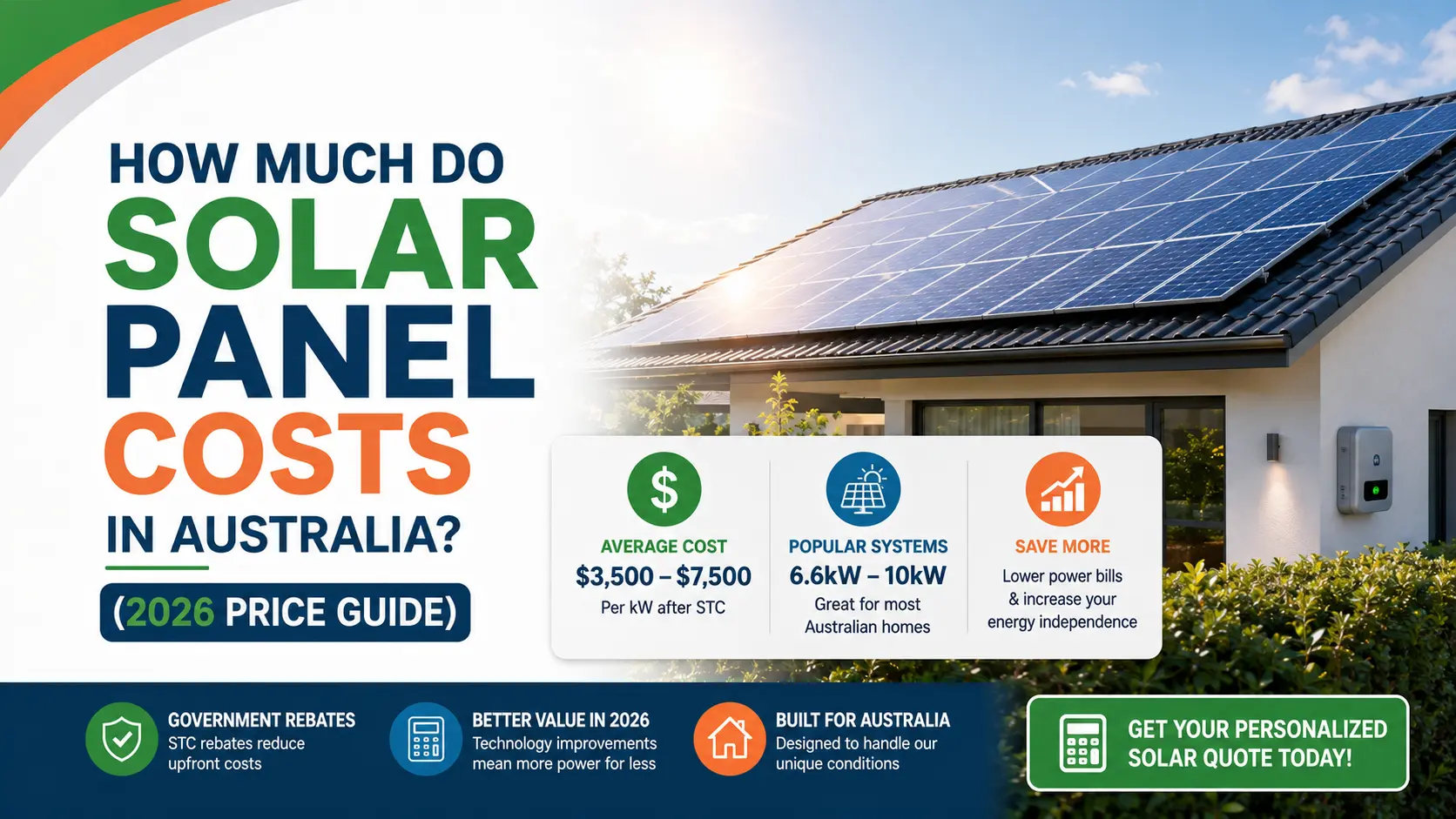
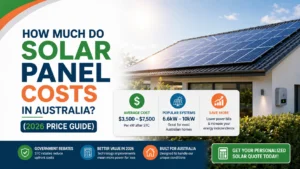
The simple rule of thumb for solar panel costs in Australia in 2026: budget around $1,000 per kilowatt (kW) installed for a good-quality, fully installed solar system. For the most popular system size — a 6.6 kW system — that means a ballpark cost of $6,600 before rebates, or $3,999–$5,500 after the federal STC rebate is applied.
But that is the starting point, not the final answer. Your actual cost depends on your state, roof complexity, panel quality, inverter brand, and the type of installer you choose. This guide breaks all of those factors down clearly, with real 2026 pricing data across all Australian states.
Here’s a breakdown of the average solar panel costs in Australia for 2026:
Residential Solar Panel Costs (2026)
| System Size | Price (After Rebates) | Cost per kWh |
|---|---|---|
| 6.6kW | $3,999 | $605/kW |
| 8kW | $4,599 | $574/kW |
| 9kW | $5,390 | $599/kW |
| 10kW | $5,599 | $543/kW |
| 13kW | $6,999 | $575/kW |
| 15kW | $8,790 | $575/kW |
| 20kW | $10,299 | $514/kW |
Commercial Solar Panel Costs (2026)
| System Size | Average Cost (After Rebates) | Power Output (kWh/day) |
| 30kW | $12,599 | 120 kWh/day |
| 40kw | $16,599 | 180 kWh/day |
| 50kW | $19,599 | 200 kWh/day |
| 100kW | $39,999 | 400 kWh/day |
These include the panels, inverter, and installation. The exact price can vary based on the quality of components, the size of the system, and the complexity of the installation.
Note: All prices listed are approximate and subject to change. Please request a quote for the most accurate and up-to-date pricing.
Not Sure Which Size You Need?
Divide your daily electricity use (kWh, from your bill) by the peak sun hours in your area. A home using 24kWh a day with about 3.6 peak sun hours needs roughly a 6.6kW inverter. Installers usually pair that with up to 33% more panel capacity (for example 7.92kW of panels on a 6.6kW inverter) to offset heat and cable losses.
Cost Breakdown: Equipment, Installation, and Extras
For a better understanding of solar panel costs, let’s see where your money goes:
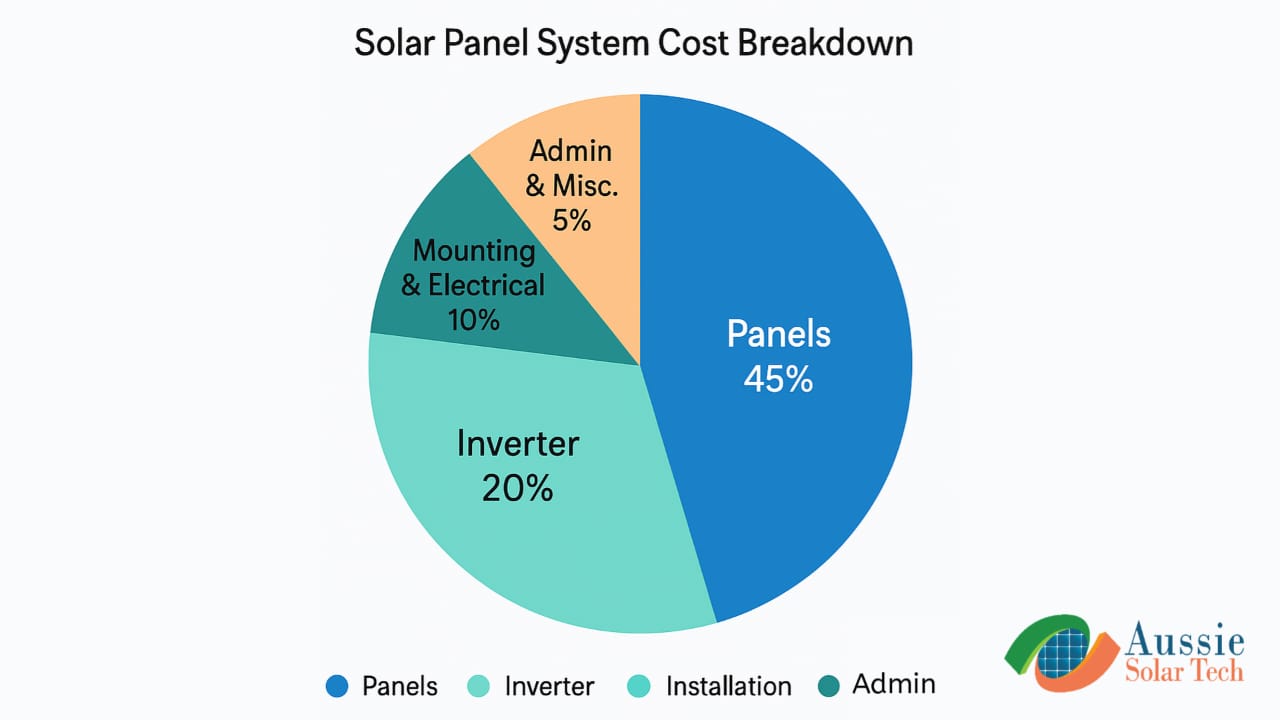
a. Equipment
- Solar Panels: 40–50% of total cost
- Inverter: 15–25% (string or hybrid)
- Mounting System: 5–10%
b. Installation
- Labour: 10–20%
- Safety & Compliance: 5–10%
c. Optional Extras
- Battery Storage (e.g., 10 kWh): $8,000 – $12,000
- Monitoring Systems: $200 – $800
- Smart Meters: $400 – $600
Key Factors Affecting Solar Panel Costs
Several factors influence the overall cost of installing solar panels in Australia. Understanding these can help homeowners make better decisions:
- System Size: Larger solar systems generally offer a lower cost per watt, making them more cost-effective in the long run. However, they require a higher upfront investment.
- Panel Brand and Efficiency: Premium brands like Jinko, SunPower, REC, and Aiko tend to cost more but deliver better efficiency, durability, and long-term performance.
- Installer Reputation: Choosing an experienced and accredited installer—such as those certified by Solar Accreditation Australia—ensures quality installation, safety compliance, and reliable after-sales support.
- Installation Complexity: Costs may increase if your property has a complex roof design, steep pitch, multi-storey structure, or requires electrical upgrades like switchboard replacement.
- Location: Installation costs can be higher for remote areas due to travel fees and additional logistics.
- Solar Rebates and Incentives: Government programs like the Small-scale Renewable Energy Scheme help reduce upfront costs through STC discounts. Additional federal and state incentives may further lower the total investment.
👉 Learn more about the rebate here.
Solar Panel Costs by State (2026) — After STC Rebate
Solar Panel Costs in New South Wales (NSW) 2026
| System Size | After STC Rebate | Annual Savings Est. |
| 6.6 kW | $3,999-4,200 | $1,400 – $1,800/yr |
| 8 kW | $4,599 – $6,000 | $1,700 – $2,100/yr |
| 10 kW | $5,599-$7,999 | $2,100 – $2,600/yr |
| 13 kW | $6,999 – $9,900 | $2,700 – $3,200/yr |
NSW is in Solar Zone 3 (Sydney, most of NSW). STC value: approx. $2,800–$3,200 for a 6.6 kW system. No additional state government solar rebate in NSW as of 2026 — only the federal STC applies.
Solar Panel Costs in Victoria (VIC) 2026
| System Size | After STC Rebate | VIC Solar Homes Rebate* |
| 6.6 kW | $3,999-4,200 | Up to $1,400 additional |
| 8 kW | $4,599-$5,300 | Up to $1,400 additional |
| 10 kW | $5,599-$7,999 | N/A (10kW+ not eligible) |
| 13 kW | $6,999 – $8,500 | N/A |
*Victoria’s Solar Homes Program provides up to $1,400 additional rebate for eligible households installing up to 6.6 kW systems. Income and eligibility criteria apply. Installations in Melbourne are generally $100–$300 more than regional VIC due to higher labour costs.
Solar Panel Costs in Queensland (QLD) 2026
| System Size | After STC Rebate | Notes |
| 6.6 kW | $3,999 – $4,500 | Zone 3 (Brisbane); Zone 2 (North QLD) |
| 8 kW | $4,599-$5,500 | Dynamic export limits in many areas |
| 10 kW | $5,599-$6,999 | Battery incentives available |
| 13 kW | $6,999 – $8,500 | Check DNSP export limit first |
QLD is one of Australia’s most competitive solar markets. Brisbane is Zone 3; north of Rockhampton is Zone 2 (higher STC value, lower system costs). Buyers in SE QLD should be aware of Energex dynamic export limits before sizing a system.
Solar Panel Costs in South Australia (SA) 2026
| System Size | After STC Rebate | SA-Specific Notes |
| 6.6 kW | $3,999 – $4,200 | Zero export limit in many areas |
| 8 kW | $4,599-$5,300 | Battery pairing essential in SA |
| 10 kW | $5,600 – $6,800 | SA Home Battery Scheme active |
| 13 kW | $6,999 – $8,500 | SA grid has highest solar penetration in AU |
South Australia warning: SA has the strictest export limits in Australia. Many SA networks impose zero export or very low export limits (1.5 kW) during peak solar hours. This makes battery storage more economically important in SA than any other state. Factor battery costs into your SA solar investment.
Solar Panel Costs in Western Australia (WA) 2026
| System Size | After STC Rebate | WA-Specific Notes |
| 6.6 kW | $4,000 – $4,500 | Perth Zone 3; very strong sun |
| 8 kW | $4,60-$5,500 | Synergy export limit: 5–10kW |
| 10 kW | $5,599-$6,900 | WA Battery Rebate Scheme available |
| 13 kW | $6,999 – $8,500 | Fewer installers = less price competition |
Perth receives the most solar radiation of any Australian capital. A 6.6 kW system in Perth generates approximately 11,200 kWh per year — about 20% more than the same system in Melbourne. This means faster payback despite similar upfront costs.
Solar Panel Costs in ACT (Canberra) 2026
| System Size | After STC Rebate | ACT Notes |
| 6.6 kW | $3,999 – $4,400 | Aussie Solar Tech’s home market |
| 8 kW | $4,600-$5,500 | NextGen Energy Storage rebates available |
| 10 kW | $5,599-$6,999 | ACT has 100% renewable electricity target |
| 13 kW | $6,999 – $8,500 | Strong installer competition in Canberra |
The prices above reflect average solar system costs in Australia. At our company, we offer more affordable, high-quality solar solutions. Visit solar system prices or request a quote to discover your personalised price.
State notes that change the real value of your system:
- NSW: only the federal STC applies to solar panels. See NSW solar rebates.
- Victoria: eligible households have been able to add Victoria’s Solar Homes rebate (up to $1,400 on smaller systems). Check current eligibility with Solar Victoria.
- ACT: see the ACT solar rebate guide for battery and loan support.
- SA, QLD, WA: check your network’s export limit before choosing a size. Tight export limits make a battery more valuable, and oversizing panels less so.
Get a local price: Canberra | NSW | Melbourne | Brisbane | Adelaide | Perth
Average Commercial Solar Panel Costs by City & Size (Updated 2026)
| City | 30kW | 50kW | 70kW | 100kW |
|---|---|---|---|---|
| Adelaide, SA | $14,990 | $23,990 | $32,990 | $45,990 |
| Brisbane, QLD | $13,990 | $22,990 | $31,990 | $44,990 |
| Canberra, ACT | $15,990 | $24,990 | $34,990 | $47,990 |
| Hobart, TAS | $15,490 | $24,490 | $33,490 | $46,490 |
| Melbourne, VIC | $14,490 | $23,490 | $32,490 | $45,490 |
| Sydney, NSW | $13,990 | $22,490 | $31,490 | $43,990 |
| Perth, WA | $15,990 | $25,990 | $35,990 | $48,990 |
The prices above reflect average solar system costs in Australia. At our company, we offer more affordable, high-quality solar solutions. Visit solar system prices or request a quote to discover your personalised price.
How Much Is the 2026 Solar Rebate in Each Australian State?
The federal STC (Small-scale Technology Certificate) rebate is the main government incentive reducing your upfront solar cost. The rebate value depends on your solar zone (which varies by location) and your system size. The scheme runs until 31 December 2030 and reduces by approximately 1/15th each year.
| State/City | Solar Zone | STC Multiplier | 6.6kW Rebate (est.) | 10kW Rebate (est.) | Rebate Trend |
| Darwin, NT | Zone 1 | 1.622 (highest) | ~$4,200 – $4,600 | ~$6,300 – $6,900 | Decreasing Jan 2027 |
| N. QLD (Townsville+) | Zone 2 | 1.536 | ~$3,800 – $4,200 | ~$5,800 – $6,300 | Decreasing Jan 2027 |
| Brisbane, Sydney, Perth, Canberra, Adelaide | Zone 3 | 1.382 (most common) | ~$2,900 – $3,400 | ~$4,400 – $5,100 | Decreasing Jan 2027 |
| Melbourne, Hobart | Zone 3–4 | 1.185 – 1.382 | ~$2,600 – $3,200 | ~$3,900 – $4,800 | Decreasing Jan 2027 |
| Tasmania (Hobart) | Zone 4 | 1.185 (lowest) | ~$2,400 – $2,800 | ~$3,600 – $4,200 | Decreasing Jan 2027 |
Important — how the rebate works: Your installer applies for STCs on your behalf and gives you the value as an upfront point-of-sale discount. You do not need to apply yourself or wait for a government payment. The prices listed on your solar quote should already reflect the STC rebate deducted from the gross cost.
The STC rebate value decreases each January 1 until the scheme ends in 2030. Installing in 2026 vs 2027 can mean $200–$400 less in rebate value. There is no benefit to waiting.
Tips to Reduce Solar Panel Costs Without Compromising Quality
- Avoid Cheap Panels: Cheap systems may seem appealing, but often come with unreliable components, limited warranties, and unresponsive installers. Quality matters more than cost savings. So, you should go for premium solar panels.
- Time Your Install: Prices may drop during off-peak seasons, such as winter. Installers often offer discounts during slow periods or end-of-financial-year sales. Take advantage of rebate windows and installer promotions.
- Group Buys: Some councils and community organizations run group-buying programs, which secure discounted rates from vetted installers by pooling local interest. These initiatives often include consumer education and free technical assessments.
- Bundle with Battery: In states like South Australia, Victoria, and the ACT, bundling a solar system with a battery can unlock additional rebates or interest-free loans. While batteries have a higher upfront cost, available incentives can significantly reduce your expenses. Some rebates only apply to bundled systems.
- Install a System Sized for Your Needs: To get the best cost-per-watt result, oversizing your system doesn’t always mean better savings. Use your electricity usage data and future energy goals to right-size your system for optimal payback and efficiency.
By following these tips, Australian homeowners can reduce solar panel costs while ensuring they invest in a high-quality system that will deliver reliable savings for decades.
Leading Options for the Best Solar Panels in Australia
In 2025, Australian homeowners will have access to a wide range of high-quality solar panels from globally recognised manufacturers. The best solar panels combine efficiency, durability, and strong warranty terms, making them a smart long-term investment. Now let’s see some leading options:
| Brand | Warranty | Efficiency | Performance (Year 25) | Value |
|---|---|---|---|---|
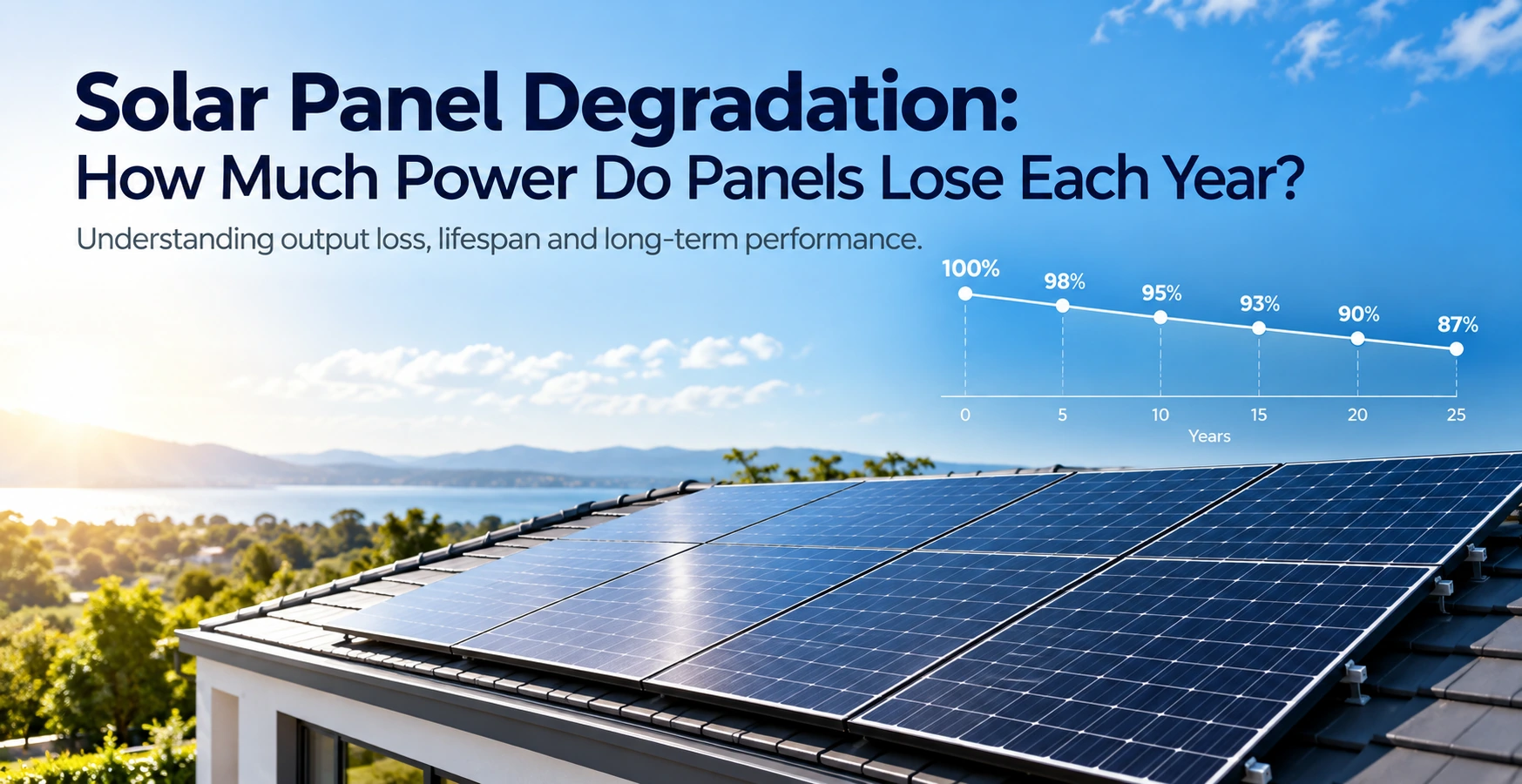
| AIKO | 25 Years | Up to 23.0% | 90.60% | Good |
| SunPower Maxeon | 40 Years | Up to 23.0% | 89.50% | Good |
| REC | 25 Years | Up to 22.6% | 89.40% | Good |
| Jinko Solar | 25 Years* | Up to 22.0% | 87.40% | Good |
| Trina Solar | 25 Years* | Up to 22.0% | 87.40% | Good |
| LONGi | 25 Years | Up to 23.0% | 89.20% | Good |
| Canadian Solar | 25 Years | Up to 23.0% | 87.40% | Good |
| Risen | 25 Years | Up to 22.6% | 88.30% | Good |
| TW Solar | 25 Years | Up to 21.5% | 85.50% | Good |
Solar and Battery Cost in 2026
A home battery typically adds $4,000 to $13,000 or more depending on capacity and brand, so adding one is the single biggest swing in a solar quote. Bundles are priced as a package: SolarCalculator’s 2026 averages for a 13.5kWh battery are about $16,900 with 6.6kW of solar, $18,300 with 8kW and $20,300 with 10kW.
The federal Cheaper Home Batteries Program changed on 1 May 2026. The STC factor dropped from 8.4 to 6.8 per kWh, and the rebate now tapers for bigger batteries (full rate up to 14kWh of usable capacity, then reduced rates above that). It also steps down every January and July through 2030. For example, a 10kWh battery earned about $3,192 before May and about $2,584 after, according to Solar Choice. Right-sized batteries between roughly 10 and 14kWh now give the strongest rebate per dollar.
Use our battery rebate calculator, see solar battery prices, or read our guide to the best solar batteries in Australia.
What Solar Really Costs Per kWh and How Fast It Pays Back
Over its life, rooftop solar is one of the cheapest sources of electricity you can buy. SolarCalculator’s analysis of a 6.6kW system in Sydney (about 232,657 kWh over 25 years, including a replacement inverter) puts the cost at about 4.1c per kWh, against a grid price of roughly 36.7c per kWh.
| System life | Cost per kWh produced |
|---|---|
| 10 years | $0.080 |
| 15 years | $0.064 |
| 20 years | $0.051 |
| 25 years | $0.041 |
Annual saving = solar used at home x grid price + solar exported x feed-in tariff. Illustrative example (assumptions, not a guarantee): a 6.6kW system producing about 9,300 kWh a year, with 40% used at home at 36.7c and the rest exported at 5c, saves about $1,640 a year. On a $6,366 market-average price that is a payback of just under 4 years; on a $3,999 package, about 2.5 years. Your result depends on how much power you use in daylight, your tariff and your feed-in rate. See our feed-in tariff guide.
Solar Panel Costs With Aussie Solar Tech
Aussie Solar Tech is a CEC-approved solar retailer with Solar Accreditation Australia-accredited installers and offices in Canberra, Sydney, Brisbane, Melbourne, Adelaide and Perth. We design for your roof and usage, show the STC on the quote, and back installs with after-sales support, cleaning and health checks.
Get an exact price for your address: Request a free quote or call 02 6182 2877. See also our current solar system prices.
Frequently Asked Questions
1. What’s the average cost of solar for a typical 4-bedroom home?
A 4-bedroom house generally requires a 6.6kW solar system, which costs between $5,000 and $8,000 after applying government rebates and incentives.
2. How much will I pay for solar panels in Brisbane?
If you’re installing solar in Brisbane, expect to pay anywhere from $4,500 to $7,500, depending on the brand, system size, and installer reputation.
3. Which Australian state offers the cheapest solar installations?
Queensland and Western Australia are typically the most affordable states for solar installation, thanks to strong competition among providers and abundant sunshine.
4. What is the typical lifespan of a solar panel system?
Most quality solar panels are built to last 25 to 30 years, with performance warranties commonly covering 20 to 25 years.
5. How much does a 6.6kW solar system cost in Australia in 2026?
In 2026, a fully installed 6.6kW system usually ranges from $4,000 to $8,500, depending on location, component quality, and any applicable rebates.

Shah Tarek is a Solar Energy Consultant with 10 years experience in solar system design and solar consultancy field at Australia. He is now a Director, Operation & Consultancy Division at Aussie Solar Tech, a leading Australian solar retailer and installer. Here he is writing informative and engaging solar content that educates the community on the benefits of solar power. His work supports Aussie Solar Tech’s mission to promote sustainable energy solutions and foster a greener future for Australia.







Seraphim Solar Panels Review: Efficiency, Reliability, and Value Unveiled

Talesun Solar Panels: Honest Review Before You Buy

Sungrow Battery VS Tesla Powerwall : Which is Best in Australia?

Leapton Solar Panels Review: Affordable Energy Solution

REC Solar Panels Review: Outstanding Efficiency & Durability

Best Hybrid Inverters for Home Solar Systems in 2025

Best Solar Battery In Australia 2026 — Complete Guide

Sigenergy VS Fox ESS Battery: Which is The Best Choice for 2026
How Much Do Solar Panel Costs in Australia? (2026 Price Guide)

