
SOLAR PV SYSTEM
100kW
Best for larger-sized businesses
$39,999*
get a quote
Submit the form below, our expert will contact with you shortly!
100kW Solar System
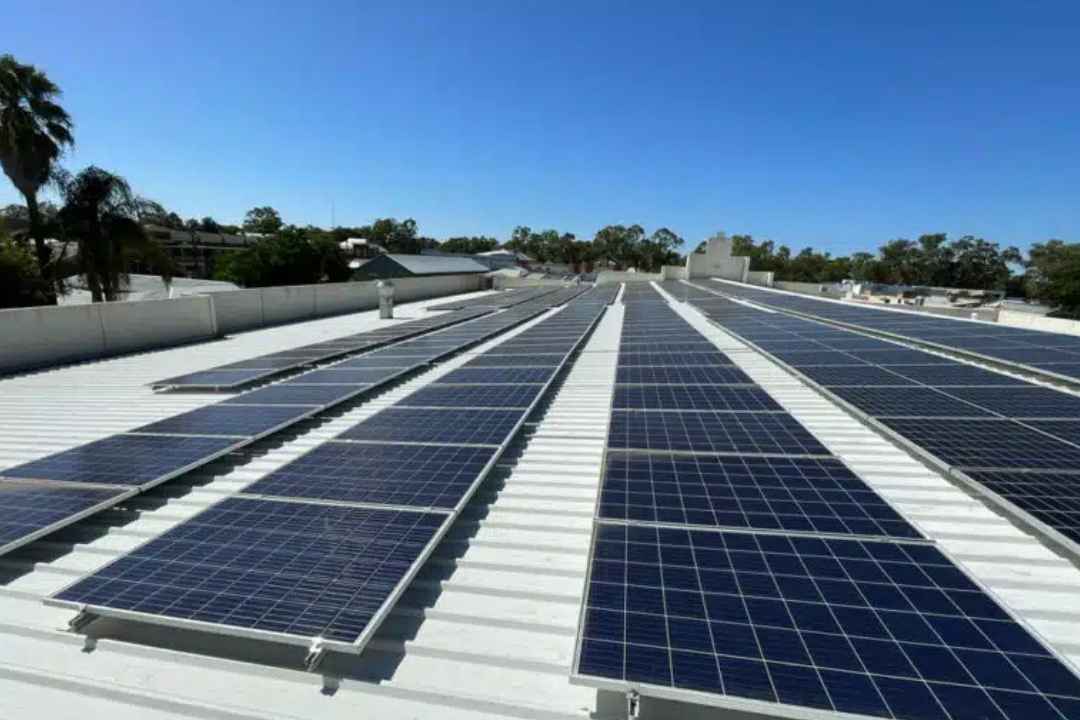
A 100kW solar system is a large-scale energy setup that’s perfectly suited for medium to large businesses, schools, warehouses, shopping centres, or even community facilities that have high energy demands. In Australia, systems of this size can make a huge difference to electricity bills, often cutting them down by a significant margin each month. Over time, that means real, long-term savings that keep adding up year after year.
Beyond the cost benefits, a lot of Aussie businesses are turning to 100kW systems to meet sustainability targets, reduce their carbon footprint, and show customers they care about the environment. Plus, with energy prices constantly on the rise, having your own renewable power source provides a layer of protection against future cost hikes — a smart move for any organisation thinking ahead.
$39,999
Installed price (after STC rebate)
286–452
1.5–3 yrs
$650k+
What Is a 100kW Solar System?
A 100kW commercial solar system offers the highest capacity possible under the Australian federal STC rebate scheme, making it the premier choice for major enterprises seeking maximum upfront incentives without complex LGC administration. Designed to generate between 286 and 452 kWh daily, this commercial-grade setup delivers robust daytime power to industrial warehouses, hospitals, large shopping centers, and campuses.
Delivered as a turnkey EPC package by Aussie Solar Tech, the system includes 182–263 Tier 1 solar panels, premium commercial three-phase inverters, certified heavy-duty mounting, compliant AS 4777 electrical protection, interval-logging smart monitors, and complete DNSP network approvals managed end-to-end by certified electrical engineers.
Federal Rebate Update — STC Now Covers Systems Up To 1MW
On 5 August 2026, the federal government announced the Small-scale Renewable Energy Scheme (SRES) — the scheme behind the upfront STC rebate — is expanding its eligible system size from 100kW up to 1MW, expected to take effect 1 October 2026, subject to final regulations. For businesses sizing a system anywhere from 100kW to 1MW, this is a major change: instead of the slow, year-by-year LGC trickle that previously applied above 100kW, these systems now qualify for the same upfront, point-of-sale STC discount that smaller systems already receive — worth roughly 20% off the installed cost, according to the government’s own figures.
STC vs LGC: Which Scheme Applies Now?
Prior to October 2026, 100kW was the hard cutoff between the two federal incentive schemes. That’s no longer the case. Here’s how it works now:
What this means if you're considering scaling past 100kW
Previously, a business weighing up 100kW against, say, 150kW or 200kW faced a real financial cliff — anything over 100kW lost the upfront rebate entirely. That cliff is gone. If your site has the roof space and the daytime load to support more than 100kW, it’s now worth exploring a larger system, since you keep the upfront STC discount all the way up to 1MW. Talk to our commercial team about sizing beyond 100kW.
Discover The Best Solar Panel System For Your Home And Business
40KW
Solar System
Best for large shops and clinics
$
16,599
*
Big Family Home
- Tier 1 Solar Module
- 30kW Power Inverter
- 40,000w Tier 1 Panels
- High Efficiency Solar Module
50KW
Solar System
warehouses and mid-size business
$
19,599
*
Medium Industrial
- Tier 1 Solar Module
- 40kW Power Inverter
- 50,000w Tier 1 Panels
- High Efficiency Solar Module
100KW
Solar System
Best for larger-sized businesses
$
39,999
*
Huge Commercial
- Tier 1 Solar Module
- 50kW Power Inverter
- 100,000w Tier 1 Panels
- High Efficiency Solar Module
10KW
Solar System
Just right for most family homes
$
5,599
*
Small Home
- Tier 1 Solar Module
- 5kW Power Inverter
- 6,600w Tier 1 Panels
- High Efficiency Solar Module
13KW
Solar System
Medium homes and small business
$
6,999
*
Medium Home
- Tier 1 Solar Module
- 8kW Power Inverter
- 10,300w Tier 1 Panels
- High Efficiency Solar Module
20KW
Solar System
Larger homes and small businesses
$
10,299
*
Big Family Home
- Tier 1 Solar Module
- 10kW Power Inverter
- 13,200w Tier 1 Panels
- High Efficiency Solar Module
*Performance data is based on CEC guidelines and may differ depending on your location. For personalized advice on your solar requirements and potential savings, please consult with an Aussie Solar Installation expert.
Ideal Candidates for a 100kW Commercial Solar System
A 100kW system delivers maximum value for large businesses with consistent, high daytime energy consumption — typically 300–500 kWh per day or more during operating hours. At this scale, electricity bills are large enough that even modest percentage reductions translate into substantial dollar savings, and the economics of a well-designed system become extremely compelling.
Panels & Roof / Ground Space Required
Panel Count & Space Requirements
| Panel Wattage | Panels Required | Roof Area (pitched) | Roof Area (flat + tilt frame) |
|---|---|---|---|
| 400W | 250 panels | ~425 m² | ~550 m² |
| 420W | 238 panels | ~405 m² | ~525 m² |
| 450W | 223 panels | ~379 m² | ~490 m² |
| 500W | 200 panels | ~340 m² | ~440 m² |
| 550W+ | 182 panels | ~309 m² | ~400 m² |
*Pitched roof area includes 300mm inter-panel clearances and perimeter setbacks per AS/NZS 5033. Flat roof with tilt frames adds 30–35% additional space for inter-row shading avoidance at 10°–15° tilt. Ground-mount systems require additional space for access tracks, fencing, and cable trenching.
Ground-Mount Option
If your property lacks sufficient roof area, a ground-mounted 100kW system is a viable alternative — particularly for industrial properties, farms, and rural commercial sites. Ground-mount systems allow optimal north-facing orientation at the ideal tilt angle regardless of roof orientation, often delivering 5–10% more annual output than compromised roof installations. Aussie Solar Tech designs and installs ground-mount systems with hot-dip galvanised steel racking structures engineered for Australian wind load conditions.
100kW Solar System Cost in Australia
Aussie Solar Tech’s fully installed price for a 100kW commercial solar system starts from $39,999 (ex GST, after STC rebate). The table below compares our pricing against market averages across capital cities, giving you a clear picture of what a competitive installed price looks like at this system size.
What's included in our $39,999 price?
Tier 1 commercial panels (CEC approved) · Two premium 50kW three-phase inverters · SAA-accredited commercial installation · Heavy-duty commercial mounting hardware · Protection relay & AS 4777 compliance · Engineer-certified single-line diagram · Commercial monitoring with interval logging · DNSP application fully managed · STC registration and paperwork handled · Standard flat or pitched commercial roof.
| City | Aussie Solar Tech | Market Average (Apr 2025) | Your Saving |
|---|---|---|---|
| Sydney, NSW | $39,999 | $84,000 | ~$44,001 |
| Melbourne, VIC | $39,999 | $80,500 | ~$40,501 |
| Brisbane, QLD | $39,999 | $92,000 | ~$52,001 |
| Adelaide, SA | $39,999 | $91,500 | ~$51,501 |
| Perth, WA | $39,999 | $89,200 | ~$49,201 |
| Canberra, ACT | $39,999 | $100,800 | ~$60,801 |
| Hobart, TAS | $39,999 | $95,200 | ~$55,201 |
*Market average figures estimated from Solar Choice Commercial Price Index scaled to 100kW (Feb 2026 index × April 2025 adjustment), ex GST. Final Aussie Solar Tech pricing may vary for complex buildings, ground-mount systems, high crane-access requirements, protection relay type, metering upgrades, extended cable runs, and premium panel/inverter selections.
100kW Solar Investment: Crucial Site Variables to Budget For
| Item | Typical Cost Range | When Required |
|---|---|---|
| Protection relay (dedicated) | $3,000–$8,000 | Required by most DNSPs at 100kW |
| Engineer-certified SLD & protection report | $2,000–$5,000 | Required by all DNSPs at 100kW |
| Tilt frames (flat commercial roof) | $8,000–$15,000 | All flat commercial roofs |
| Main switchboard upgrade | $2,000–$8,000 | Undersized or outdated board |
| DNSP application / connection fee | $800–$3,000 | All states |
| Interval metering upgrade | $500–$2,000 | If not already installed |
| Crane hire (multi-storey) | $2,000–$8,000 | Multi-storey or difficult access |
| Ground-mount civil works | $8,000–$25,000 | Ground-mounted systems |
| Commercial battery storage | $50,000–$150,000+ | Optional — for demand management |
Quick Summary: 100kW Solar System Price Australia 2026
– Base installed price: $39,999 (after STC rebates)
– Market average across capital cities: $78,000–$98,000
– Your saving with Aussie Solar Tech: Up to $59,000
– Payback period: 1.8–3.5 years (business use)
– Estimated 25-year savings: $620,000+
– STC rebate value: $25,000–$36,000 (pre-applied)
Aussie Solar Tech
Commercial Team
CEC Accredited Commercial Solar Retailer · 7+ Years Experience
Our commercial team has designed and installed 30kW–100kW solar systems for small businesses, schools, retail stores, and industrial properties across ACT, NSW, VIC, QLD, SA, and WA.
Get Your Commercial Quote
Fully installed · After STC rebate · ex GST
100kW Solar System Generation by Australian Capital City
Output figures are modelled using Bureau of Meteorology (BOM) solar irradiance data and PVWatts v8, assuming a north-facing array at 15°–20° tilt, and 77% system efficiency. These are conservative annual averages — summer output is 20–40% higher, winter 20–40% lower.
| City | Peak Sun Hours/Day | Avg Daily Output | Annual Output | Data Source |
|---|---|---|---|---|
| Darwin, NT | 5.5 hrs | 393–452 kWh/day | ~156,220 kWh/yr | BOM/PVWatts v8 |
| Brisbane, QLD | 5.0 hrs | 360–406 kWh/day | ~140,900 kWh/yr | BOM/PVWatts v8 |
| Perth, WA | 4.9 hrs | 382–436 kWh/day | ~149,700 kWh/yr | BOM/PVWatts v8 |
| Adelaide, SA | 4.8 hrs | 362–408 kWh/day | ~140,900 kWh/yr | BOM/PVWatts v8 |
| Canberra, ACT | 4.6 hrs | 360–412 kWh/day | ~140,900 kWh/yr | BOM/PVWatts v8 |
| Sydney, NSW | 4.6 hrs | 340–378 kWh/day | ~131,400 kWh/yr | BOM/PVWatts v8 |
| Melbourne, VIC | 4.2 hrs | 314–360 kWh/day | ~122,285 kWh/yr | BOM/PVWatts v8 |
| Hobart, TAS | 3.8 hrs | 286–330 kWh/day | ~113,150 kWh/yr | BOM/PVWatts v8 |
*Assumes north-facing at 15°–20° tilt, 77% system efficiency, no shading. Based on BOM solar irradiance data and PVWatts v8. Actual output varies with soiling (~2–3%/yr), temperature losses (~10–15% in peak summer), inverter efficiency, and panel degradation (~0.5%/yr).
Demand Charge Savings — The Hidden Benefit
This section is unique to large commercial systems and is almost never covered by generic solar guides — yet for many businesses it represents a significant portion of total solar savings that doesn’t appear in a simple electricity-rate payback calculation.
Many large Australian businesses are on commercial electricity tariffs that include a demand charge component — a fee charged per kW of peak demand recorded in your highest 15–30 minute interval each month. Demand charges can represent 20–40% of a large business’s total electricity bill, yet they are billed based on just a few peak moments per month.
How Solar Reduces Demand Charges
Solar offsets peak daytime consumption directly
During business hours when peak demand events most commonly occur, your 100kW solar array reduces the amount of power drawn from the grid — lowering your recorded kW demand for that interval.
Demand events outside solar hours (early morning starts, evening shifts) can be addressed by commercial battery storage configured for demand response — charging during low-demand periods and discharging during peak intervals to cap recorded demand.
Our commercial monitoring systems identify when peak intervals are likely to be set and can trigger alerts to defer non-essential loads (HVAC pre-cooling, EV charging, compressor cycles) during those windows.
Payback Period & ROI by City
The payback table below models returns for a large business consuming 400 kWh per day (typical for a large warehouse, supermarket, or university building) at 70% and 90% self-consumption. These figures include only energy savings — demand charge savings and tax benefits add further value not shown here.
| City | System Cost | Elec. Rate | Self-Consumption | Annual Energy Savings | Payback (Energy Only) |
|---|---|---|---|---|---|
| Sydney | $39,999 | 28c/kWh | 70% | $19,530 | 2.2 yrs |
| Sydney | $39,999 | 28c/kWh | 90% | $25,110 | 1.7 yrs |
| Brisbane | $39,999 | 25c/kWh | 70% | $17,438 | 2.5 yrs |
| Brisbane | $39,999 | 25c/kWh | 90% | $22,421 | 1.9 yrs |
| Melbourne | $39,999 | 22c/kWh | 70% | $13,860 | 3.0 yrs |
| Melbourne | $39,999 | 22c/kWh | 90% | $17,820 | 2.3 yrs |
| Adelaide | $39,999 | 34c/kWh | 70% | $26,832 | 1.5 yrs |
| Adelaide | $39,999 | 34c/kWh | 90% | $34,496 | 1.2 yrs |
| Perth | $39,999 | 30c/kWh | 70% | $25,410 | 1.6 yrs |
| Perth | $39,999 | 30c/kWh | 90% | $32,671 | 1.3 yrs |
| Canberra | $39,999 | 28c/kWh | 70% | $19,936 | 2.1 yrs |
| Canberra | $39,999 | 28c/kWh | 90% | $25,631 | 1.6 yrs |
*Assumes 400 kWh/day business consumption. Commercial electricity rates based on competitive market offers, April 2025. Energy savings only — demand charge reductions, tax incentives, and LGC/FiT revenue not included. Request a full commercial business case.
Battery Storage for 100kW Systems
At 100kW, commercial battery storage transitions from an ROI enhancer to a strategic business asset. A well-designed battery system enables demand charge management (the highest-value application at this scale), energy arbitrage, resilience against grid outages, and participation in demand response programs that can generate additional revenue.
| Battery Capacity | Primary Application | Best Business Type | Approx. Cost |
|---|---|---|---|
| 50–100kWh | Demand peak shaving (solar hours) | Offices, retail, schools with daytime peaks | $40,000–$75,000 |
| 100–200kWh | Demand management + evening coverage | Warehouses, large retail, manufacturing | $70,000–$150,000 |
| 200–500kWh | Full demand management + arbitrage | Hospitals, hotels, 24/7 operations | $140,000–$350,000 |
| 500kWh+ | Microgrid / energy independence | Critical facilities, remote industrial | $350,000+ |
Aussie Solar Tech
Commercial Team
CEC Accredited Commercial Solar Retailer · 7+ Years Experience
Our commercial team has designed and installed 30kW–100kW solar systems for small businesses, schools, retail stores, and industrial properties across ACT, NSW, VIC, QLD, SA, and WA.
Get Your Commercial Quote
Fully installed · After STC rebate · ex GST
Frequently Asked Questions
How much does a 100kW solar system cost in Australia?
How much energy does a 100kW solar system produce per day?
What is the payback period for a 100kW solar system?
How many panels does a 100kW solar system need?
Why Choose Aussie Solar Tech For Your 100kW Solar System?
Our commercial team has designed and installed 30kW–100kW solar systems for small businesses, schools, retail stores, and industrial properties across ACT, NSW, VIC, QLD, SA, and WA.
- Reduced Electricity Bills — Many customers save up to 70% on their monthly utility costs by generating their own power.
- Premium Products, Guaranteed Performance — Tier 1 solar panels, inverters, and battery systems from leading global brands, built for Australian conditions and backed by comprehensive warranties.
- Brand Image and Sustainability — Going solar strengthens your business’s environmental credentials with customers, partners, and investors.
- Energy Independence & Stability — Reduced reliance on the grid protects your business from blackouts and unexpected rate hikes.
- Expert Local Installers — SAA-certified, in-house installation teams with years of local experience handling permits, grid connections, and final inspection.
- Unmatched 24/7 Support — Continuous help, support, and maintenance throughout the entire lifespan of your system.
Get Your Commercial Quote → Fully installed · After STC rebate · ex GST
We Install CEC Approved Popular Solar Panels In Australia








We install CEC-approved solar panels from trusted brands including SunPower, REC, AIKO, Canadian Solar, Trina Solar, LONGi Solar, Jinko Solar, and JA Solar.
These brands are chosen for their performance, reliability, and suitability for Australian conditions.
