
SOLAR PV SYSTEM
20KW
Best For Larger Homes
$10,299*
get a quote
Submit the form below, our expert will contact with you shortly!
20kW Solar System
A 20KW solar system might sound like overkill at first — but in today’s energy-hungry households, it’s honestly not that crazy. Especially if your electricity bills are creeping higher, or you’re planning to add an EV to the driveway soon. Many Australian families with bigger homes or home offices are going for this size not just for savings, but also for future-proofing.
You might be wondering though — is it worth the money? Do you even need that much power? And what’s the actual cost in 2026? Let’s unpack the answers.
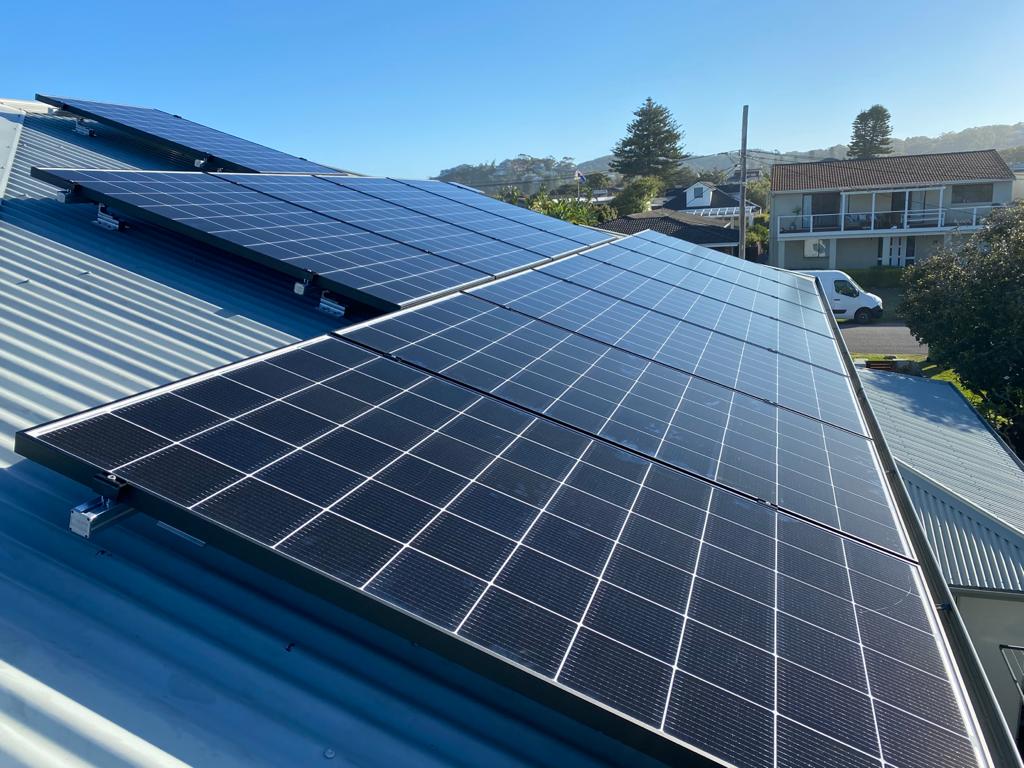
$10,299
Installed price (after STC rebate)
68–105
2–5 yrs
$75k+
What Is a 20kW Solar System?
A 20kW solar system is the largest solar installation commonly fitted to Australian homes and the entry point to commercial-grade solar. At this capacity, the system generates 68 to 105 kWh of electricity per day depending on your location — enough to power a very large, fully electrified home, a small farm, a home-based business, or a small commercial premises almost entirely during daylight hours.
At Aussie Solar Tech, a standard 20kW system includes 45–53 Tier 1 solar panels, a premium 15kW–20kW three-phase inverter (or two 10kW inverters), roof-mount hardware, smart monitoring, and a complete grid connection managed by our CEC-accredited team. Three-phase power is mandatory at this system size across all Australian DNSPs — our team confirms your connection and manages any required upgrade during your free site assessment.
20kW: The top of residential and the start of commercial
At 20kW, you are at the boundary where residential solar ends and commercial solar begins for most Australians. The system qualifies for the full STC residential rebate, but some DNSPs begin applying commercial-grade connection and protection requirements at this size. Having an installer experienced at 20kW — not just 10kW — matters significantly. Aussie Solar Tech installs 20kW systems across all states regularly and manages the complete DNSP process.
Discover The Best Solar Panel System For Your Home And Business
10KW
Solar System
Medium homes and small business
$
5,599
*
Small Home
- Tier 1 Solar Module
- 5kW Power Inverter
- 6,600w Tier 1 Panels
- High Efficiency Solar Module
13KW
Solar System
Larger homes and small business
$
6,999
*
Medium Home
- Tier 1 Solar Module
- 8kW Power Inverter
- 10,300w Tier 1 Panels
- High Efficiency Solar Module
20KW
Solar System
Larger homes and medium business
$
10,299
*
Big Family Home
- Tier 1 Solar Module
- 10kW Power Inverter
- 13,200w Tier 1 Panels
- High Efficiency Solar Module
30kW
Solar System
small offices and retail stores
$
12,599
*
Big Family Home
- Tier 1 Solar Module
- 30kW Power Inverter
- 30,000w Tier 1 Panels
- High Efficiency Solar Module
40kW
Solar System
best for large shops and clinics
$
16,599
*
Medium Industrial
- Tier 1 Solar Module
- 40kW Power Inverter
- 40,000w Tier 1 Panels
- High Efficiency Solar Module
50kW
Solar System
warehouses and mid-size business
$
19,599
*
Huge Commercial
- Tier 1 Solar Module
- 50kW Power Inverter
- 50,000w Tier 1 Panels
- High Efficiency Solar Module
*Performance data is based on CEC guidelines and may differ depending on your location. For personalized advice on your solar requirements and potential savings, please consult with an Aussie Solar Installation expert.
Residential or Commercial? Understanding the Crossover
At 20kW, many buyers are unsure whether they’re making a residential or commercial purchase. The honest answer is: it depends on your property and how you use it. Here’s how to think about it.
| Property Type | Typical Daily Usage | Is 20kW Right? | Classification |
|---|---|---|---|
| Large home — EV + pool + ducted AC + full electrification | 65–90 kWh/day | Yes — excellent match | Residential |
| Extended family / dual occupancy property | 70–100 kWh/day | Yes — ideal | Residential |
| Home with large home-based business | 60–100 kWh/day | Yes — high self-consumption | Residential/Commercial |
| Small farm or rural property | 60–120 kWh/day | Yes — often fastest payback | Rural/Agricultural |
| Small office or retail premises | 60–100 kWh/day | Yes — strong commercial ROI | Commercial |
| Average home — no EV or pool | 20–35 kWh/day | No — consider 10kW or 13kW | Residential |
20kW: The top of residential and the start of commercial
At 20kW, you are at the boundary where residential solar ends and commercial solar begins for most Australians. The system qualifies for the full STC residential rebate, but some DNSPs begin applying commercial-grade connection and protection requirements at this size. Having an installer experienced at 20kW — not just 10kW — matters significantly. Aussie Solar Tech installs 20kW systems across all states regularly and manages the complete DNSP process.
15kW vs 20kW vs 30kW — Which Is Right for You?
The 20kW sits between the largest standard residential sizes and the smallest commercial systems. Here’s a direct comparison across all three to help you decide quickly.
15kW
- → 52–79 kWh/day output
- → 45–65 kWh/day ideal
- → 36 panels at 420W (~61m²)
- → Three-phase mandatory
- → EV + pool + ducted AC
20kW
- → 68–105 kWh/day output
- → 65–90+ kWh/day ideal
- → 48 panels at 420W (~82m²)
- → Three-phase mandatory
- → Multiple EVs + farm + business
30kW
- → 86–136 kWh/day output
- → 100–160 kWh/day ideal
- → 72 panels at 420W (~122m²)
- → Three-phase mandatory
- → Commercial premises
The ~$1,500 step from 15kW to 20kW pays for itself in under 18 months
The price difference between our 15kW and 20kW systems is approximately $1,500. The extra 16–26 kWh generated daily saves an additional $1,400–$2,800 per year in electricity — typically recovering the upgrade cost within 12–18 months. If your consumption is approaching 65 kWh/day or you have plans to add another EV, farm equipment, or further electrification, the 20kW system is the financially superior choice.
How Many Panels & Roof Space Required
At 20kW, roof space becomes a key consideration for residential installations. Most large Australian homes can accommodate a 20kW system, but the layout will need careful design — particularly for homes with multiple roof faces, dormers, or significant obstructions.
| Panel Wattage | Panels Required | Approx. Roof Area | Notes |
|---|---|---|---|
| 380W | 53 panels | ~90 m² | Standard efficiency |
| 400W | 50 panels | ~85 m² | Common choice |
| 420W | 48 panels | ~82 m² | Most common — efficiency/price balance |
| 450W | 45 panels | ~77 m² | High efficiency, fewer panels |
| 500W+ | 40 panels | ~68 m² | Premium / space-constrained roofs |
*Roof area includes 300mm inter-panel clearances and perimeter setbacks per AS/NZS 5033. North-facing at 15°–30° tilt delivers peak output. East/west split arrays achieve 85–92% of north-facing output and improve morning/afternoon self-consumption — often a better layout for 20kW on residential roofs.
20kW Solar System Cost in Australia
Aussie Solar Tech’s installed price for a 20kW solar system is $10,299 (after the federal STC rebate). The table below compares our pricing against market averages across capital cities.
What's included in our $10,299 price?
Tier 1 panels (CEC approved) · Premium 15–20kW three-phase inverter (or 2 × 10kW) · SAA-accredited installation · Grid connection & compliance certification · Smart monitoring system · Federal STC rebate already deducted · Standard single-storey installation. Three-phase upgrade (if required) is additional.
| City | Aussie Solar Tech | Market Average (Apr 2025) | Your Saving |
|---|---|---|---|
| Sydney, NSW | $10,299 | $16,500 | ~$6,201 |
| Melbourne, VIC | $10,299 | $17,820 | ~$7,521 |
| Brisbane, QLD | $10,299 | $18,090 | ~$7,791 |
| Adelaide, SA | $10,299 | $17,820 | ~$7,521 |
| Perth, WA | $10,299 | $17,400 | ~$7,101 |
| Canberra, ACT | $10,299 | $15,900 | ~$5,601 |
*Market average figures based on Solar Choice Price Index scaled to 20kW, April 2025. Prices shown after federal STC rebate. Final pricing may vary for multi-storey homes, complex roof layouts, switchboard upgrades, dual-inverter configurations, and cable run distances.
Additional Costs to Budget For
| Item | Typical Cost Range | When Required |
|---|---|---|
| Three-phase upgrade | $2,000–$8,000 | If currently single-phase (mandatory at 20kW) |
| Dual-inverter configuration | +$400–$800 | Multi-orientation roofs (recommended) |
| Switchboard upgrade | $500–$2,500 | If existing board is outdated |
| Multi-storey access | $500–$2,000 | Two-storey or difficult roof access |
| Extended cable runs | $400–$1,500 | Large properties or long cable paths |
| Protection relay | $800–$2,000 | Often required by DNSPs at 20kW |
Aussie Solar Tech
Team
CEC Accredited Solar Retailer · 7+ Years Experience
Our team has designed and installed 10kW–100kW solar systems for resident, small businesses, schools, retail stores, and industrial properties across ACT, NSW, VIC, QLD, SA, and WA.
Get Your Quote
Fully installed · After STC rebate · ex GST
Daily Energy Output by City — BOM Data
Output figures below are based on Bureau of Meteorology (BOM) solar irradiance data and PVWatts v8 modelling, assuming a north-facing array at 20°–30° tilt and 77% system efficiency. Summer output is typically 20–35% above these annual averages; winter 20–35% below.
| City | Peak Sun Hours/Day | Avg Daily Output | Annual Output | Data Source |
|---|---|---|---|---|
| Darwin, NT | 5.5 hrs | 78–90 kWh/day | ~30,660 kWh/yr | BOM/PVWatts v8 |
| Brisbane, QLD | 5.0 hrs | 72–82 kWh/day | ~27,740 kWh/yr | BOM/PVWatts v8 |
| Perth, WA | 4.9 hrs | 71–81 kWh/day | ~27,375 kWh/yr | BOM/PVWatts v8 |
| Adelaide, SA | 4.8 hrs | 69–81 kWh/day | ~27,010 kWh/yr | BOM/PVWatts v8 |
| Canberra, ACT | 4.6 hrs | 69–80 kWh/day | ~26,645 kWh/yr | BOM/PVWatts v8 |
| Sydney, NSW | 4.6 hrs | 68–76 kWh/day | ~26,280 kWh/yr | BOM/PVWatts v8 |
| Melbourne, VIC | 4.2 hrs | 63–72 kWh/day | ~24,455 kWh/yr | BOM/PVWatts v8 |
| Hobart, TAS | 3.8 hrs | 57–66 kWh/day | ~22,265 kWh/yr | BOM/PVWatts v8 |
*Assumes north-facing at 20°–30° tilt, 77% system efficiency, no shading. Based on BOM irradiance data and PVWatts v8. Actual output varies with panel degradation (~0.5%/yr), soiling, temperature derating, and inverter efficiency.
Who Needs a 20kW System? Use Cases & Households
A 20kW system makes financial sense only when your property consistently consumes 65–90+ kWh per day during daylight hours. Below are the most common profiles that drive buyers to a 20kW system.
Not right for typical homes without EV or major additional loads
If your current daily consumption is below 50 kWh and you have no plans for multiple EVs, farm equipment, or a home-based business, a 20kW system will generate large quantities of surplus you can’t profitably export. In that case, a 13kW system or 15kW system will deliver significantly better financial returns. Our team models your actual usage before recommending any system size.
Payback Period & Financial Returns by City
The payback table below models returns for a household or small property consuming 75 kWh per day — typical for a large electrified home with multiple EVs and a pool, or a small farm — at 30% and 60% daytime self-consumption. All figures use Aussie Solar Tech’s installed price of $10,299.
| City | System Cost | Elec. Rate | FiT Rate | Self-Consumption | Annual Savings | Payback |
|---|---|---|---|---|---|---|
| Sydney | $10,299 | 29c/kWh | 7c/kWh | 30% | $3,898 | 2.7 yrs |
| Sydney | $10,299 | 29c/kWh | 7c/kWh | 60% | $5,966 | 1.8 yrs |
| Brisbane | $10,299 | 26c/kWh | 6c/kWh | 30% | $3,659 | 2.9 yrs |
| Brisbane | $10,299 | 26c/kWh | 6c/kWh | 60% | $5,543 | 1.9 yrs |
| Melbourne | $10,299 | 22c/kWh | 5c/kWh | 30% | $2,808 | 3.8 yrs |
| Melbourne | $10,299 | 22c/kWh | 5c/kWh | 60% | $4,400 | 2.4 yrs |
| Adelaide | $10,299 | 35c/kWh | 8c/kWh | 30% | $4,770 | 2.2 yrs |
| Adelaide | $10,299 | 35c/kWh | 8c/kWh | 60% | $7,299 | 1.4 yrs |
| Perth | $10,299 | 31c/kWh | 6c/kWh | 30% | $4,171 | 2.5 yrs |
| Perth | $10,299 | 31c/kWh | 6c/kWh | 60% | $6,506 | 1.6 yrs |
| Canberra | $10,299 | 29c/kWh | 7c/kWh | 30% | $3,992 | 2.6 yrs |
| Canberra | $10,299 | 29c/kWh | 7c/kWh | 60% | $6,063 | 1.7 yrs |
*Assumes 75 kWh/day consumption. Electricity and feed-in rates based on competitive market offers, April 2025. Excludes state-based rebates which may further reduce payback. Request a free personalised quote.
Lifetime savings of $145,000–$210,000
With a 25-year system lifespan, annual savings of $3,500–$7,300, and modest electricity price increases of 2–3% per year, most Aussie Solar Tech 20kW customers accumulate $145,000–$210,000 in lifetime electricity savings — after accounting for ~0.5% annual panel degradation over the system’s life.
Battery Storage Options
At 20kW generating 68–105 kWh per day, battery storage transitions from a nice-to-have to a near-essential component for maximising ROI. With feed-in tariffs at 5c–9c/kWh and grid electricity at 22c–35c/kWh, storing surplus solar instead of exporting it can add $2,000–$5,000 in additional annual savings.
| Battery Size | Evening Coverage | Best For | Approx. Additional Cost |
|---|---|---|---|
| 15kWh | ~3–4 hrs evening | Households with lower evening loads | $12,000–$16,000 |
| 20kWh | ~4–5 hrs evening | Large households, covers dinner-to-bedtime | $15,000–$22,000 |
| 30kWh | Full overnight coverage | Most popular pairing with 20kW systems | $22,000–$32,000 |
| 40–50kWh | Full overnight + EV overnight charge | Multi-EV households, overnight vehicle charging | $30,000–$45,000 |
| 50kWh+ | Multi-day resilience | Farms, off-grid aspiration, blackout-prone areas | $40,000–$60,000 |
For a 20kW household, a 30kWh battery is the most popular pairing — providing full overnight coverage while keeping the storage investment proportional to the solar system size. See our 30kWh battery guide and 40kWh battery guide for detailed pricing and payback analysis.
