
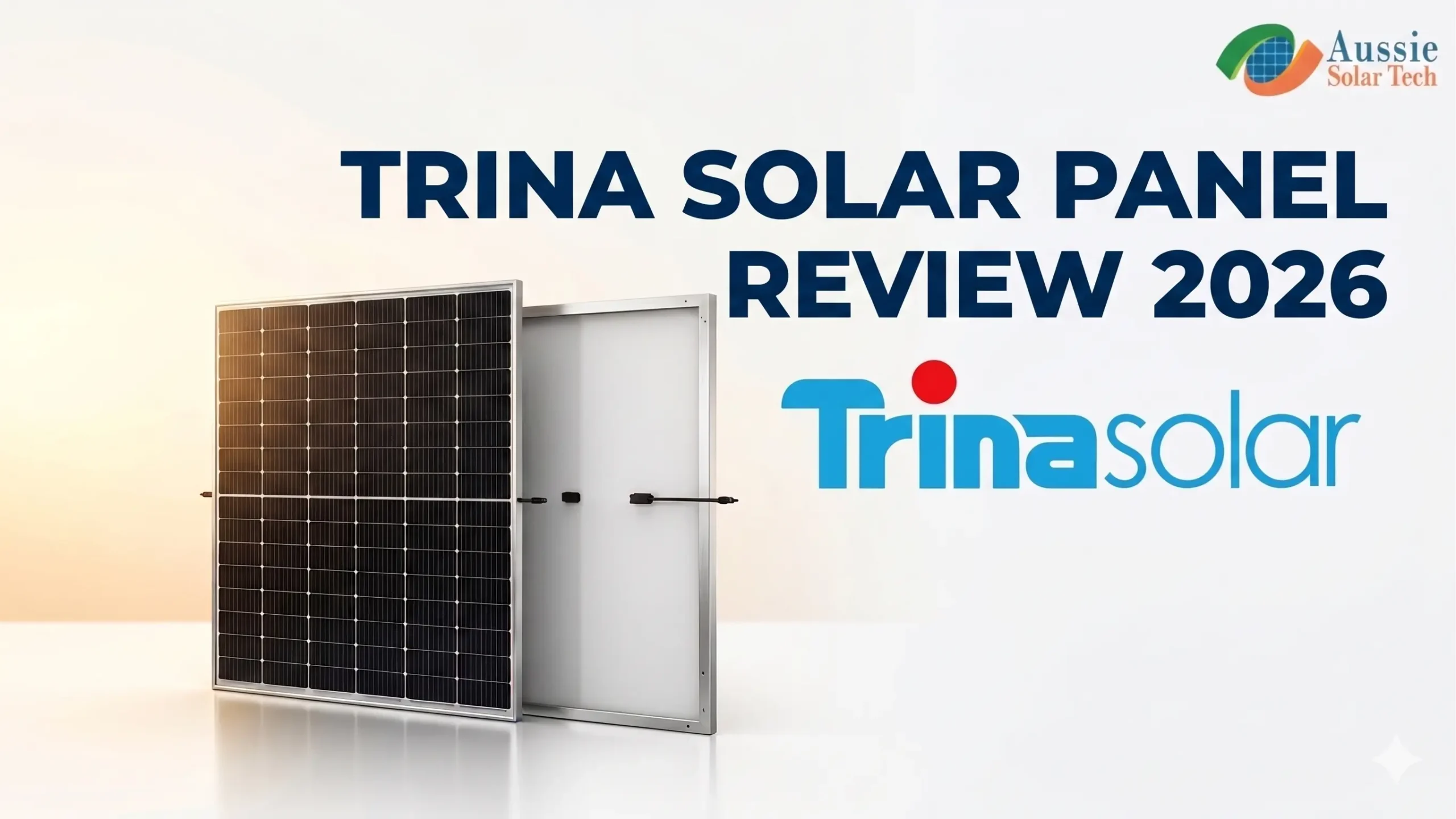
Trina Solar has established its own benchmark for quality and performance in the global solar technology industry. This Chinese company has been in the solar business for over 25 years and is a household name across Europe and Asia. In Australia, both commercial projects and residential households have been choosing Trina Solar for its high-power output and competitive prices. Trina Solar uses the latest n-type cell technology in both its S and N-series panels.
The Aussies Solar tech team often recommends the lightweight S-Series for residential use. Their lightweight design is compatible with home rooftops. Plus, it has a longer warranty. Meanwhile, the large-format N-Series works best for large commercial projects that require massive power output. This Trina Solar panels review will help you decide if it is the right fit for your home.
Trina Solar: Company Overview
Trina Solar started its journey in 1997 in Changzhou, China. Today, it’s a Bloomberg Tier 1 manufacturer. Currently, they are catering to the solar needs in 170 countries. The company has shipped a total of more than 260 GW worth of modules to the whole world. They are the proud pioneers of the 210 mm wafer and N-type TOPCon tech platforms. Trina’s Vertex series modules have set a record output of over 760W. They have also broken multiple world records in solar cell efficiency. Alongside modules, Trina offers other solar solutions like Trina Storage, Trinatracker, and digital energy services. The company has achieved a 100% Bankability rating in BloombergNEF surveys, making it the ideal choice for large-scale industrial projects.
5 Reasons To Choose Trina Solar In Australia 2026
For most people, the number one reason to choose these solar panels is the price. A mid-range Trina Solar Vertex S cost in Australia is around $240–$290 per panel. The average home usually needs about 12 to 15 panels for a standard rooftop system. That brings the total installed cost (panel and component prices plus professional installation) to roughly $4,500–$7,500 after rebates.
In contrast, premium brands like SunPower or REC Group cost around $400+ per panel for similar performance, pushing overall system prices significantly higher. This can easily increase the total installed cost to 10000$ plus, even after rebates. However, Trina Solar’s low prices don’t mean a compromise in quality. Let’s have a closer look.
World Record In Efficiency
Trina Solar uses the i-TOPCon Ultra cell tech. This is an advanced version of modern solar cell design. It improves how electricity moves inside the panel and reduces energy loss. In simple terms, more of the sunlight that hits the panel gets turned into usable electricity.
The company claims a record efficiency of 26.58%. It means it converts more sunlight into power than any previous TOPCon solar cell recorded in lab testing. Most residential panels today sit closer to 21–23%. So, this figure shows how far the technology has progressed, even if real-world rooftop performance is a bit lower.
This connects to another key idea called low-voltage design. In a solar system, panels are linked together in a chain called a string. Low-voltage design means the system is optimised so electricity flows more smoothly and with less loss between panels and the inverter. As a result, the whole string can produce more stable and efficient output.
All of this leads to what is called energy yield, which is the actual amount of electricity you get over time in real conditions. So in simple terms, these improvements do not just increase peak performance on paper. They help the system produce slightly more usable electricity day to day. For a homeowner, that means better efficiency from the same roof space, more consistent output, and a small but meaningful improvement in bill savings over the long run.
Built For the Long Haul
The Trina Solar Panel degradation rate is much lower than that of other panels. All solar panels degrade over time. The constant sun and other weather conditions weaken the panels every day. As a result, with each passing year, the panel’s ability to produce electricity decreases. For most older standard panels, this degradation rate is around 0.7-0.9 percent. The loss is usually most noticeable in the first year when the electricity production rate can fall by 2-3 percent.
In comparison, Trina Solar’s PV modules can last much longer. It loses only one percent of its efficiency in the first year. After that, the degradation rate is much lower at 0.4 percent. In other words, you would barely notice any change in Trina solar panels’ performance even after ten years from installation. This lower degradation also grants the panels a robust lifespan of 25-30 years.
Fit For Australian Weather
Trina Solar panels usually have a superior temperature coefficient of around -0.29% to -0.34% per °C. This tells you the panels are perfect to withstand the scorching Australian heat. Besides the Sun, these panels are also thoroughly tested for actual fire events. This makes it easier to adhere to building safety standards in Australia.
In addition, the Vertex S series has a load capacity of 5400 Pa/-4000 Pa. The 5400 Pa capacity means the panels can easily hold their own when weight is pushing down on them from above. For instance, during a heavy snowfall or rain. Meanwhile, a -4000 Pa suction force guarantees the panel can keep up its performance during strong windy days or in stormy weather.
For commercial and industrial use, the Vertex N shield and Vertex N antidust are your best options for low-budget but superior weather-resistant panels. The Vertex N Shield has a 3.2 mm fully tempered front glass. This provides the panel with the ability to withstand hail as big as 75 mm hitting at a 60-degree angle.
The Vertex N antidust is your best option for a dusty desert area project where the panels are installed closer to the ground. These models have a flush frame design. It solves the water-dam problem for the panels and allows the rainwater to wash away dust accumulation.
The design also follows a superior encapsulation process. As a result, there is no glue overflow at the edges where dirt and debris might stick. This, overall, prevents the formation of hot spots on the panels, which might lead to energy loss and degradation.
Best Size For Transport and Installation
Trina Solar often claims its Vertex S Plus series has the Golden Size when it comes to home installations. Well, this is not an overstatement for the 1762mm x 1134mm and 21 kg panels.
Firstly, Trina uses 210 mm rectangular wafers. As a result, the same frame that could hold only 370W can now accommodate 440W-475W. Thus, homeowners get more power from the same roof space.
Also, these panels only weigh 21 kg. According to the field experience of the Aussie Solar Tech Team, this is the ideal weight for safely carrying a panel up to the roof. This golden size also makes it widely compatible with Australian mounting systems. So, no need to spend extra on custom software.
The sleek, lightweight design also makes the best use of container space. That means reduced freight costs and lower delivery charges for the homeowner.
Aesthetic Panels
One of the major complaints regarding solar panels is that they look “ugly”. The modules look like some odd entity sticking out from the roof of your beautiful home. This happens because most solar panels don’t blend with your property’s architecture. Trina Solar has solved this aesthetic issue with its Vertex S Plus panel’s sophisticated all-black design.
Unlike most solar panels, Vertex S plus panels don’t have silver frames and white backsheets. Instead, the frames and backsheets are all black while the busbars are ultra-thin. This creates the uniform look of a single black glass slab rather than the typical honeycomb or grid-like appearance. This aesthetic appeal matters a lot when you are considering selling or renting out your property.
Trina Solar Vs. Premium Brands in Australia: Who Wins?
Trina Solar offers superior design and technology at an astonishingly low price. Combine this with the low freight costs, safer installation, and slower degradation, and you have a clear winner over most other premium brands. Here’s a comparison table to help you make a decision.
2026 Premium Solar Panel Brands vs. Trina Solar
|
Feature |
Trina Solar (Vertex S+) |
SunPower (Maxeon) |
REC Group |
Winaico |
AIKO Solar |
Comment |
|
Construction |
Dual-Glass (Standard) |
Single Glass / Backsheet |
Single Glass / Backsheet |
Dual-Glass (Select models) |
Single Glass / Backsheet |
Trina’s dual-glass is standard, giving stronger durability than brands relying on plastic backsheets. |
|
Cell-Tech |
N-type i-TOPCon |
N-type IBC |
N-type HJT |
N-type HJT |
N-type ABC |
Trina provides stable, high-efficiency N-type tech at a much more accessible price than HJT or IBC alternatives. |
|
Salt/Ammonia |
Superior Resistance |
High Resistance |
High Resistance |
High Resistance |
High Resistance |
Glass-on-glass construction is naturally impermeable to salt and ammonia, making Trina ideal for coastal Australia. |
|
Fire Rating |
Class A (Highest) |
Class C |
Class C |
Class A / C |
Class C |
Trina consistently achieves Class A, ensuring maximum fire safety. |
|
Product Warranty |
25–30 Years (S+ Series) 12-15 years for large-format industrial panels. |
40 Years |
25 Years |
30 Years |
15–25 Years |
Maxeon leads in warranty length, but Trina balances strong coverage with affordability. |
|
Performance Guar. |
30 Years (87.4%) |
40 Years (88.3%) |
25 Years (92%) |
30 Years (~85–87%) |
30 Years (88.8%) |
Trina’s 30-year guarantee is competitive, though REC offers higher efficiency retention at 25 years. |
|
Price Point |
$200 – $240 |
$450 – $750 |
$250 – $400 |
$340 – $385 |
$228 – $240 |
Trina delivers premium durability and efficiency at mid-range pricing, making it the best value option. |
Final Verdict
|
Pros |
Cons |
|
· Highest efficiency (26% in lab conditions) at low price · Superior longevity and weather resistance · Easier to carry and safe installation · Sophisticated all black design for aesthetics |
· Shorter warranty for industrial modules · Regarded as a ‘budget-brand” rather than a premium one. |
Trina solar panels offer a combination of features that other premium brands rarely do. Panels that are aesthetically pleasing are rarely this cheap. And if they are cheap, then they are usually not built for weather resistance and durability. Meanwhile, if they are durable, then they might be too bulky for safe handling. Trina Solar Vertex S series and N series solve all of these issues.
Still wondering whether Trina Solar panels are the right choice for your home or factory? Contact the Aussie Solar Tech team for a consultation and help you reach a decision.
FAQs
What is Trina Solar’s warranty policy?
There are two types of warranty for your Trina solar panels: product and performance warranty. Almost all the Trina panels come with a performance warranty of 25-30 years. The product warranty is around 15-25 years for Vertex N and standard Vertex S panels. Meanwhile, dual glass Vertex S plus models have a 25-year product warranty.
How long does it take to pay off the upfront cost on Trina Solar panels?
Depending on the model, unit size, and installer, the Trina Solar installation upfront cost is within five to seven thousand dollars. Now, a typical 6.6 KW system saves you around 1,100$-2000$ per year on electricity bills. By that number, you can pay off the upfront cost in as little as 3-5 years.
Will choosing Trina Solar panels reduce mounting costs?
Yes. Trina’s modules have an ultra-high output. Combine that with its low-voltage design, and you need roughly 25% less modules to build a unit of the same size. That means 25% less spending on BOS material and labor. Plus, you can use the company’s specially designed Trinamount (rail-less mounting system) to avoid buying expensive rails.
Is Trina Solar better than Jinko panels?
While both offer high-performance at low-budget, Trina has a heat advantage. Its glass-on-glass or dual-glass design makes it more resilient to a scorching climate compared to Jinko’s plastic backsheet structure. So, Trina is your best option if you are living in a really hot region.

Shah Tarek is a Solar Energy Consultant with 10 years experience in solar system design and solar consultancy field at Australia. He is now a Director, Operation & Consultancy Division at Aussie Solar Tech, a leading Australian solar retailer and installer. Here he is writing informative and engaging solar content that educates the community on the benefits of solar power. His work supports Aussie Solar Tech’s mission to promote sustainable energy solutions and foster a greener future for Australia.






Seraphim Solar Panels Review: Efficiency, Reliability, and Value Unveiled

Talesun Solar Panels: Honest Review Before You Buy

Sungrow Battery VS Tesla Powerwall : Which is Best in Australia?

Leapton Solar Panels Review: Affordable Energy Solution

REC Solar Panels Review: Outstanding Efficiency & Durability

Best Hybrid Inverters for Home Solar Systems in 2025
Best Solar Battery In Australia 2026 — Complete Guide

Sigenergy VS Fox ESS Battery: Which is The Best Choice for 2026

How Much Do Solar Panel Costs in Australia? (2026 Price Guide)

