
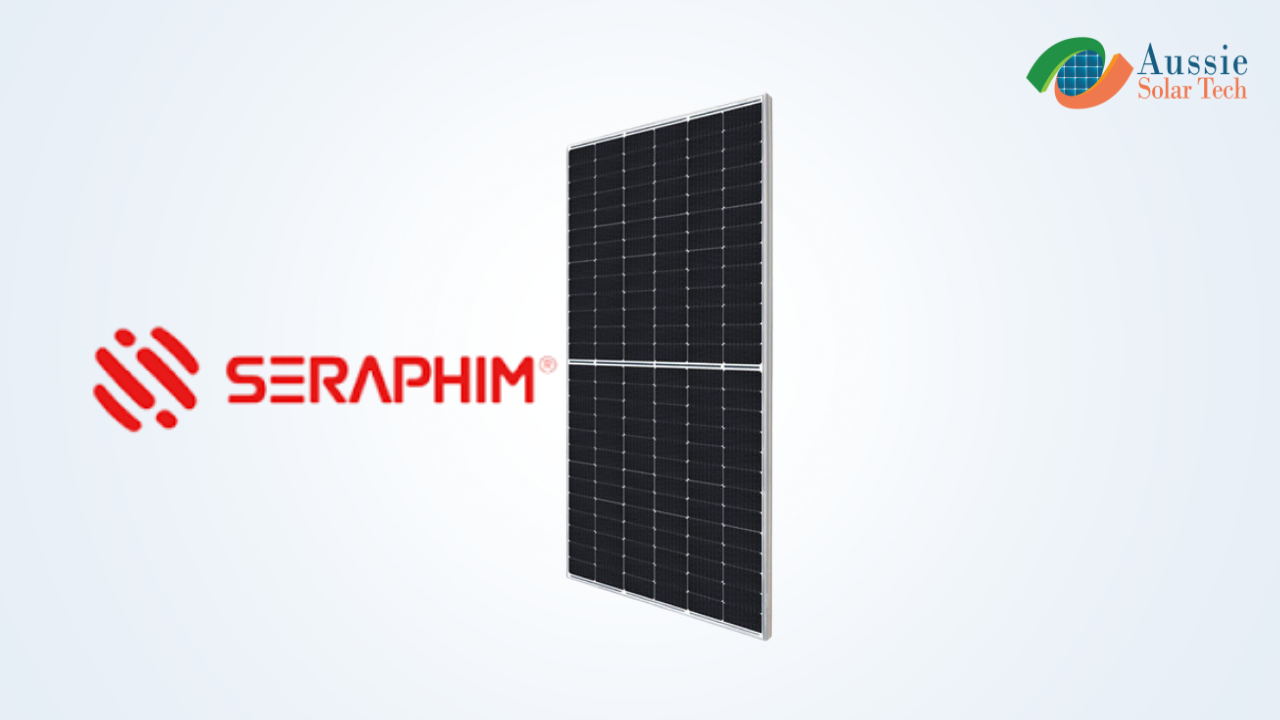
Many cheap solar brands in Australia sacrifice quality control. They cut corners to make their products appear adequate at first, masking hidden defects. Within a year of installation, these panels often fail due to Australia’s harsh climate. This is where Seraphim solar panels outperform competitors.
Seraphim Solar, a Chinese brand, keeps panel prices affordable at $150-200 AUD (premium Hydra HJT panels may cost up to $250-$350/panel). While many budget brands in Australia fluctuate in reputation, Seraphim has sustained its BNEF Tier 1 status for over a decade—even as standards rise. It is one of the few budget brands to pass the TUV SUD “Thresher test,” verifying longevity against Australia’s climate for 25+ years.
You need to be more picky when choosing a budget panel compared to a premium one, since their qualities vary widely. Amidst that confusion, our installers at Aussie Solar Tech often confidently recommend Seraphim due to its well-proven integrity. Go deeper into this Seraphim solar panels review to see why.
Company Overview: Jiangsu Seraphim Solar System Co., Ltd
The company was founded in China in 2011 with a focus exclusively on solar panels. Within three years, they opened an Australian branch. Seraphim established itself as a standard global solar solution within the first two years by securing major international certifications like ISO and CEC. In 2013, they became the first solar manufacturer to pass the TÜV SÜD thresher test. This is a test for the resilience and durability of solar panels with passing criteria three times stricter than the IEC. It’s one of the most important certifications Seraphim holds that makes it a valid brand for the Australian climate. From 2017-2022, Seraphim’s research and lab facilities were recognized both in its country and by the TÜV SÜD.
This shows the company’s extreme dedication to developing newer and better solar module tech and design, which they consistently incorporate into their latest models. Kiwa PVEL, an independent solar PV evaluation company that focuses solely on testing panels under extreme conditions (mimicking 25-30 years of weather), recognized Seraphim as the top performer in the world in 2025. Seraphim also currently holds a triple B bankability rating, which would give confidence to any major lender to invest in them on a large-scale commercial project.
Why Buy Seraphim Solar Panels For Australian Homes In 2026?
Most Australian homeowners choose Seraphim solar panels for their reputed resilience on a low budget. Installers often present them as premium-like panels that cost less than half the price.
At such a low cost, you get panels that offer up to 23% efficiency, 540-720W, depending on the model. These panels have a temp co-eff ranging from -0.26% to -0.30%/celcius and an annual degradation rate of less than 0.3%-0.4%. Seraphim offers a product warranty of 15 years and a performance warranty of 30 years, which shows the company’s confidence in its panels.
Wide Variety to Choose From
Most standard and budget panels don’t offer a wide variety to choose from. They usually have one series with a specific, often proprietary cell tech and fixed weight and dimensions. Brands focus either on commercial or on residential models. Seraphim is different. They have introduced four different series, which cater to four kinds of user needs. Here’s a quick overview
Hydra: The Premium Tier Series
This is the most powerful and efficient panel among all Seraphim modules. It has a max power output of 730 W and an efficiency of 23.5% on a good day. Of course, a panel with such massive output has to be large and heavy. This is why the Hydra series is mostly suitable for commercial and industrial projects.
The reason behind Hydra’s powerful performance is the Heterojunction cells. This is the latest solar tech, which combines crystalline silicone cells with a thin amorphous silicon layer. It’s almost like stacking two cells into a single one. The result is a cell that can absorb more sunlight than ever and mitigate power losses.
Due to the HJT cells’ super absorbent nature, Hydra panels have a bifaciality of 90%+/-5%. Such bifaciality can significantly reduce the number of panels you need in large commercial projects. Thus, saving space and money. (datasheet)
Sable: The Standard Residential Panel
The Sable series is Seraphim’s standard for residential use. They use TOPCon cell tech, which, despite not being super-tier like HJT, still does a great job at making electricity. These cell designs include a very thin layer of oxide and a special contact structure. As a result, there is a significant reduction in energy loss and an increase in performance and longevity.
TOPCon (Tunnel Oxide Passivated Contact) solar cell technology improves how electricity flows inside a solar panel. In simple terms, it adds a very thin oxide layer and a special contact structure to reduce energy loss. Compared to older PERC cells, TOPCon cells capture more sunlight, waste less energy as heat, and keep performing well even after years of use. For everyday users, this means panels that are more efficient and last longer.
Seraphim’s Sable Series offers efficiency up to 22.54%, 570-600W power output, higher bifaciality (80% ±5%), and a temperature coefficient of — 0.29%/°C. (Datasheet)
Nebula: The Lightweight Champion
If your roof is too fragile to handle the load of the Sable panels, the Nebula series is your next best option. They also use TOPCon cell tech but offer a lesser power output of 400-460W since the panels are smaller. However, efficiency is still good at 22.5-23% with a 80% ±5% bifaciality and similar temp co-eff like the Sable series.
The Nebula series uses a thinner 1.6mm + 1.6mm dual‑glass design and a 28mm ultra‑thin frame. They weigh around 21 kg compared to the 30 kg Sable panels. These lightweight features reduce the stress on your roof and are also an ideal choice for many small DIY projects where you are not looking to set up a full system.
These panels also reduce upfront costs since they are easier to handle and therefore cut down installation labor costs. The manufacturer claims that you can also cut down transportation costs by fitting 25% more panels per 40‑foot container and about 5% more per flatbed truck when you transport these panels. We find this claim to be largely true from our experience with these panels. (datasheet)
Seco: The Most Affordable
Seraphim offers a PERC cell module for homeowners who can’t yet afford the more expensive TOPCon modules. PERC cells are less advanced compared to HJT or TOPCon. However, it’s still a significant improvement over the normal solar cell.
Normal solar cells do not absorb all incoming sunlight efficiently, so some light passes through or is not converted into electricity. PERC cells have a rear passivation and reflective layer that reflects unabsorbed photons back into the silicon layer of the cell. This increases the chances of light being absorbed and converted into electricity. As a result, PERC cells produce more electricity from the same amount of sunlight compared to standard solar cells.
Seraphim’s Seco Series 182mm PERC bifacial modules are better than most typical PERC panels. For instance, they reach 21.46% efficiency (normal perc panels barely reach 19%) and offer a strong bifaciality of 70% ±10%. The panels also show strong resilience against heat with a temp co-eff of –0.34%/°C (most perc panels have -0.40%/°C or more). All these features, while the price per panel is less than $150. (datasheet)
MBB Technology
Multi‑Busbar (MBB) technology is a design improvement in solar panels. Instead of just a few thick busbars, many thin round wires collect electricity from the solar cells in this design. Busbars are like “roads” that carry electricity out of the cell — with more, thinner roads, electrons travel shorter distances. It means resistance is reduced, and minimal shading on the cell surface. This makes the panel more efficient and durable, while still looking almost the same from the outside.
Older designs had 3‑busbar or 5‑busbar for each panel. Therefore, these panels deal with higher resistance and more shading losses. They can’t match Seraphim’s MBB panel’s efficiency gains or the resilience against microcracks.
Superior Mechanical Load Capacity
Seraphim panels possess a mechanical load capacity of 5400 Pa on the front side and 2400 Pa on the back side. In simple terms, this is the strength rating of the glass and frame against heavy forces like wind, hailstorms, heavy rainfall, or even accidental impacts. For a buyer, it’s reassurance that the panel is built tough enough to survive harsh conditions.
Compared to panels with lower ratings, a 5400 Pa front load means the module can handle very strong downward pressure — equivalent to heavy rain or hails or strong wind gusts pressing against the panel. The 2400 Pa back load ensures the panel won’t flex or crack when wind tries to lift it from underneath. Many cheaper or older panels have lower ratings, which makes them more vulnerable to damage over time.
In Australia, this specification is especially significant where cyclonic winds, dust storms, and rooftop stresses are real challenges. A panel with 5400/2400 Pa mechanical load capacity is more durable during extreme weather, safer for rooftop installations, and less likely to need costly replacements.
Low BOS and LCOE
Seraphim solar panels are designed to reduce both BOS (Balance of System) costs and LCOE (Levelized Cost of Energy). BOS refers to all the extra equipment and installation costs needed besides the panels themselves. Meanwhile, LCOE measures how much the electricity from the solar system will cost over its full lifetime. These are two major factors that determine the long-term value of a solar system.
Seraphim’s models use advanced technologies such as half-cut cells, multi-busbar (MBB) design, bifacial generation, and high-efficiency monocrystalline wafers. As a result, the panels produce more power while using fewer modules. Because of this higher efficiency, installers can build the same system size with fewer panels. Consequently, less racking, shorter cable runs, and lower labor costs are required. This reduces BOS and EPC costs, especially in residential, commercial, and utility-scale projects.
Seraphim’s low LCOE advantage comes from strong long-term energy production and lower degradation rates. Moreover, the company’s bifacial and TOPCon modules perform better in low-light conditions and reduce shading losses. In suitable reflective environments, they can also increase energy generation by 10–30%. Altogether, these features help produce cheaper electricity over the system’s lifespan and improve long-term return on investment.
Reduced Hot Spot Effect
A hot spot happens when a small section of a solar panel overheats because one or more cells become shaded, dirty, damaged, or electrically weak. Instead of producing power normally, the affected cell starts resisting the electrical flow and converts energy into heat. This can create extremely high temperatures that damage the panel over time.
In severe cases, hot spots may crack cells, melt backing materials, reduce energy production, and even increase fire risk. For homeowners, hot spots mean lower efficiency, faster degradation, and shorter panel lifespan.
Many low-cost budget solar panels are more vulnerable to hot spots because manufacturers often reduce costs through cheaper components and weaker quality control.
Some use fewer or lower-grade bypass diodes, which are responsible for redirecting electricity around shaded sections. Others rely on older full-cell designs that carry higher internal current and generate more heat under stress. In addition, poorly matched cells and microscopic cracks from lower manufacturing standards can create electrical bottlenecks. As a result, heat builds up more easily inside the panel.
Seraphim panels avoid many of these problems despite remaining competitively priced. The company uses modern half-cut cell architecture, multi-busbar (MBB) technology, and stricter manufacturing standards.
Half-cut cells reduce internal current and heat generation, while improved bypass protection helps electricity safely flow around shaded areas. Seraphim also performs advanced reliability and electroluminescence testing to detect microcracks and weak cells before panels leave the factory. Consequently, Seraphim panels offer better resistance to hot spots, improved safety, lower degradation, and more stable long-term performance compared to many typical budget panels.
Seraphim VS. Other Budget Panel in Australia 2026
Seraphim panels are often in the same tier as premium panels if you only consider performance. However, they are still cheaper and therefore might not be the same as a premium panel, which costs double. The difference lies in materials, design quirks, and longevity. A more effective way to evaluate this panel is to compare it against budget panels of the same price range (AUD$150-$200). Let’s see how Seraphim measures up against its true competitors-
| Feature | Seraphim Sable (the standard residential model) | Jinko Tiger Neo | Trina Vertex S+ | LONGi Hi-MO 7 | JA Solar DeepBlue 4.0 Pro |
| Power Range (W) | 575–600 | 580–670 | 425–510 | 595–625 | 625–650 |
| Efficiency (%) | 22.3–23.2 | 24.8–27 | 22.0–23.0 | 22.0–23.1 | 22.4–23.3 |
| Bifaciality | 80% ±5% | 85% ±5% | ~80% | 80% ±5% | ~80–85% |
| Temperature Coefficient (Pmax) | –0.29 %/°C | –0.26 %/°C | –0.30 %/°C | –0.28 %/°C | –0.29 %/°C |
| Warranty | 15 yrs product / 30 yrs power | 12 yrs product / 30 yrs power | 25 yrs product / 30 yrs power | 12 yrs product / 30 yrs power | 12 yrs product / 30 yrs power |
| Degradation | 1% first year, ~0.4% annually | 1% first year, 0.4% annually | 1% first year, 0.4% annually | 1% first year, 0.4% annually | 1% first year, 0.4% annually |
| Mechanical Load | 5400 Pa front / 2400 Pa back | 5400 / 2400 | 4000 / 5400 | 5400 / 2400 | 5400 / 2400 |
| Durability & Build | Dual‑glass, 2.0 mm AR‑coated semi‑tempered | Dual‑glass (select models), thinner glass | Dual‑glass standard, lighter build | Dual‑glass, heavier | Dual‑glass, heavier |
| Weight & Size | 32 kg, 2278×1134×30 mm | ~27–32 kg, 2278×1134×30 mm | 21–23.5 kg, 1762–1961×1134×30 mm | 33.5 kg, 2382×1134×30 mm | 34.6 kg, 2465×1134×30 mm |
| International Certifications | ISO9001, ISO14001, ISO45001, TÜV‑SÜD, CE, ETL, Intertek, PV Cycle, Clean Energy Council | IEC 61215/61730, TÜV‑SÜD, UL/IEC, CE, Clean Energy Council (approved models) | IEC 61215/61730, TÜV‑SÜD, UL, CE, Clean Energy Council (approved models) | IEC 61215/61730, TÜV‑SÜD, UL, CE, Clean Energy Council (approved models) | IEC 61215/61730, TÜV‑SÜD, UL, CE, Clean Energy Council (approved models) |
Where Does Seraphim Win?
- Broader certification coverage: adds ETL, Intertek, PV Cycle, and Clean Energy Council membership beyond the standard IEC/TÜV. This makes Seraphim particularly appealing for multi‑region projects where compliance with EU recycling (PV Cycle), Australian grid standards (CEC), and North American ETL/Intertek validation is critical.
- Stronger mechanical load rating than Trina (better for harsh weather).
- Dual‑glass durability with thicker 2.0 mm AR‑coated glass, reducing microcracks.
- Longer product warranty than Jinko, LONGi, and JA (15 yrs vs 12 yrs).
- Matches industry‑leading 30‑year power warranty.
The Verdict
| Pros | Cons |
| · Panels available for all kinds of consumer needs
· High efficiency and power output for budget panels · Resistant to heat, weather factors, and shading · Longer product warranty · Broad international certification coverage |
· Online complaints regarding broken or damaged panels upon arrival. Although this is more of a delivery problem.
· Some retailers mislead customers by labelling Seraphim’s budget panels as premium. |
Seraphim’s Sable series is the perfect fit for Australian homes due to its superior cell technology and resilience. Meanwhile, the HJT Hydra panels can be a smart investment in commercial projects. Unlike other budget panels, Seraphim’s module cuts down BOS and LCOE too, which further reduces the installation cost. Still having problems making a decision? Contact us for a professional opinion.
FAQs
Which Seraphim solar panel should I buy?
The choice of the Seraphim panel depends on your needs and budget. The most expensive is the Hydra panel, which is usually meant for commercial projects. The ideal residential choice is the Sable series. For smaller roofs and DIY projects, you can use the lightweight Nebula panels. Those with a really small budget can look into the Seco series.
Do Seraphim sell defective products?
There are some social media posts where users complain about receiving defective or broken Seraphim modules. The fault here is most likely within the third party who delivered your product. Seraphim panels go through the 3 EL testing- before and after the lamination, and also before packaging. So, the chances of them packing a faulty panel are almost zero.
What kind of inverter to use with solar panels?
Seraphim Sable panels use standard high-efficiency TOPCon technology. So, they have broad inverter compatibility. For standard setups, use string inverters like Fronius or Sungrow. If your roof gets shade, pair them with microinverters like Enphase or SolarEdge power optimizers. Always match your inverter’s maximum input voltage to the total voltage of the panel string.
Why do price ranges vary so much?
The price range varies since the cell tech used in the various series is different. The Hydra panels using HJT are Seraphim panels that will cost $200-250 Australian dollars. Some stores even sell them for $300. Meanwhile, the PERC cell Seco panels cost less than $150/panels. This can make it seem like the Seraphim panels have a very wide price range.

Shah Tarek is a Solar Energy Consultant with 10 years experience in solar system design and solar consultancy field at Australia. He is now a Director, Operation & Consultancy Division at Aussie Solar Tech, a leading Australian solar retailer and installer. Here he is writing informative and engaging solar content that educates the community on the benefits of solar power. His work supports Aussie Solar Tech’s mission to promote sustainable energy solutions and foster a greener future for Australia.



Seraphim Solar Panels Review: Efficiency, Reliability, and Value Unveiled

Talesun Solar Panels: Honest Review Before You Buy

Sungrow Battery VS Tesla Powerwall : Which is Best in Australia?

Leapton Solar Panels Review: Affordable Energy Solution

REC Solar Panels Review: Outstanding Efficiency & Durability

Best Hybrid Inverters for Home Solar Systems in 2025
Best Solar Battery In Australia 2026 — Complete Guide

Sigenergy VS Fox ESS Battery: Which is The Best Choice for 2026

How Much Do Solar Panel Costs in Australia? (2026 Price Guide)

