
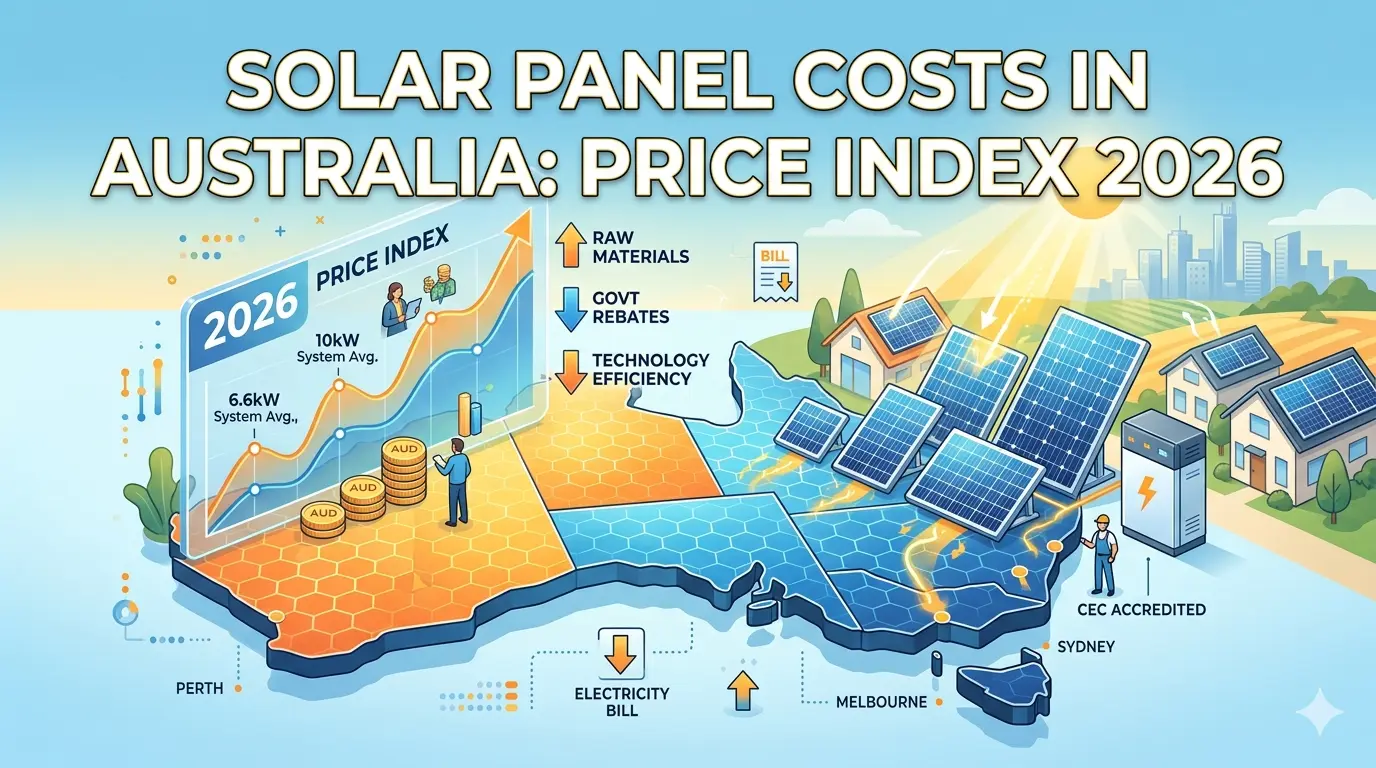
Australia is one of the best places in the world for harnessing solar energy. As a sun-drenched continent, it continues to lead the world in per-capita solar adoption. The solar energy market in Australia has been booming, with more homeowners and businesses turning to solar power as a long-term solution to cut electricity bills and reduce carbon footprints. So, what is the solar panel cost in Australia today?
The price of solar panel systems varies based on many factors such as location, system size, panel quality, and installation fees. In this detailed guide, we’ll break down solar panel costs across different states, installation expenses, government rebates, and the long-term financial benefits of going solar. By the end, you’ll have a clear understanding of the solar market, which will help you make a well-informed investment that maximises your savings and improves your home’s energy efficiency.
How Much Do Solar Panels Cost in Australia in 2026?
The simple rule of thumb for solar panel costs in Australia in 2026: budget around $1,000 per kilowatt (kW) installed for a good-quality, fully installed solar system. For the most popular system size — a 6.6 kW system — that means a ballpark cost of $6,600 before rebates, or $3,999–$5,500 after the federal STC rebate is applied.
But that is the starting point, not the final answer. Your actual cost depends on your state, roof complexity, panel quality, inverter brand, and the type of installer you choose. This guide breaks all of those factors down clearly, with real 2026 pricing data across all Australian states.
Average Solar Panel Costs in Australia (2026)
Solar panel prices have decreased a lot over the past 10 years, making them more affordable. In Australia, solar panel costs can vary depending on where you live, but most households can expect to pay between $3,000 and $10,000 after government rebates. The final price depends on things like how big your system is, the quality of the panels and parts, and how much the installation costs.
Here’s a breakdown of the average solar panel costs in Australia for 2026:
Residential Solar Panel Costs (2026)
| System Size | Price (After Rebates) | Cost per kWh |
|---|---|---|
| 6.6kW | $3,999 | $605/kW |
| 8kW | $4,599 | $574/kW |
| 9kW | $5,390 | $599/kW |
| 10kW | $5,599 | $543/kW |
| 13kW | $6,999 | $575/kW |
| 15kW | $8,790 | $575/kW |
| 20kW | $10,299 | $514/kW |
Commercial Solar Panel Costs (2026)
| System Size | Average Cost (After Rebates) | Power Output (kWh/day) |
| 30kW | $12,599 | 120 kWh/day |
| 40kw | $16,599 | 180 kWh/day |
| 50kW | $19,599 | 200 kWh/day |
| 100kW | $39,999 | 400 kWh/day |
These include the panels, inverter, and installation. The exact price can vary based on the quality of components, the size of the system, and the complexity of the installation.
Note: All prices listed are approximate and subject to change. Please request a quote for the most accurate and up-to-date pricing.
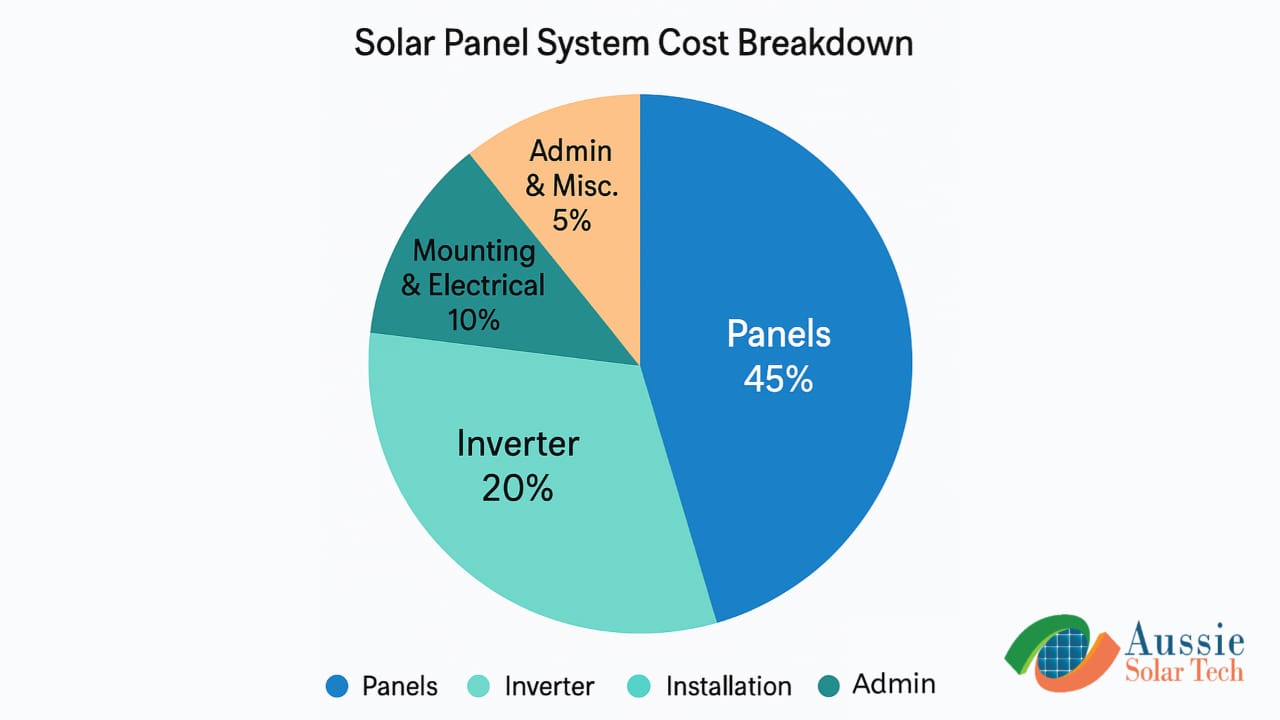
Cost Breakdown: Equipment, Installation, and Extras
For a better understanding of solar panel costs, let’s see where your money goes:
a. Equipment
- Solar Panels: 40–50% of total cost
- Inverter: 15–25% (string or hybrid)
- Mounting System: 5–10%
b. Installation
- Labour: 10–20%
- Safety & Compliance: 5–10%
c. Optional Extras
- Battery Storage (e.g., 10 kWh): $8,000 – $12,000
- Monitoring Systems: $200 – $800
- Smart Meters: $400 – $600
Key Factors Affecting Solar Panel Costs
Several factors influence the overall cost of installing solar panels in Australia. Understanding these can help homeowners make better decisions:
- System Size: Larger solar systems generally offer a lower cost per watt, making them more cost-effective in the long run. However, they require a higher upfront investment.
- Panel Brand and Efficiency: Premium brands like Jinko, SunPower, REC, and Aiko tend to cost more but deliver better efficiency, durability, and long-term performance.
- Installer Reputation: Choosing an experienced and accredited installer—such as those certified by Solar Accreditation Australia—ensures quality installation, safety compliance, and reliable after-sales support.
- Installation Complexity: Costs may increase if your property has a complex roof design, steep pitch, multi-storey structure, or requires electrical upgrades like switchboard replacement.
- Location: Installation costs can be higher for remote areas due to travel fees and additional logistics.
- Solar Rebates and Incentives: Government programs like the Small-scale Renewable Energy Scheme help reduce upfront costs through STC discounts. Additional federal and state incentives may further lower the total investment.
👉 Learn more about the rebate here.
Solar Panel Costs by State (2026) — After STC Rebate
Solar Panel Costs in New South Wales (NSW) 2026
| System Size | After STC Rebate | Typical Range | Annual Savings Est. |
| 6.6 kW | $3,999-4,200 | Good: $5,000–$6,000 | $1,400 – $1,800/yr |
| 8 kW | $4,599 – $6,000 | Good: $6,000–$7,200 | $1,700 – $2,100/yr |
| 10 kW | $5,599-$7,999 | Good: $7,500–$8,800 | $2,100 – $2,600/yr |
| 13 kW | $6,999 – $9,900 | Good: $9,500–$11,000 | $2,700 – $3,200/yr |
NSW is in Solar Zone 3 (Sydney, most of NSW). STC value: approx. $2,800–$3,200 for a 6.6 kW system. No additional state government solar rebate in NSW as of 2026 — only the federal STC applies.
Solar Panel Costs in Victoria (VIC) 2026
| System Size | After STC Rebate | Typical Range | VIC Solar Homes Rebate* |
| 6.6 kW | $3,999-4,200 | Good: $5,200–$6,300 | Up to $1,400 additional |
| 8 kW | $4,599-$5,300 | Good: $6,200–$7,500 | Up to $1,400 additional |
| 10 kW | $5,599-$7,999 | Good: $7,800–$9,200 | N/A (10kW+ not eligible) |
| 13 kW | $6,999 – $8,500 | Good: $9,800–$11,500 | N/A |
*Victoria’s Solar Homes Program provides up to $1,400 additional rebate for eligible households installing up to 6.6 kW systems. Income and eligibility criteria apply. Installations in Melbourne are generally $100–$300 more than regional VIC due to higher labour costs.
Solar Panel Costs in Queensland (QLD) 2026
| System Size | After STC Rebate | Typical Range | Notes |
| 6.6 kW | $3,999 – $4,500 | Good: $4,800–$5,800 | Zone 3 (Brisbane); Zone 2 (North QLD) |
| 8 kW | $4,599-$5,500 | Good: $5,800–$7,000 | Dynamic export limits in many areas |
| 10 kW | $5,599-$6,999 | Good: $7,200–$8,600 | Battery incentives available |
| 13 kW | $6,999 – $8,500 | Good: $9,200–$10,800 | Check DNSP export limit first |
QLD is one of Australia’s most competitive solar markets. Brisbane is Zone 3; north of Rockhampton is Zone 2 (higher STC value, lower system costs). Buyers in SE QLD should be aware of Energex dynamic export limits before sizing a system.
Solar Panel Costs in South Australia (SA) 2026
| System Size | After STC Rebate | Typical Range | SA-Specific Notes |
| 6.6 kW | $3,999 – $4,200 | Good: $4,700–$5,700 | Zero export limit in many areas |
| 8 kW | $4,599-$5,300 | Good: $5,700–$6,800 | Battery pairing essential in SA |
| 10 kW | $5,600 – $6,800 | Good: $7,000–$8,200 | SA Home Battery Scheme active |
| 13 kW | $6,999 – $8,500 | Good: $8,900–$10,400 | SA grid has highest solar penetration in AU |
South Australia warning: SA has the strictest export limits in Australia. Many SA networks impose zero export or very low export limits (1.5 kW) during peak solar hours. This makes battery storage more economically important in SA than any other state. Factor battery costs into your SA solar investment.
Solar Panel Costs in Western Australia (WA) 2026
| System Size | After STC Rebate | Typical Range | WA-Specific Notes |
| 6.6 kW | $4,000 – $4,500 | Good: $4,900–$5,900 | Perth Zone 3; very strong sun |
| 8 kW | $4,60-$5,500 | Good: $5,900–$7,100 | Synergy export limit: 5–10kW |
| 10 kW | $5,599-$6,900 | Good: $7,200–$8,600 | WA Battery Rebate Scheme available |
| 13 kW | $6,999 – $8,500 | Good: $9,400–$11,000 | Fewer installers = less price competition |
Perth receives the most solar radiation of any Australian capital. A 6.6 kW system in Perth generates approximately 11,200 kWh per year — about 20% more than the same system in Melbourne. This means faster payback despite similar upfront costs.
Solar Panel Costs in ACT (Canberra) 2026
| System Size | After STC Rebate | Typical Range | ACT Notes |
| 6.6 kW | $3,999 – $4,400 | Good: $4,800–$5,800 | Aussie Solar Tech’s home market |
| 8 kW | $4,600-$5,500 | Good: $5,800–$6,900 | NextGen Energy Storage rebates available |
| 10 kW | $5,599-$6,999 | Good: $7,100–$8,400 | ACT has 100% renewable electricity target |
| 13 kW | $6,999 – $8,500 | Good: $9,200–$10,800 | Strong installer competition in Canberra |
The prices above reflect average solar system costs in Australia. At our company, we offer more affordable, high-quality solar solutions. Visit solar system prices or request a quote to discover your personalised price.
Average Commercial Solar Panel Costs by City & Size (Updated 2026)
| City | 30kW | 50kW | 70kW | 100kW |
|---|---|---|---|---|
| Adelaide, SA | $14,990 | $23,990 | $32,990 | $45,990 |
| Brisbane, QLD | $13,990 | $22,990 | $31,990 | $44,990 |
| Canberra, ACT | $15,990 | $24,990 | $34,990 | $47,990 |
| Hobart, TAS | $15,490 | $24,490 | $33,490 | $46,490 |
| Melbourne, VIC | $14,490 | $23,490 | $32,490 | $45,490 |
| Sydney, NSW | $13,990 | $22,490 | $31,490 | $43,990 |
| Perth, WA | $15,990 | $25,990 | $35,990 | $48,990 |
The prices above reflect average solar system costs in Australia. At our company, we offer more affordable, high-quality solar solutions. Visit solar system prices or request a quote to discover your personalised price.
How Much Is the 2026 Solar Rebate in Each Australian State?
The federal STC (Small-scale Technology Certificate) rebate is the main government incentive reducing your upfront solar cost. The rebate value depends on your solar zone (which varies by location) and your system size. The scheme runs until 31 December 2030 and reduces by approximately 1/15th each year.
| State/City | Solar Zone | STC Multiplier | 6.6kW Rebate (est.) | 10kW Rebate (est.) | Rebate Trend |
| Darwin, NT | Zone 1 | 1.622 (highest) | ~$4,200 – $4,600 | ~$6,300 – $6,900 | Decreasing Jan 2027 |
| N. QLD (Townsville+) | Zone 2 | 1.536 | ~$3,800 – $4,200 | ~$5,800 – $6,300 | Decreasing Jan 2027 |
| Brisbane, Sydney, Perth, Canberra, Adelaide | Zone 3 | 1.382 (most common) | ~$2,900 – $3,400 | ~$4,400 – $5,100 | Decreasing Jan 2027 |
| Melbourne, Hobart | Zone 3–4 | 1.185 – 1.382 | ~$2,600 – $3,200 | ~$3,900 – $4,800 | Decreasing Jan 2027 |
| Tasmania (Hobart) | Zone 4 | 1.185 (lowest) | ~$2,400 – $2,800 | ~$3,600 – $4,200 | Decreasing Jan 2027 |
Important — how the rebate works: Your installer applies for STCs on your behalf and gives you the value as an upfront point-of-sale discount. You do not need to apply yourself or wait for a government payment. The prices listed on your solar quote should already reflect the STC rebate deducted from the gross cost.
The STC rebate value decreases each January 1 until the scheme ends in 2030. Installing in 2026 vs 2027 can mean $200–$400 less in rebate value. There is no benefit to waiting.
Tips to Reduce Solar Panel Costs Without Compromising Quality
- Avoid Cheap Panels: Cheap systems may seem appealing, but often come with unreliable components, limited warranties, and unresponsive installers. Quality matters more than cost savings. So, you should go for premium solar panels.
- Time Your Install: Prices may drop during off-peak seasons, such as winter. Installers often offer discounts during slow periods or end-of-financial-year sales. Take advantage of rebate windows and installer promotions.
- Group Buys: Some councils and community organizations run group-buying programs, which secure discounted rates from vetted installers by pooling local interest. These initiatives often include consumer education and free technical assessments.
- Bundle with Battery: In states like South Australia, Victoria, and the ACT, bundling a solar system with a battery can unlock additional rebates or interest-free loans. While batteries have a higher upfront cost, available incentives can significantly reduce your expenses. Some rebates only apply to bundled systems.
- Install a System Sized for Your Needs: To get the best cost-per-watt result, oversizing your system doesn’t always mean better savings. Use your electricity usage data and future energy goals to right-size your system for optimal payback and efficiency.
By following these tips, Australian homeowners can reduce solar panel costs while ensuring they invest in a high-quality system that will deliver reliable savings for decades.
How to Calculate the Right Solar System Size
First things first, before installing a new solar panel, calculating the right solar system size is important. After calculating, you will know your energy needs. Let’s get into the calculation. First, determine your peak sun hours. Peak sun hours are the hours during which sunlight is strong enough to generate a significant amount of solar energy. In Australia, this typically ranges from 2 to 7 hours per day, depending on your location.
Calculate the System Size with this simple formula:
System Size (kW) = Daily Energy Usage (kWh) ÷ Peak Sun Hours
We use a conservative average of 3.6 peak sun hours to determine the approximate size solar system necessary for your needs. This is then cross-checked using our solar design software. For example, if your daily usage is 24 kWh and you get 3.6 peak sun hours per day, your system size would be:
Inverter System Size: 24 kWh ÷ 3.6 hours = 6.66 kW
So to produce 24kWh per day, you need at least a 6.6kW inverter. It is also industry best practice to oversize the inverter up to 33% to account for heat and cable losses and provide a more constant output. This means we oversize the solar panels that are paired with the inverter. For example, 7.92 kW of solar panels on your 6.6 kW inverter. Now that you have a better understanding of how to size the right solar system, you’re in a much better position to make informed decisions. When you receive your quotes, you’ll know exactly what to expect, ensuring that you get the most out of your investment and maximise your savings.
However, the process can still feel overwhelming, and that’s perfectly normal. Consulting with a solar expert can offer personalised advice tailored to your specific needs, giving you peace of mind. They can answer your questions, address your concerns, and help you navigate any uncertainties.
Leading Options for the Best Solar Panels in Australia
In 2025, Australian homeowners will have access to a wide range of high-quality solar panels from globally recognised manufacturers. The best solar panels combine efficiency, durability, and strong warranty terms, making them a smart long-term investment. Now let’s see some leading options:
| Brand | Warranty | Efficiency | Performance (Year 25) | Value |
|---|---|---|---|---|
| AIKO | 25 Years | Up to 23.0% | 90.60% | Good |
| SunPower Maxeon | 40 Years | Up to 23.0% | 89.50% | Good |
| REC | 25 Years | Up to 22.6% | 89.40% | Good |
| Jinko Solar | 25 Years* | Up to 22.0% | 87.40% | Good |
| Trina Solar | 25 Years* | Up to 22.0% | 87.40% | Good |
| LONGi | 25 Years | Up to 23.0% | 89.20% | Good |
| Canadian Solar | 25 Years | Up to 23.0% | 87.40% | Good |
| Risen | 25 Years | Up to 22.6% | 88.30% | Good |
| TW Solar | 25 Years | Up to 21.5% | 85.50% | Good |
Solar Panel Payback Period & ROI (2026)
One of the biggest advantages of solar is the quick payback period. The average payback period for residential solar in 2025 is between 3.5 to 6 years, depending on electricity usage, location, and feed-in tariff.
Residential Solar ROI (Estimated)
| System Size | Price (After Rebates) | Est. Annual Savings | Payback Period | 25-Year Savings | ROI |
|---|---|---|---|---|---|
| 6.6kW | $3,999 | $1,320 | 3.0 – 3.5 yrs | $33,000 | 725% |
| 8kW | $4,599 | $1,600 | 2.8 – 3.3 yrs | $40,000 | 770% |
| 9kW | $5,390 | $1,800 | 3.0 – 3.5 yrs | $45,000 | 735% |
| 10kW | $5,599 | $2,000 | 2.8 – 3.2 yrs | $50,000 | 793% |
| 13kW | $7,599 | $2,600 | 2.9 – 3.4 yrs | $65,000 | 755% |
| 15kW | $8,790 | $3,000 | 2.9 – 3.3 yrs | $75,000 | 753% |
| 20kW | $10,299 | $4,000 | 2.5 – 3.0 yrs | $100,000 | 870% |
Commercial Solar ROI (Estimated)
| System Size | Price (After Rebates) | Est. Annual Savings | Payback Period | 25-Year Savings | ROI |
|---|---|---|---|---|---|
| 30kW | $12,599 | $6,000 | 2.0 – 2.5 yrs | $150,000 | 1,090% |
| 40kW | $16,599 | $8,000 | 2.0 – 2.4 yrs | $200,000 | 1,105% |
| 50kW | $19,599 | $10,000 | 1.9 – 2.3 yrs | $250,000 | 1,175% |
| 100kW | $39,999 | $20,000 | 1.8 – 2.2 yrs | $500,000 | 1,150% |
After the payback period, your solar system generates free electricity for 20+ years!
Is Solar Worth It in Australia in 2026?
Yes — for most Australian homeowners, solar panels are worth it in 2026. With payback periods of 4–8 years and system lifespans of 25+ years, a good-quality 6.6 kW system delivers 17–21 years of effectively free electricity after payback. The investment case has actually strengthened in 2026 because while the STC rebate has decreased slightly, battery rebates have increased, grid electricity rates continue to rise, and panel prices remain competitive.
Solar is worth it if you:
- Have a predominantly north, east, or west-facing roof with minimal shading
- Use significant electricity during the day (home office, pool, air conditioning) OR are willing to time-shift usage
- Pay above-average electricity rates (SA, parts of QLD, regional NSW)
- Plan to stay in your property for 5+ years
- Are considering an EV — solar + EV is one of the strongest financial combinations in 2026
Solar may not be worth it if you:
- Have significant shading on your roof for more than 4–5 hours per day
- Are on a very low, time-of-use tariff where off-peak rates are below 10c/kWh
- Are planning to sell the property within 3 years (though solar does add property value)
- Live in a strata apartment where roof access is restricted
Aussie Solar Tech insight: Based on our installations across ACT, NSW, VIC, QLD, SA, and WA, over 90% of customers who installed solar in 2022–2024 have seen electricity bills drop by 60–90% in the first year. The few who saw smaller savings had unusually shaded roofs or chose undersized systems.
How to Choose the Right Solar Installer — And Avoid Costly Mistakes
The solar installer you choose is the single biggest variable in your system’s cost and quality. The Clean Energy Regulator’s inspection data reveals that 18.6% of all Australian solar installations are substandard — nearly 1 in 5. The right installer at a slightly higher price protects your investment, your warranty, and your safety.
- Check the SAA (Solar Accreditation Australia) register at saaustralia.com.au — every installer claiming STCs on your behalf must be accredited
- Ask for their SAA accreditation number and verify it is current — accreditation is annual
- Request a written quote with all components specified: panel brand and model, inverter brand and model, system capacity in kW
- Check Google Reviews, Product Review, and the SAA installer reviews for feedback from real customers
- Ask specifically: ‘Will your own employed technicians be doing the installation, or are you subcontracting?’
- Get at least 3 quotes before committing — price differences of $1,000–$2,500 for the same system are common
Frequently Asked Questions About Solar Panels in Australia
1. What’s the average cost of solar for a typical 4-bedroom home?
A 4-bedroom house generally requires a 6.6kW solar system, which costs between $5,000 and $8,000 after applying government rebates and incentives.
2. How much will I pay for solar panels in Brisbane?
If you’re installing solar in Brisbane, expect to pay anywhere from $4,500 to $7,500, depending on the brand, system size, and installer reputation.
3. Which Australian state offers the cheapest solar installations?
Queensland and Western Australia are typically the most affordable states for solar installation, thanks to strong competition among providers and abundant sunshine.
4. What is the typical lifespan of a solar panel system?
Most quality solar panels are built to last 25 to 30 years, with performance warranties commonly covering 20 to 25 years.
5. How much does a 6.6kW solar system cost in Australia in 2026?
In 2026, a fully installed 6.6kW system usually ranges from $4,000 to $8,500, depending on location, component quality, and any applicable rebates.
Final Thoughts
Solar energy remains one of the most cost-effective investments for Australian households in 2026. With continued technological improvements and supportive government rebates, the solar panel costs are more affordable than ever. With favorable pricing, robust government incentives, and continuous technological advancements, the decision to go solar is more financially sound than ever. Understanding the key factors influencing costs, leveraging available rebates, and making informed decisions about system components and installers will ensure a maximum return on investment and a significant contribution to a cleaner, more sustainable energy future for Australia. The current price index reflects a mature and competitive market, making 2026 an ideal time to invest in solar power and harness the abundant Australian sunshine.
Looking for the best solar deal near you? Skip the guesswork—Aussie Solar Tech connects you with trusted, SAA-accredited installers and personalised solar quotes based on your home and energy needs. Get expert advice and start saving today!

Shah Tarek is a Solar Energy Consultant with 10 years experience in solar system design and solar consultancy field at Australia. He is now a Director, Operation & Consultancy Division at Aussie Solar Tech, a leading Australian solar retailer and installer. Here he is writing informative and engaging solar content that educates the community on the benefits of solar power. His work supports Aussie Solar Tech’s mission to promote sustainable energy solutions and foster a greener future for Australia.



Seraphim Solar Panels Review: Efficiency, Reliability, and Value Unveiled

Talesun Solar Panels: Honest Review Before You Buy

Trina Vertex Solar Panels Review: Efficiency, Lifespan, and Performance

Sungrow Battery VS Tesla Powerwall : Which is Best in Australia?

Top 17 Solar Panel Brands in Australia 2025

Leapton Solar Panels Review: Affordable Energy Solution

REC Solar Panels Review: Outstanding Efficiency & Durability

Best Hybrid Inverters for Home Solar Systems in 2025

Best Solar Battery In Australia 2026 — Complete Guide

