

Choosing between bifacial and monocrystalline solar panels can be confusing because the two terms describe different features. Monocrystalline refers to the type of solar cell, while bifacial panels generate electricity from both sides. In fact, many bifacial panels also use monocrystalline cells. This bifacial solar panels vs monocrystalline comparison explains the differences in performance, installation requirements, durability and cost to help Australian homeowners understand which configuration suits their property.
Bifacial Solar Panels Vs Monocrystalline – Which to Choose?
Monocrystalline describes the cell technology: silicon wafers cut from a single crystal structure, producing high efficiency in a compact footprint. Bifacial solar panels describe a physical design format where both the front and rear surfaces generate power. The critical overlap that most guides miss: the majority of bifacial panels sold through SAA-accredited installers in Australia today use monocrystalline cells, specifically N-type TOPCon or PERC half-cut cell configurations.
So the real comparison is between bifacial and conventional monofacial panels, which may use similar monocrystalline cell technologies. The main differences are rear-side electricity generation, installation requirements and overall system cost.
For STC eligibility, solar panels must be included on the applicable Clean Energy Council approved-product list and meet current product requirements.
Breaking Down the Technology: Bifacial vs Monocrystalline
Bifacial and monocrystalline panels are built on different engineering principles, and those differences show up directly in how each technology handles Australian heat, coastal conditions, and long-term output. Before comparing specs, it helps to understand what each panel is actually designed to do and where each one has a clear edge over the other.
Bifacial panels generate power from both the front and rear surfaces, making them well-suited to installations where reflected light can reach the back of the panel. Monocrystalline panels generate power from the front surface only, but deliver consistent, predictable output regardless of roof surface or mounting setup.
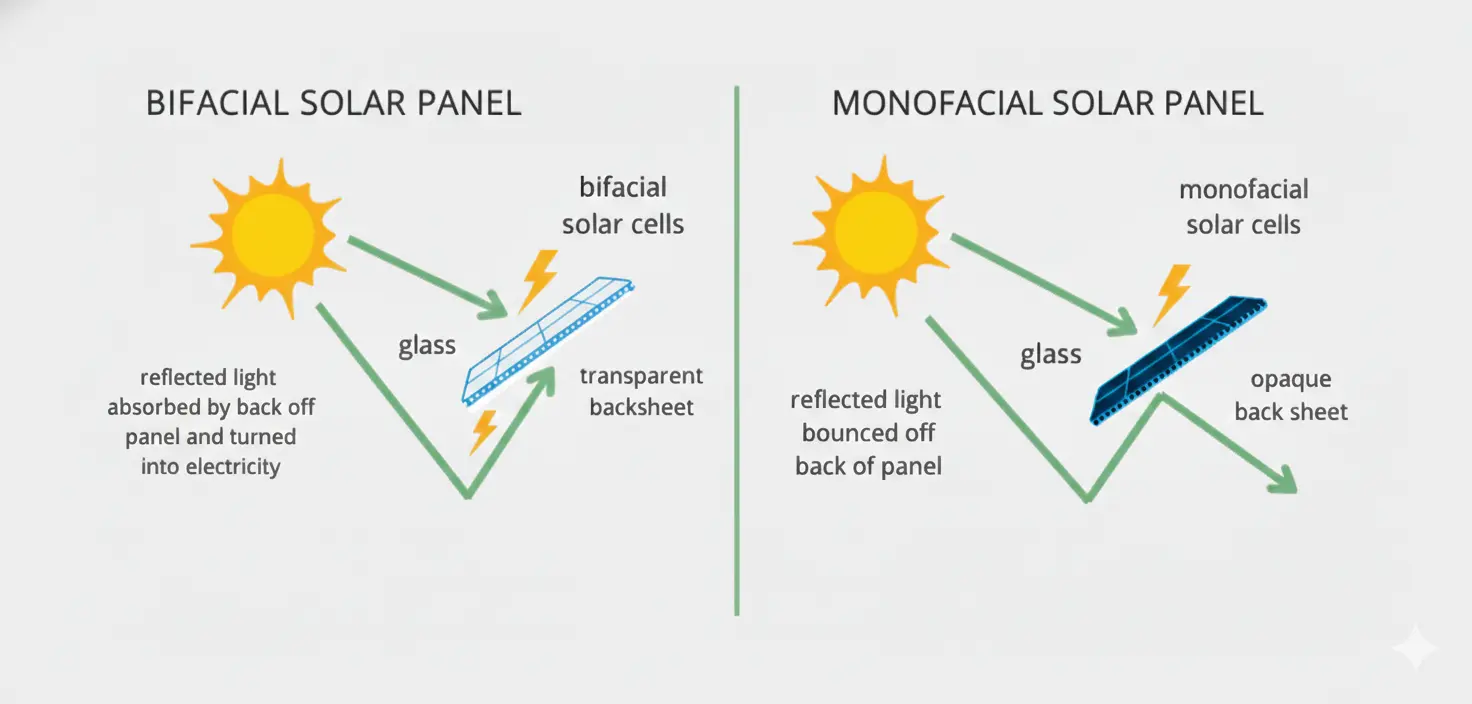
The table below compares bifacial panels with conventional monofacial panels.
|
Specification |
Bifacial Solar Panels |
Monofacial Solar Panels |
|---|---|---|
|
Electricity Generation |
Front and rear surfaces |
Front surface |
|
Cell Technology |
PERC, TOPCon, HJT and others |
PERC, TOPCon, HJT and others |
|
Rear-Side Gain |
Possible with suitable installation |
Not applicable |
|
Roof Suitability |
Performs better where rear light is available |
Suitable for conventional rooftop mounting |
|
Performance |
Depends on model and installation |
Depends on model and installation |
|
Durability |
Model and construction dependent |
Model and construction dependent |
|
Warranty |
Varies by manufacturer and model |
Varies by manufacturer and model |
|
Best Applications |
Elevated rooftops, carports and ground mounts |
Conventional residential rooftops |
Note: Compare actual product datasheets rather than assuming all bifacial panels have better specifications.
How Each Panel Type Performs in Australian Conditions
Efficiency Comparison
Both bifacial and monofacial solar panels lose some output as cell temperatures rise. However, temperature performance depends on the specific panel model and cell technology, not simply whether the panel is bifacial.
Bifacial panels can generate additional electricity when reflected or diffuse light reaches their rear surface. The amount depends on mounting height, surrounding surfaces, shading and weather conditions.
For Australian homes, comparing the temperature coefficient, panel efficiency and expected annual energy yield of specific models provides a more reliable assessment than comparing panel types alone.
Durability and Warranty
Durability and warranty coverage vary between manufacturers and panel models. Some bifacial panels use dual-glass construction, while others use transparent backsheets. For coastal installations, check whether the selected panel has appropriate salt-mist corrosion testing, such as IEC 61701, and whether its warranty covers installation near the ocean.
Always compare the product warranty, performance warranty and manufacturer installation requirements before purchasing. Check both the product warranty and the performance warranty before signing. These are two separate documents. A 12-year product warranty means little if salt mist compliance is not explicitly stated.
Cost Considerations
Under the Small-scale Renewable Energy Scheme (SRES), STC entitlements depend on eligible system capacity, installation postcode and installation year—not whether the panels are bifacial or monofacial.
For example, ten 440W panels provide a 4.4kW system, while ten 415W panels provide 4.15kW. This difference in rated capacity may affect the number of STCs, but additional rear-side generation does not automatically create extra certificates.
Compare complete system quotes after the applicable STC discount, and use the Clean Energy Regulator’s STC calculator to confirm your estimated entitlement.
The Roof Reality: When Bifacial Panels Earn Their Price Premium
Bifacial panels perform best when sufficient light can reach their rear surface. Elevated mounting, reflective surfaces and suitable panel spacing can improve rear-side electricity generation.
Before choosing bifacial panels, consider:
-
Roof Surface: Light-coloured surfaces generally reflect more sunlight than dark roofing.
-
Mounting Height: Adequate clearance allows more reflected light to reach the rear cells.
-
Tilt and Spacing: The ideal arrangement depends on the property and system design.
-
Roof Structure: The mounting system must meet applicable structural and installation requirements.
On a conventional roof where little light reaches the back of the panels, the additional energy gain may be limited. An installer should assess the roof, mounting requirements and expected annual generation before recommending a bifacial system. Rear-side performance depends on reflectivity, clearance, spacing and shading—not a single universal mounting dimension.
Advantages and Disadvantages of Bifacial Solar Panels
Advantages
-
Additional Energy Generation: Produces electricity from both sides when reflected light reaches the rear surface.
-
Better Use of Reflective Surfaces: Can deliver additional output on suitable light-coloured roofs, carports and ground-mounted installations.
-
Flexible Applications: Suitable for elevated installations where both sides receive sufficient light.
-
Modern Panel Options: Available with advanced cell technologies and construction options, depending on the manufacturer.
Disadvantages
-
Installation-Dependent Performance: Rear-side gains depend on mounting height, surface reflectivity, spacing and shading.
-
Limited Benefit on Some Roofs: Flush-mounted panels on dark roofs may receive little additional rear-side light.
-
Potentially Higher Costs: Additional mounting requirements can increase installation costs.
-
Structural Considerations: Some dual-glass models are heavier and may require additional mounting or structural assessment.
Advantages and Disadvantages of Monocrystalline Solar Panels
Advantages
-
High Efficiency: Modern monocrystalline cells deliver strong power output from a relatively compact area.
-
Suitable for Standard Rooftops: Conventional single-sided panels do not depend on rear-side light for electricity generation.
-
Flexible Installation: Well-suited to many residential roof types without additional mounting for bifacial gain.
-
Cost-Effective Options: A wide range of models allows homeowners to compare prices, efficiency and warranties.
Disadvantages
-
Single-Sided Generation: Conventional monofacial models cannot produce additional electricity from rear-side light.
-
No Bifacial Gain: Cannot take advantage of reflected sunlight in the same way as bifacial panels.
-
Heat-Related Losses: Output decreases as cell temperatures rise, although the extent varies by model and technology.
-
Model-Dependent Performance: Degradation rates, durability and warranties vary between manufacturers, so specifications must be compared individually.
Note: Bifacial and monocrystalline are not opposing technologies. Many bifacial panels also use monocrystalline cells. The comparison above is between bifacial and conventional monofacial panels.
Key Takeaways
-
Bifacial and monocrystalline describe different characteristics. Many bifacial panels use monocrystalline cells.
-
Bifacial panels can generate additional electricity when reflected light reaches their rear surface.
-
Rear-side gains depend on roof reflectivity, mounting height, spacing and shading.
-
Temperature performance, degradation and warranties should be compared using actual product datasheets.
-
STCs depend on eligible system capacity, postcode and installation year, not panel type.
-
For coastal installations, check salt-mist certification and manufacturer warranty conditions.
Making the Right Decision for Your Roof and Budget
The bifacial vs monocrystalline decision is not about which technology is globally superior. It is about which configuration delivers the best return given your roof surface, tilt capacity, location, and STC entitlement.
Bifacial panels may offer additional generation where the roof provides sufficient rear-side light. For conventional rooftops with limited rear-side exposure, a well-priced monofacial panel may provide similar practical value without additional mounting costs. Compare actual panel specifications, expected annual energy output and complete installation prices before making a decision.
Before accepting any quote, confirm your installer holds SAA accreditation, your panels appear on the CEC-approved products list, and your STC entitlement has been calculated using the system capacity, installation postcode and year. Also, check the solar connection and export limits that apply to your local electricity network.
Frequently Asked Questions
Do bifacial solar panels generate more STCs than monocrystalline panels?
Not automatically. STCs depend on eligible system capacity, installation location and year. A higher-rated system may qualify for more certificates, but bifacial rear-side generation does not independently increase STC entitlement.
Are bifacial panels worth the extra cost for a standard suburban Australian home?
It depends on the installation. Bifacial panels may provide additional energy where their rear surfaces receive sufficient light. On conventional rooftops with limited rear-side exposure, the extra benefit may be small. Compare expected annual generation and installed prices before deciding.
Which panel type handles Australian coastal conditions better?
Neither type is automatically better for every coastal property. Check the specific panel’s IEC 61701 salt-mist certification, construction and manufacturer warranty conditions.
Can I use either panel type with a battery storage system under AS/NZS 4777?
Yes. Both panel types can be used with compatible battery systems. Grid-connected inverter installations must comply with applicable requirements, including AS/NZS 4777.1:2024. Use approved equipment and appropriately accredited Solar Accreditation Australia (SAA) installers.
The previous AS/NZS 4777.1:2016 edition was superseded, and the 2024 installation standard became mandatory for relevant low-voltage grid connections from 23 February 2025.

Shah Tarek is a Solar Energy Consultant with 10 years experience in solar system design and solar consultancy field at Australia. He is now a Director, Operation & Consultancy Division at Aussie Solar Tech, a leading Australian solar retailer and installer. Here he is writing informative and engaging solar content that educates the community on the benefits of solar power. His work supports Aussie Solar Tech’s mission to promote sustainable energy solutions and foster a greener future for Australia.







Seraphim Solar Panels Review: Efficiency, Reliability, and Value Unveiled

Talesun Solar Panels: Honest Review Before You Buy

Sungrow Battery VS Tesla Powerwall : Which is Best in Australia?

Leapton Solar Panels Review: Affordable Energy Solution

REC Solar Panels Review: Outstanding Efficiency & Durability

Best Hybrid Inverters for Home Solar Systems in 2025
Best Solar Battery In Australia 2026 — Complete Guide

Sigenergy VS Fox ESS Battery: Which is The Best Choice for 2026

How Much Do Solar Panel Costs in Australia? (2026 Price Guide)

