
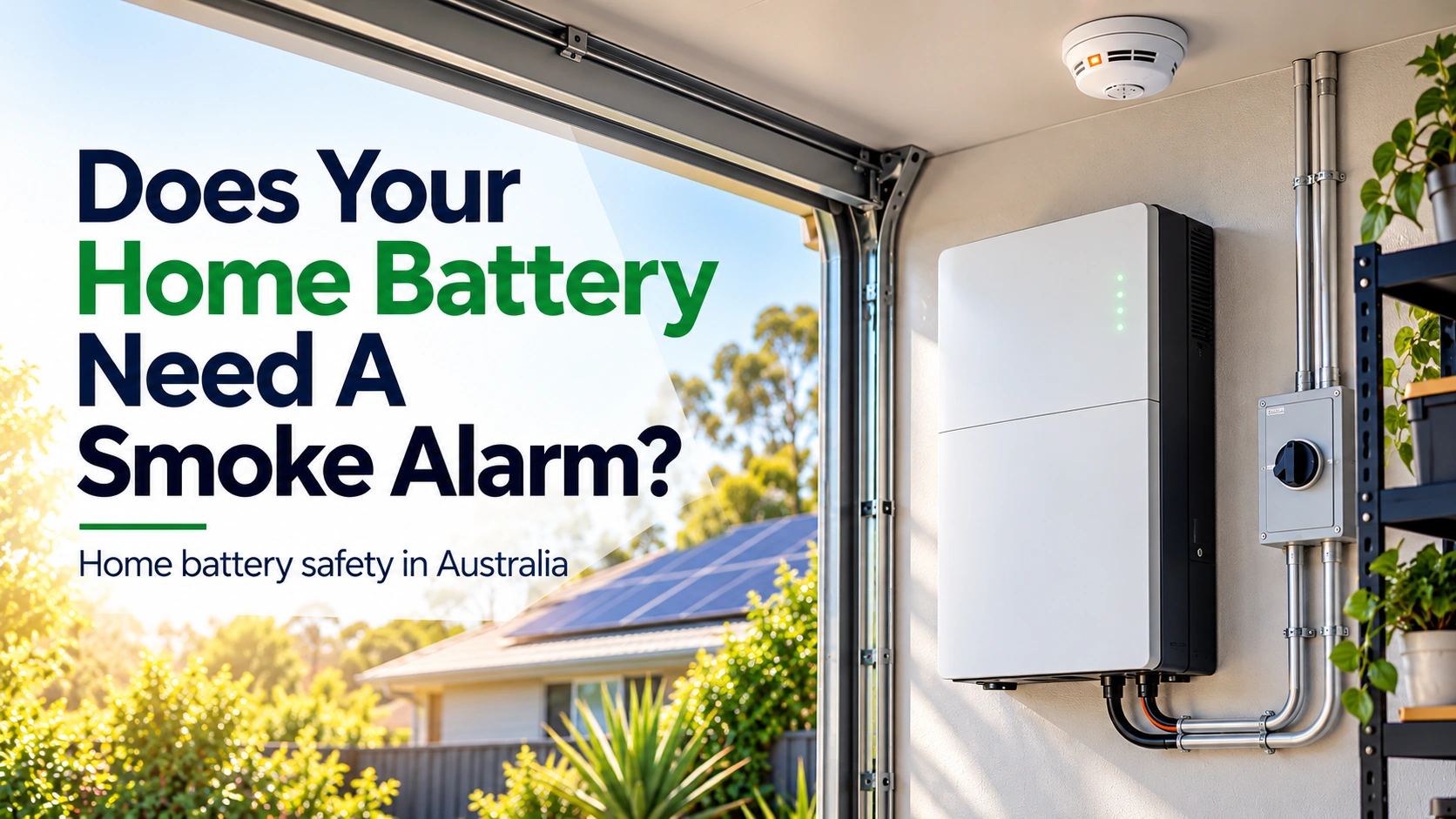
Installing a home battery brings plenty of benefits, but it also raises an important safety question: Home Battery Need a Smoke Alarm — is one actually required?
The answer depends on where you live and where the battery is installed. Australia does not have one blanket rule requiring a smoke alarm beside every home battery. Some states and territories have specific requirements, while others provide fire-safety recommendations. For batteries installed indoors or in an attached garage, adding suitable smoke or heat detection can provide valuable early warning if something goes wrong. This is why battery smoke alarm Australia requirements can vary depending on the location and installation type.
Home Battery Need a Smoke Alarm in Australia?
In many cases, a smoke alarm for home battery installations is recommended rather than universally required.
NSW Government guidance, for example, recommends placing a smoke detector near the battery. It also requires a smoke alarm for certain indoor installations covered by applicable battery incentive requirements. Battery location matters too. A battery inside the home or an attached garage sits much closer to occupied areas than one installed on a suitable external wall or in a detached structure.
If you are still choosing a system, compare suitable solar batteries and discuss the installation location with your installer before the system is fitted.
Home Battery Smoke Alarm Rules Across Australia
Rules and recommendations are not identical across the country.
| State or Territory | What Homeowners Should Know |
|---|---|
| Northern Territory | From 1 July 2026, new energy storage systems installed inside a domestic residence and under the same roof as a habitable room require a smoke alarm above or close to the system. It must also be integrated with other smoke alarms in the building. |
| ACT | Smoke detection is required for battery storage systems in an attached garage or storage space under the same roof as the residence. Different treatment applies to suitable external installations, detached garages and open carports. |
| New South Wales | A smoke detector near the battery is recommended. A smoke alarm is required for certain indoor installations using applicable NSW battery incentive arrangements. |
| Victoria | There is no blanket battery-specific smoke alarm requirement for every home battery. However, CFA recommends an interconnected smoke alarm in a garage attached to the house. |
| South Australia | The Metropolitan Fire Service recommends considering a ceiling-mounted heat detector where a battery is installed in a garage or carport and interconnecting it with household smoke alarms. |
| Western Australia | DFES recommends smoke or heat alarms in garages or utility rooms containing a battery energy storage system and suggests interconnecting mains-powered devices where possible. |
| Queensland | There is no separate statewide rule triggered simply by installing a battery, but Queensland’s broader smoke-alarm requirements are moving all dwellings toward interconnected photoelectric alarms by 1 January 2027. |
The Northern Territory requirement is particularly clear for new installations from 1 July 2026, while ACT guidance specifically addresses attached garages and storage areas. Victoria, South Australia and Western Australia place more emphasis on fire-service recommendations for garages and battery areas.
Because rules can change, homeowners should confirm current requirements with their installer before relying on a general online guide.
Smoke Alarm or Heat Detector?
A smoke alarm reacts to smoke particles, while a heat detector responds to temperature changes. Which one is appropriate can depend on where the battery sits. Garages can contain dust, fumes and other conditions that may affect detector choice. South Australia’s Metropolitan Fire Service specifically suggests considering a heat detector above a battery installed in a garage or carport.
Do not choose a detector purely for convenience. The installer or licensed electrician should consider the battery location, applicable rules and the rest of the home’s alarm system.
Why Interconnected Alarms Matter
A detector beside a battery is less useful if nobody can hear it. This is especially important when a battery is installed in a garage away from bedrooms. An interconnected system can activate other alarms inside the house when one detector is triggered. Both Victorian and Western Australian fire authorities recommend interconnection in relevant garage situations where practical.
What Should You Check Around Your Battery?
Good battery storage safety goes beyond smoke alarms.
Keep an eye out for:
- Physical damage
- Unusual heat
- Strange sounds or smells
- Warning lights or fault messages
- Blocked ventilation
- Combustible materials stored close to the battery
NSW guidance recommends regularly checking batteries for damage, strange sounds or gases and keeping ventilation clear. Do not open the battery enclosure or touch internal wiring.
For more information about ageing and long-term battery performance, see our home battery lifespan and warranties guide.
What If Your Home Battery Starts Smoking?
Smoke, vapour, strong odours, unusual heat or visible damage should be taken seriously. Move away from the battery and keep other people clear. If there is a fire or immediate danger, call 000 and tell emergency services that a battery energy storage system is installed at the property.
Do not attempt to open or repair the battery yourself. For a non-emergency fault, contact your installer or an appropriately licensed professional.
Final Thoughts
So, Home Battery Need a Smoke Alarm? Sometimes it is required, and sometimes it is a recommended safety measure rather than a legal requirement.
The answer depends on your state or territory, battery location and any applicable installation or incentive rules. For indoor batteries and attached garages in particular, suitable smoke or heat detection can strengthen home battery safety. The best approach is to follow current local requirements, manufacturer instructions and professional installation advice rather than assuming one rule applies everywhere in Australia.
FAQs
Is a smoke alarm mandatory next to every home battery in Australia?
No. There is no single nationwide requirement applying to every home battery. Rules differ between jurisdictions and can also depend on where the battery is installed.
Do I need a smoke detector near battery systems installed indoors?
It may be required or strongly recommended depending on your location. Indoor and attached-garage installations generally deserve greater consideration because they are closer to occupied areas.
Is a heat detector better than a smoke alarm in a garage?
It can be appropriate in some situations. South Australian fire guidance, for example, recommends considering a heat detector where a battery system is installed in a garage or carport.
Should a battery alarm be interconnected with the home’s smoke alarms?
Where possible and appropriate, interconnection can improve early warning because an alarm near the battery can also alert people elsewhere in the house.
What should I do if a solar battery starts smoking?
Move away, keep others clear and call 000 if there is a fire or immediate danger. Tell emergency services that a battery energy storage system is installed and do not attempt to open or repair the battery yourself.

Shah Tarek is a Solar Energy Consultant with 10 years experience in solar system design and solar consultancy field at Australia. He is now a Director, Operation & Consultancy Division at Aussie Solar Tech, a leading Australian solar retailer and installer. Here he is writing informative and engaging solar content that educates the community on the benefits of solar power. His work supports Aussie Solar Tech’s mission to promote sustainable energy solutions and foster a greener future for Australia.










Seraphim Solar Panels Review: Efficiency, Reliability, and Value Unveiled

Talesun Solar Panels: Honest Review Before You Buy

Sungrow Battery VS Tesla Powerwall : Which is Best in Australia?

Leapton Solar Panels Review: Affordable Energy Solution

REC Solar Panels Review: Outstanding Efficiency & Durability

Best Hybrid Inverters for Home Solar Systems in 2025

Best Solar Battery In Australia 2026 — Complete Guide

Sigenergy VS Fox ESS Battery: Which is The Best Choice for 2026

How Much Do Solar Panel Costs in Australia? (2026 Price Guide)

