
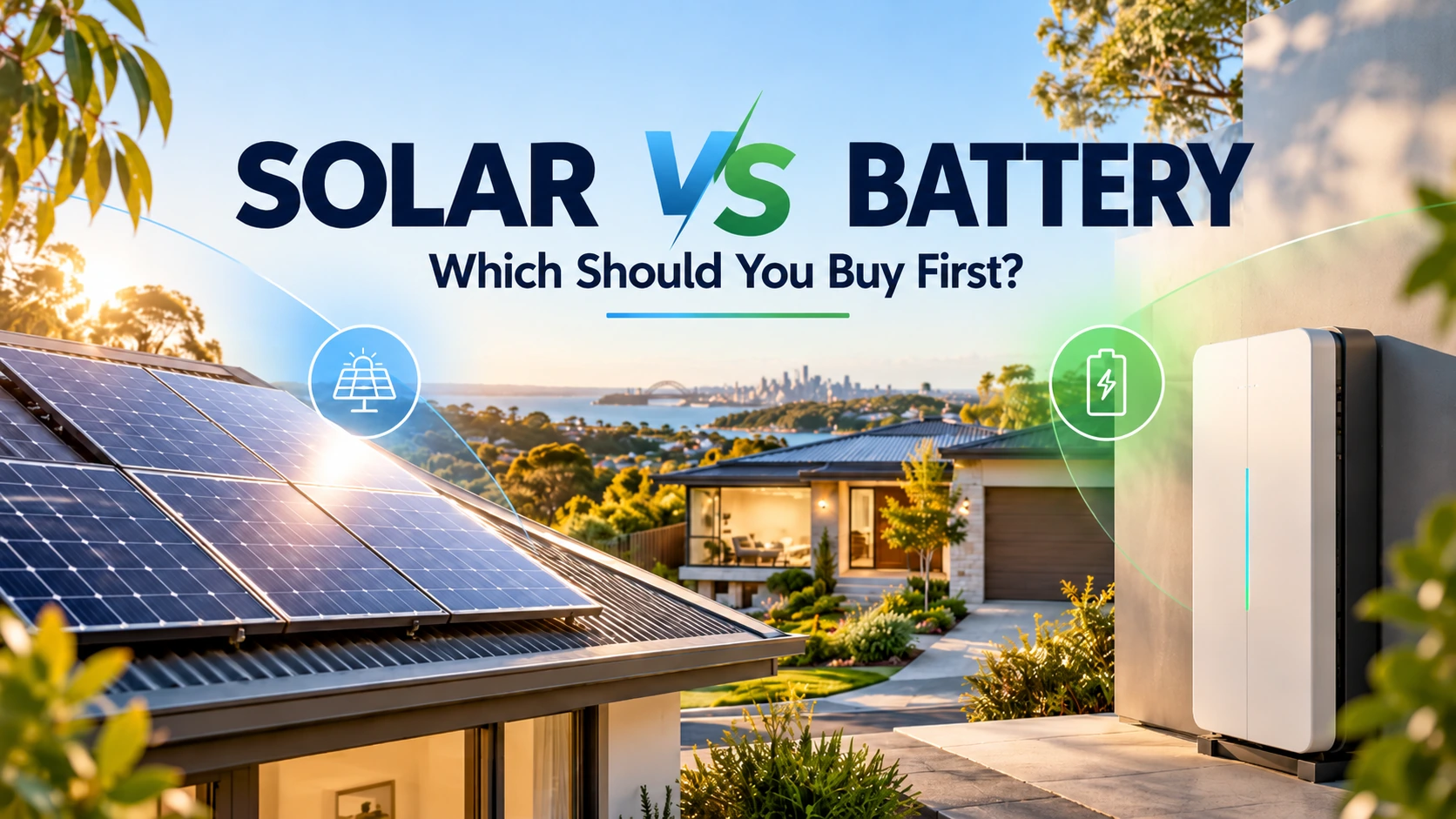
If you are trying to lower your electricity bills or depend less on the grid, you may be comparing solar vs battery and wondering which one should come first. The two technologies do different jobs. Solar panels generate electricity during the day, while a solar battery stores energy so you can use it later. For most Australian homes without rooftop solar, solar panels usually make sense as the first step. If you already have solar and regularly send excess energy back to the grid, a battery may be the better next move.
Solar vs Battery: What Is the Difference?
| Feature | Solar Panels | Solar Battery |
|---|---|---|
| Main Purpose | Generates electricity from sunlight | Stores electricity for later use |
| Best Time of Use | Daytime | Evening, night or backup |
| Grid Reliance | Reduces daytime grid use | Can reduce evening and overnight grid use |
| Blackout Support | Usually not on its own | Possible with a suitable backup setup |
| Best For | Homes without existing solar | Homes with excess solar, evening use or backup needs |
How Solar Panels and Batteries Work
How Do Solar Panels Work
Solar panels convert sunlight into electricity for your home. Your appliances use that solar power first. If the panels generate more electricity than your home needs at the time, the excess can be exported to the grid or stored in a compatible battery. Solar production falls in the evening and stops at night, which is why households with higher after-dark electricity use may consider battery storage.
How Do Solar Batteries Work
A solar battery stores electricity so it can be used later. When your solar panels generate more energy than your home is using, some of that excess can charge the battery. The stored energy can then be used in the evening or overnight instead of drawing as much electricity from the grid. A battery may also provide blackout backup when the system includes the right inverter, switching equipment and backup configuration.
Solar Battery vs Solar Panels: Which Should You Install First?
If you do not already have solar, solar panels are usually the better first step. They create the electricity and can immediately reduce the amount of grid power used during daylight hours. A battery may become the better next upgrade if you:
- already have rooftop solar
- regularly export excess solar
- use more electricity after sunset
- want to increase solar self-consumption
- want properly configured blackout backup
Some households may choose solar and a battery together from the beginning, particularly when evening energy use or backup is a priority.
Which Option Gives the Best Return?
The best return depends on whether you already have solar, when you use most of your electricity and what you want from the system.
| Option | Best Suited to | How It Delivers Value | Key Consideration |
|---|---|---|---|
| Solar only | Homes without solar or with high daytime use | Powers daytime appliances and reduces grid electricity use | Works best when more energy is used during the day |
| Solar + battery | Homes with high evening use or backup needs | Stores excess solar for evening or night use | Solar and battery size should match household usage |
| Existing solar + battery | Homes that export excess solar | Stores unused solar so it can be used later | Check inverter compatibility, battery size and evening use |
| Battery only | Homes with specific storage or backup needs | Provides stored energy when needed | It does not generate electricity, so solar is usually the better first step |
For most homes starting from scratch, solar usually gives the stronger first benefit. If you already have solar and regularly export excess energy, adding a battery may provide more value.
Can a Solar Battery Reduce Your Electricity Bill?
Yes, a battery can help reduce electricity bills by allowing you to use more of your own solar energy later in the day. Instead of exporting all unused solar electricity, you can store part of it and use it during the evening or overnight. This can help:
- increase solar self-consumption
- reduce evening grid purchases
- shift solar energy to higher-use periods
- reduce reliance on grid electricity
Actual savings vary depending on your solar generation, household usage, electricity tariff, battery capacity and how the system is operated.
When Is a Solar Battery Worth It?
A solar battery becomes more useful when your home already produces enough excess solar energy to store. It may be worth considering if you:
- already have a suitable solar system
- regularly export unused solar
- use a lot of electricity after sunset
- want more control over your energy use
- want blackout protection
- plan to add an EV or more electric appliances
Battery sizing matters. A larger battery is not automatically better if your solar system cannot regularly charge it or your household does not use the stored energy.
What Should You Consider Before Buying a Battery?
Before choosing a battery, look at your whole energy setup. Consider:
- your current solar system size
- daytime and evening electricity use
- inverter compatibility
- usable battery capacity
- backup requirements
- warranty conditions
- available installation space
- single-phase or three-phase supply
- future EV charging
- whether you may expand storage later
If you are installing solar now but plan to add a battery in the future, discussing battery compatibility with your installer from the beginning can make the later upgrade easier.
Can You Add a Battery Later?
Yes. Many homeowners start with solar and add a battery later once they understand how much energy they generate, use and export. If you may add storage in the future, check these points when installing solar:
- inverter compatibility
- switchboard capacity
- available battery installation space
- single-phase or three-phase setup
- future EV or electrification plans
Planning for battery compatibility from the beginning can make a future upgrade easier and avoid unnecessary system changes.
Solar Panels and Battery Storage for Australian Homes
Australian homes use electricity differently. Common household loads include:
- air conditioning and heating
- hot water systems
- kitchen and laundry appliances
- pool equipment
- home offices
- EV charging
If most of your electricity use happens during the day, solar panels may be enough. If you export excess solar but use more power after sunset, battery storage can help you use more of your own energy later. The right setup depends on when and how much electricity your household uses.
What About Australian Battery Rebates in 2026?
Eligible battery systems can receive support through Australia’s Cheaper Home Batteries Program under the Small-scale Renewable Energy Scheme. From 1 May 2026, the incentive uses a tiered STC structure based on usable battery capacity. The first 14kWh receives the full applicable factor, capacity above 14kWh to 28kWh receives a reduced factor, and capacity above 28kWh to 50kWh receives a lower factor again.
The solar battery rebate Australia 2026 settings can make eligible battery storage more attractive, especially for households already considering a battery upgrade. Eligible systems must also meet current battery, installation and scheme requirements. Rebates can improve the case for adding storage, but they should not be the only reason to install a battery. Your solar generation, household energy use and backup needs still matter.
Quick Decision: Solar or Battery First?
| Your Situation | Better First Step |
|---|---|
| No solar installed | Solar |
| Existing solar with high daytime exports | Battery |
| High daytime electricity use | Solar |
| High evening electricity use | Battery |
| Blackout backup is a priority | Battery with suitable backup setup |
| Planning a completely new energy system | Consider solar + battery |
Why Choose Aussie Solar Tech?
Aussie Solar Tech can help match a solar and battery system to your household’s actual electricity use, existing equipment, backup needs and future plans. Rather than choosing a system based only on battery size or brand, the complete setup should consider solar generation, inverter compatibility, usable storage and future expansion. A well-matched system can make it easier to use more of your own solar energy and get the result you expect from your investment.
Final Verdict
When comparing solar vs battery, neither is simply better than the other.
Solar panels generate electricity. Batteries store it. For most Australian homes without solar, installing panels first is usually the logical starting point. If you already have solar, regularly export excess energy, use more electricity after sunset or want blackout backup, a battery may be the next useful upgrade.
The best choice is the one that matches how your home actually uses energy.
Frequently Asked Questions
Should I install solar or a battery first?
For most homes without existing solar, solar panels usually come first because they generate the electricity a battery can later store.
Can a battery work without solar panels?
Yes, some battery systems can charge from the grid. However, residential batteries are commonly paired with rooftop solar.
Can a solar battery reduce electricity bills?
Yes. A battery can store excess solar for later use, reducing the amount of electricity you need to buy from the grid. Actual savings depend on your energy use, tariff and system design.
Does a solar battery work during a blackout?
It can, but only if the battery and inverter system includes suitable backup capability and has been configured correctly.
Do I need both solar panels and a battery?
Not necessarily. Solar alone may suit households with strong daytime electricity use, while solar plus battery can be useful for evening use, higher self-consumption and backup.

Shah Tarek is a Solar Energy Consultant with 10 years experience in solar system design and solar consultancy field at Australia. He is now a Director, Operation & Consultancy Division at Aussie Solar Tech, a leading Australian solar retailer and installer. Here he is writing informative and engaging solar content that educates the community on the benefits of solar power. His work supports Aussie Solar Tech’s mission to promote sustainable energy solutions and foster a greener future for Australia.







Seraphim Solar Panels Review: Efficiency, Reliability, and Value Unveiled

Talesun Solar Panels: Honest Review Before You Buy

Sungrow Battery VS Tesla Powerwall : Which is Best in Australia?

Leapton Solar Panels Review: Affordable Energy Solution

REC Solar Panels Review: Outstanding Efficiency & Durability

Best Hybrid Inverters for Home Solar Systems in 2025

Best Solar Battery In Australia 2026 — Complete Guide

Sigenergy VS Fox ESS Battery: Which is The Best Choice for 2026

How Much Do Solar Panel Costs in Australia? (2026 Price Guide)

