
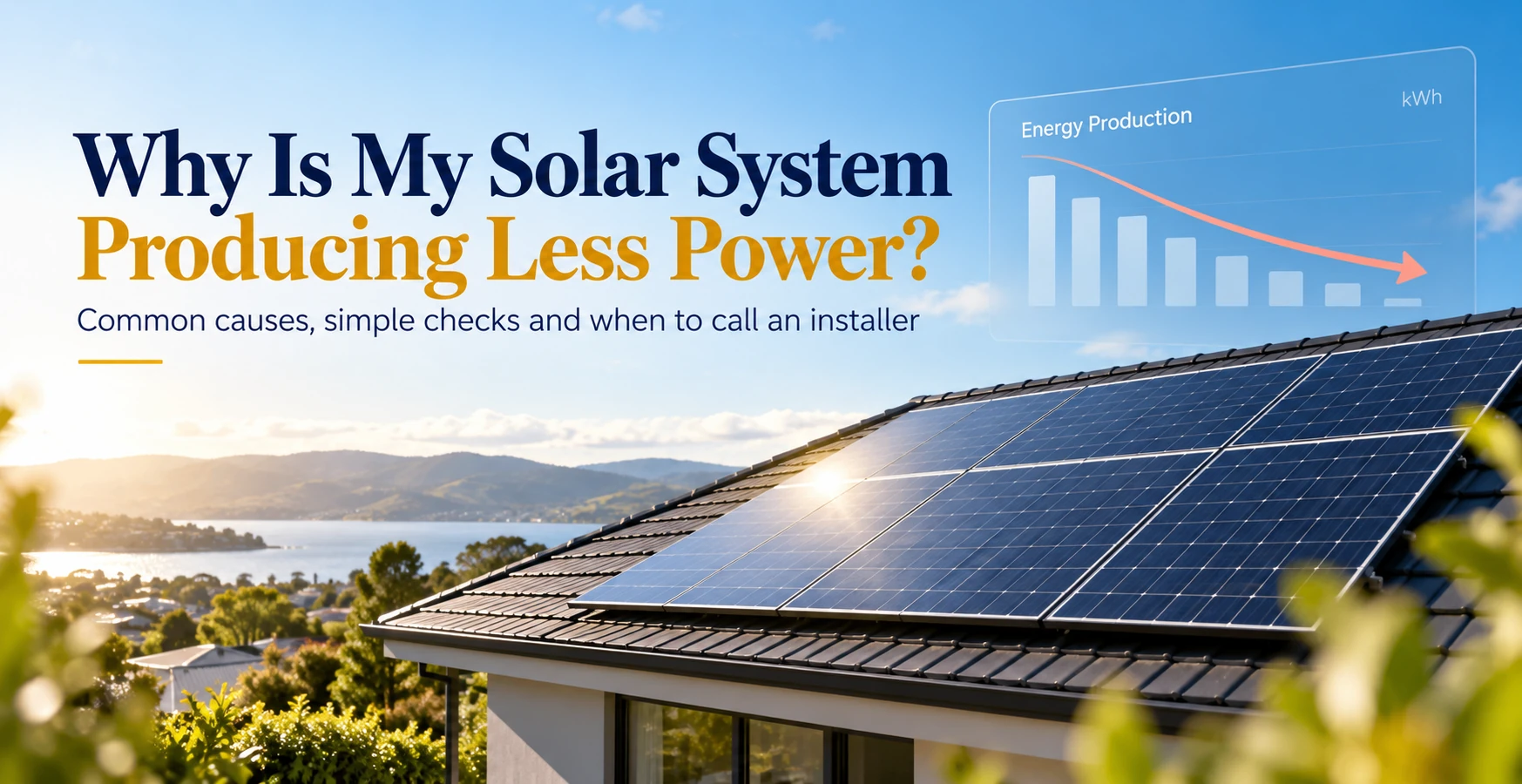
A drop in solar output does not always mean something is broken. Some days your system may produce noticeably less electricity even though the panels and inverter are working normally. A solar system producing less power can be affected by weather, shade, dirt, temperature, season, inverter settings or a genuine system fault. The key is to work out whether the drop is normal or unusual. Australian Government guidance explains that real solar output is normally lower than the panel’s laboratory rating and can change with weather, location, panel direction, slope, dirt and shading.
Common Reasons for a Solar System Producing Less Power
| Cause | What Happens |
|---|---|
| Cloudy weather | Less sunlight reaches the panels |
| Shade | Trees or nearby buildings block direct sunlight |
| Dirt and debris | Dust, leaves or bird droppings reduce sunlight reaching the cells |
| High temperature | Very hot panels can produce less power |
| Seasonal changes | Shorter winter days usually mean lower daily generation |
| Inverter issue | Faults or limits can reduce system output |
| Wiring problem | Loose or damaged connections may affect performance |
| Panel ageing | Solar panels slowly lose some generating ability over time |
Shade Can Make a Big Difference
Shade is one of the most common reasons for reduced solar output. A tree that caused no problem when the system was installed may grow over time and start covering part of the panels. Nearby buildings can also create shadows during certain hours. Even partial shading can affect solar generation, depending on how the system is designed. Government solar guidance notes that panels generate less electricity when shaded by trees, buildings or other objects.
Dirty Panels Can Reduce Generation
Rain helps clean many rooftop panels, but it may not remove everything. Dust, leaves and other debris can build up, particularly in dry or dusty locations. If cleaning is needed, avoid climbing onto the roof yourself. The Australian Government recommends using a qualified person for panel cleaning and maintenance.
Hot Weather Does Not Always Mean More Solar Power
Bright summer sunlight can produce plenty of energy, but solar panels become less efficient as their temperature rises. This means a very hot afternoon may sometimes produce less peak power than a cooler sunny day. It is normal and does not automatically indicate a fault.
How Much Solar Power Should Your System Produce?
Many homeowners expect a 6.6kW solar system to produce exactly 6.6kW all day. That is not how solar systems work. The system rating is measured under specific test conditions. Real-world output changes throughout the day.
Normally:
- Morning production starts low.
- Output increases as sunlight becomes stronger.
- Peak production usually happens around the middle of the day.
- Generation falls again in the afternoon.
- Winter output is generally lower than summer output.
Panel direction also matters. East-facing solar panels usually produce more in the morning, while west-facing panels perform better later in the day.
Check Your Solar Monitoring App
Your monitoring app can help you spot unusual changes before calling an installer.
Check for:
- very low output on a clear sunny day
- sudden drops compared with similar days
- inverter warning or error messages
- long periods showing zero generation
- repeated shutdowns during daylight
- unusual changes that weather cannot explain
Try to compare similar days. A cloudy winter day should not be compared with a clear summer day.
Also remember that kW and kWh are different. kW shows how much power the system is producing at a particular moment. kWh shows how much energy it has generated over a period of time. Your system may not reach its maximum kW every day while still producing a normal amount of daily energy.
When Should You Call a Solar Installer?
A little variation is normal. A sudden or persistent drop is different. Contact your installer or a qualified solar electrician if:
- output drops significantly without an obvious weather reason
- the inverter shows a recurring fault code
- the system regularly stops generating during daylight
- generation stays unusually low for several clear days
- you notice damaged equipment, cables or isolators
Do not open the inverter or attempt electrical repairs yourself.
Final Verdict: Why Your Solar System Producing Less Power
Lower solar generation is not always a sign of failure. Clouds, heat, shade, dirt, seasonal changes and panel orientation can all affect daily output. But if your system suddenly performs much worse than usual under similar conditions, check the monitoring app and inverter for warnings.
Tracking your normal production makes unusual changes much easier to spot. If the problem continues, have the system inspected by a qualified solar professional.
Frequently Asked Questions
Why is my solar output lower on a sunny day?
High panel temperatures, temporary shade, inverter limits or dirt can reduce output even when the sky looks clear.
Do dirty solar panels produce less electricity?
Yes. Dust, leaves and other debris can reduce the amount of sunlight reaching the solar cells and lower generation.
Why is my solar system producing less power in winter?
Winter has shorter daylight hours and a lower sun angle, so total daily solar generation is generally lower than in summer.
Does shade on one solar panel affect the whole system?
It can. The impact depends on the system design, inverter type and how the panels are connected.
When should I worry about low solar production?
If output remains unusually low for several clear days, or your inverter shows repeated errors, contact your installer or a qualified solar electrician.

Shah Tarek is a Solar Energy Consultant with 10 years experience in solar system design and solar consultancy field at Australia. He is now a Director, Operation & Consultancy Division at Aussie Solar Tech, a leading Australian solar retailer and installer. Here he is writing informative and engaging solar content that educates the community on the benefits of solar power. His work supports Aussie Solar Tech’s mission to promote sustainable energy solutions and foster a greener future for Australia.



Seraphim Solar Panels Review: Efficiency, Reliability, and Value Unveiled

Talesun Solar Panels: Honest Review Before You Buy

Sungrow Battery VS Tesla Powerwall : Which is Best in Australia?

Leapton Solar Panels Review: Affordable Energy Solution

REC Solar Panels Review: Outstanding Efficiency & Durability

Best Hybrid Inverters for Home Solar Systems in 2025
Best Solar Battery In Australia 2026 — Complete Guide

Sigenergy VS Fox ESS Battery: Which is The Best Choice for 2026

How Much Do Solar Panel Costs in Australia? (2026 Price Guide)

