

Risen and Jinko Solar Panels are leading photovoltaic products, each with unique features and performance metrics. Risen panels are known for their high efficiency and robust warranties, while Jinko offers cost-effective solutions with strong track records in reliability.
Choosing between aRisen vs Jinko Solar Panels requires understanding your energy needs and budget. Solar energy enthusiasts often compare these two brands to find the best fit for their installations. Risen Energy Co. Ltd. Has made a name for itself with impressive power output and efficiency rates in their solar panels.
Jinko Solar, on the other hand, is recognized for producing a wide range of panels that cater to different market segments, maintaining a balance between quality and affordability. Both manufacturers invest heavily in research and development, ensuring their photovoltaic panels incorporate the latest technology advancements. This introduction gives a snapshot of what sets Risen and Jinko Solar Panels apart, guiding potential buyers to make an informed decision based on product strengths and suitability for their specific solar energy projects.
Quick Comparison: Risen vs Jinko Solar Panels
| Feature | Risen Solar Panels | Jinko Solar Panels |
|---|---|---|
| Efficiency | Up to 21% | Up to 20.9% |
| Output Capacity | Up to 390W | Up to 400W |
| Panel Type | Monocrystalline (PERC, TOPCon) | Monocrystalline (PERC, N-Type) |
| Durability | High – Tested for snow & wind | Very High – Great in heat and wind |
| Warranty | 12-year product, 25-year performance | 15-year product, 25-year performance |
| Technology | Advanced cell technology with anti-PID | Tiger Neo series, bifacial & N-type options |
| Design | Standard, cost-effective | Sleek, modern, minimal shading design |
| Price Range | Affordable | Mid to high-end |
| Best For | Budget-friendly & reliable solar installations | High-performance residential & commercial users |
What Australian Rooftops Actually Demand from a Solar Panel
Standard lab tests measure solar panels at a cool 25°C. In the real world—especially across Queensland and Western Australia—rooftop temperatures regularly soar to between 60°C and 75°C during summer. This massive 50-degree gap is where “cheap” panels fail and premium engineering pays for itself.
The “Heat Tax”: Understanding Temperature Coefficient
The most critical spec for the Australian climate is the Temperature Coefficient ($P_{max}$). Think of this as a “heat tax”: it measures exactly how much power a panel loses for every degree it rises above that 25°C lab setting.
- The Rule: The smaller the negative number, the better.
- The Reality: High wattage ratings on a brochure don’t matter if the panel “bleeds” its output the moment the sun actually comes out.
The Impact of Export Limits
We also design systems around your local DNSP (Network) export limits. In South Australia and WA, many homes are capped at exporting only 1.5 kW to 5 kW back to the grid.
When your system hits this limit, it “clips” at the inverter. In these scenarios, chasing “peak power” is a waste of money. Instead, you need panels with high partial-load efficiency—hardware that generates steady, usable power during the cooler mornings, late afternoons, or cloudy patches, rather than just a massive burst of midday energy you aren’t allowed to sell.
Risen Solar Panels – How They Hold Up in Australian Conditions
Risen’s Titan S and RSM108 TOPCon series carry a temperature coefficient of -0.29%/°C. At a cell temperature of 70°C, that translates to roughly 11.7% output reduction from rated wattage. Other variants of the Risen N-type TOPCon series are also rated at $-0.30%/°C. In real terms, a Risen TOPCon panel retains noticeably more output across a long Australian summer than most PERC alternatives still being sold in the market.
Risen panels carry a power tolerance rating of 0/+5W. Every panel shipped performs at or above its rated wattage, which matters when sizing a system precisely against a DNSP export cap.
Annual degradation on the Titan S series sits at 0.55% per year after year one, backed by a 25-year linear performance warranty guaranteeing a minimum of 84.95% rated output at the end of life. The product warranty runs to 25 years for residential systems serviced through Risen Energy’s Australian office. That local warranty support is worth checking with any brand before you sign a contract.
Jinko Solar Panels – How They Hold Up in Australian Conditions
Jinko’s Tiger Neo N-type TOPCon series reaches up to 22.53% efficiency. The standard Tiger Neo carries a temperature coefficient of -0.29%/°C. Jinko’s newer Tiger Neo 3.0, built for the Australian market, brings that down to -0.26%/°C through advanced passivation technology. Before committing, confirm which Tiger Neo generation your installer is quoting.
Jinko also leads on annual degradation, rated at 0.40% per year after year one versus Risen’s 0.55%. Over 25 years, that difference retains roughly 3.75% more output from a Jinko panel on the same-sized system.Half-cut cell technology reduces resistive losses and holds output steadier under partial shading, useful for rooftops with neighboring obstructions or morning tree coverage.
Current residential models carry a 25-year product warranty and a 30-year linear performance guarantee. Coastal buyers benefit from standard IEC 61701 salt mist corrosion certification across the Tiger Neo range. Full specs and Australian warranty documents are available on Jinko’s Australian site.
Why Your Postcode Changes the Financial Outcome
Australia’s Small-scale Renewable Energy Scheme (SRES) splits the country into four STC zones by solar irradiance. Zone 1 (Far North Queensland, Northern Territory) generates the highest STC (Small-scale Technology Certificates) entitlement per kilowatt installed. Zone 4 (Tasmania, southern Victoria) generates the lowest. Since Risen and Jinko panels differ slightly in wattage output, your total STC count and upfront rebate will vary between brands depending on your zone. Use the official STC calculator on the Clean Energy Regulator website to check your entitlement by postcode before approaching any retailer.
Aussie Solar Tech provides a postcode-specific STC calculation for both brands as part of their solar system assessment, so the cost difference between Risen and Jinko is clear before any quote is signed. DNSP export limits add a second variable. If your network caps export at 5 kW, a panel with lower heat-related output loss holds performance better during daily clipping hours. We confirm real-world output using an IV Curve Tracer on every system we commission.
Coastal Installs – The Certification Most Retailers Skip Mentioning
Standard solar panel warranties contain specific exclusions for salt mist corrosion damage when the installed product is not IEC 61701 certified. For Australian homes within one kilometre of the coastline, across Queensland, NSW, and Western Australia, particularly, this exclusion can void a product warranty entirely if the wrong panel is specified.
Jinko Tiger Neo carries IEC 61701 certification as a standard inclusion across the range. Risen’s Titan S series requires model-by-model verification, as the IEC 61701 status is not uniform across every Titan sub-variant. Before any coastal installation, Aussie Solar Tech confirms IEC 61701 compliance for the exact panel model being supplied, not just the brand family. See our coastal solar installation guide for a full breakdown of what to check before you purchase.
To claim STCs under the SRES and maintain rebate eligibility, your installer must hold current Solar Accreditation Australia (SAA) accreditation. This is a mandatory requirement, not optional, for any grid-connected system installed from May 2024 onwards.
Risen Solar Panels
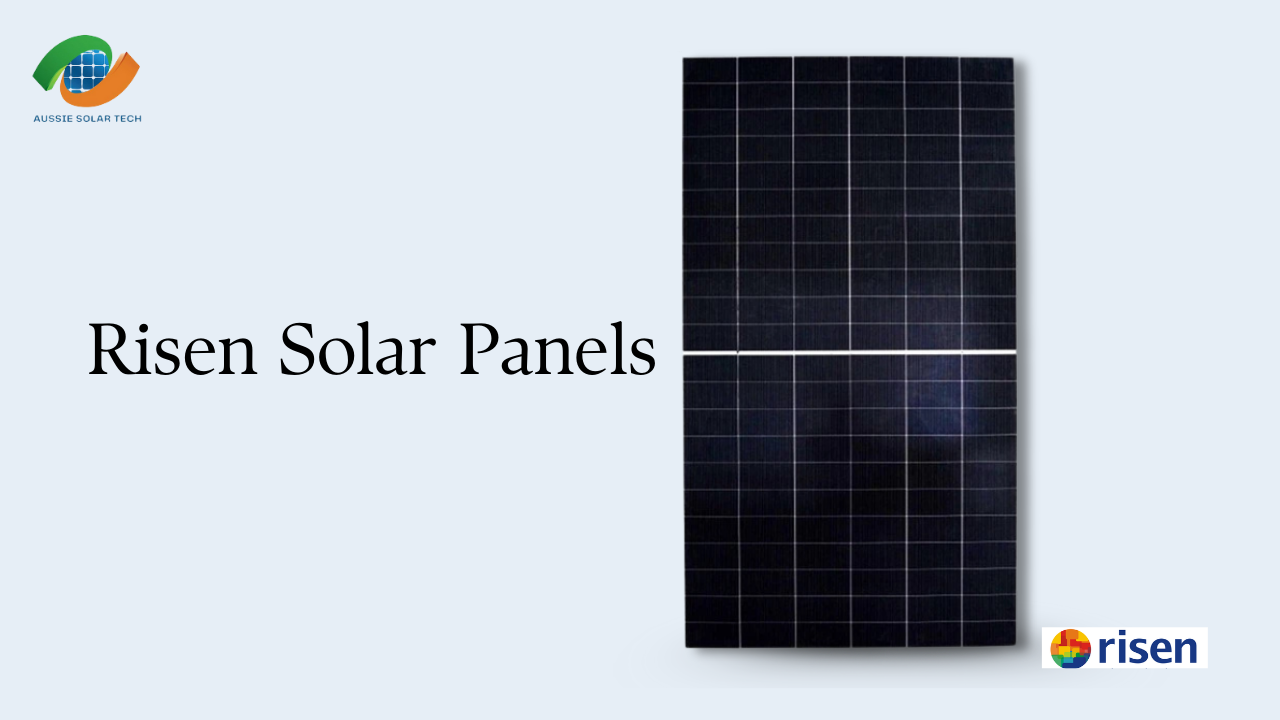
Risen Energy is a renowned player in the solar industry. This company has garnered attention due to its efficient and durable solar solution offerings. Consumers eyeing alternative energy solutions often consider Risen in their choices.
Overview
Established in 1986, Risen Energy Co., Ltd has carved its way to being one of the leading solar panel manufacturers. It focuses on producing solar photovoltaic (PV) technology that caters to global energy demands.
Features
Risen solar panels stand out for their advanced features:
- Wide product range: Catering to diverse market needs.
- Innovative technology: Embracing new tech trends for better performance.
- Cost-effective: Balancing quality with affordability.
Efficiency
Risen panels boast impressive efficiency rates. Their PERC monocrystalline solar panels can reach efficiency levels up to 21%. This means more energy conversion and savings.
Durability
Durability is a key feature of Risen panels. They are tested against harsh conditions like heavy snow loads and high wind. The panels come with a 12-year product warranty and 25-year linear performance guarantee, ensuring long-term reliability.
Jinko Solar Panels
Exploring the solar market, Jinko Solar panels stand out with their robust features and trusted performance. Key players in residential and large-scale solar projects, Jinko Solar is a name you need to know. Let’s delve into what makes Jinko Solar Panels a solid choice for renewable energy enthusiasts.
Overview
Jinko Solar, founded in 2006, has grown rapidly to become a global leader in the solar industry. Their panels are known for high quality and reliability. Jinko Solar serves a worldwide market, offering a range of panels for different needs.
Features
- Advanced Technology: Jinko panels use innovative tech for better performance.
- Versatility: Suitable for various installations, from homes to large power plants.
- Smart Design: Aesthetically pleasing and engineered for minimal shading.
Efficiency
Jinko Solar Panels have an impressive efficiency rating up to 20.78%. This means they convert more sunlight into electricity, crucial for maximizing energy output.
Durability
| Test Type | Outcome |
| Weather Resistance | Panels withstand high winds and heavy snow loads. |
| Heat Tolerance | Performs well in high temperatures. |
| Longevity | Built to last with a 25-year warranty. |
In-Depth Comparison of Risen vs Jinko Solar Panels
Choosing the right solar panel can be a bright decision for a greener future. When it comes to Risen and Jinko Solar Panels, our detailed comparison sheds light on their performance, cost, warranty, and what actual customers say. Make an informed choice with our head-to-head comparison of these solar giants.
Performance
Risen and Jinko Solar Panels both stand out in the renewable energy market. Risen panels boast impressive efficiency and strength against harsh weather. Jinko panels answer with their high output and innovative technology. Here’s how they stack up:
| Feature | Risen | Jinko |
| Efficiency (%) | 19.5 – 21 | 18.3 – 20.9 |
| Weather Resistance | Excellent | Very Good |
| Output (Watts) | Up to 390W | Up to 400W |
Cost
The price tag is often the deal-maker or breaker. Risen panels provide a cost-effective solution without compromising quality. Jinko panels come at a premium, reflecting their leading-edge technology. Here are the typical price ranges:
- Risen: More affordable, great value
- Jinko: Higher-end price, reflects tech advancements
Warranty
A strong warranty underlines manufacturer confidence. Risen offers a standard 10-15 year product warranty and a 25-year performance warranty. Jinko matches with similar terms. Both assure long-term reliability and peace of mind for customers.
Customer Reviews
What do users say? Risen panels receive praise for their durability and performance. Jinko’s customers highlight high output and robust support. Common feedback includes:
- Risen: Satisfaction with build and efficiency
- Jinko: Commended for innovation and customer service
Frequently Asked Questions
Can I claim the STC rebate on both Risen and Jinko panels?
Yes, provided the specific panel model is listed on the SAA approved product register and your installer holds current SAA accreditation. Always confirm the exact model number is registered, not just the brand, as individual sub-variants within a product range are assessed separately for SRES eligibility. The Clean Energy Regulator’s SRES page outlines the full eligibility criteria.
Which panel handles Australian summer heat better?
In our experience, Risen’s standard TOPCon range and Jinko’s newer Tiger Neo 3.0 both carry a temperature coefficient of -0.26%/°C, making them equal on heat performance when comparing current-generation products. On older Tiger Neo stock at -0.35%/°C, Risen holds a measurable advantage on the hottest days across Queensland and WA. Always confirm which Tiger Neo generation your quote is based on.
Does my DNSP export limit affect which panel I should choose?
Yes, and most retailers do not factor this into their recommendation. If your network caps solar export at 1.5 kW or 5 kW, your system spends significant daily hours operating below its peak rating. Under those partial-load conditions, a panel with lower temperature-related output loss and tighter power tolerance holds its output more consistently than one optimised purely for peak wattage figures. Our team assesses your specific DNSP zone as part of every solar consultation.
Is Jinko’s product warranty genuinely 25 years on current models?
Yes, Jinko upgraded the Tiger Neo residential product warranty to 25 years, with a 30-year linear performance warranty on current models sold in Australia. This is a significant improvement over earlier 10-year product warranty offerings and places Jinko on equal footing with Risen’s residential warranty cover. Always request the specific Australian warranty document for the exact model being quoted, as warranty terms vary across Jinko’s product sub-ranges.

Shah Tarek is a Solar Energy Consultant with 10 years experience in solar system design and solar consultancy field at Australia. He is now a Director, Operation & Consultancy Division at Aussie Solar Tech, a leading Australian solar retailer and installer. Here he is writing informative and engaging solar content that educates the community on the benefits of solar power. His work supports Aussie Solar Tech’s mission to promote sustainable energy solutions and foster a greener future for Australia.


Seraphim Solar Panels Review: Efficiency, Reliability, and Value Unveiled

Talesun Solar Panels: Honest Review Before You Buy

Sungrow Battery VS Tesla Powerwall : Which is Best in Australia?

Leapton Solar Panels Review: Affordable Energy Solution

REC Solar Panels Review: Outstanding Efficiency & Durability

Best Hybrid Inverters for Home Solar Systems in 2025
Best Solar Battery In Australia 2026 — Complete Guide

Sigenergy VS Fox ESS Battery: Which is The Best Choice for 2026

How Much Do Solar Panel Costs in Australia? (2026 Price Guide)

