
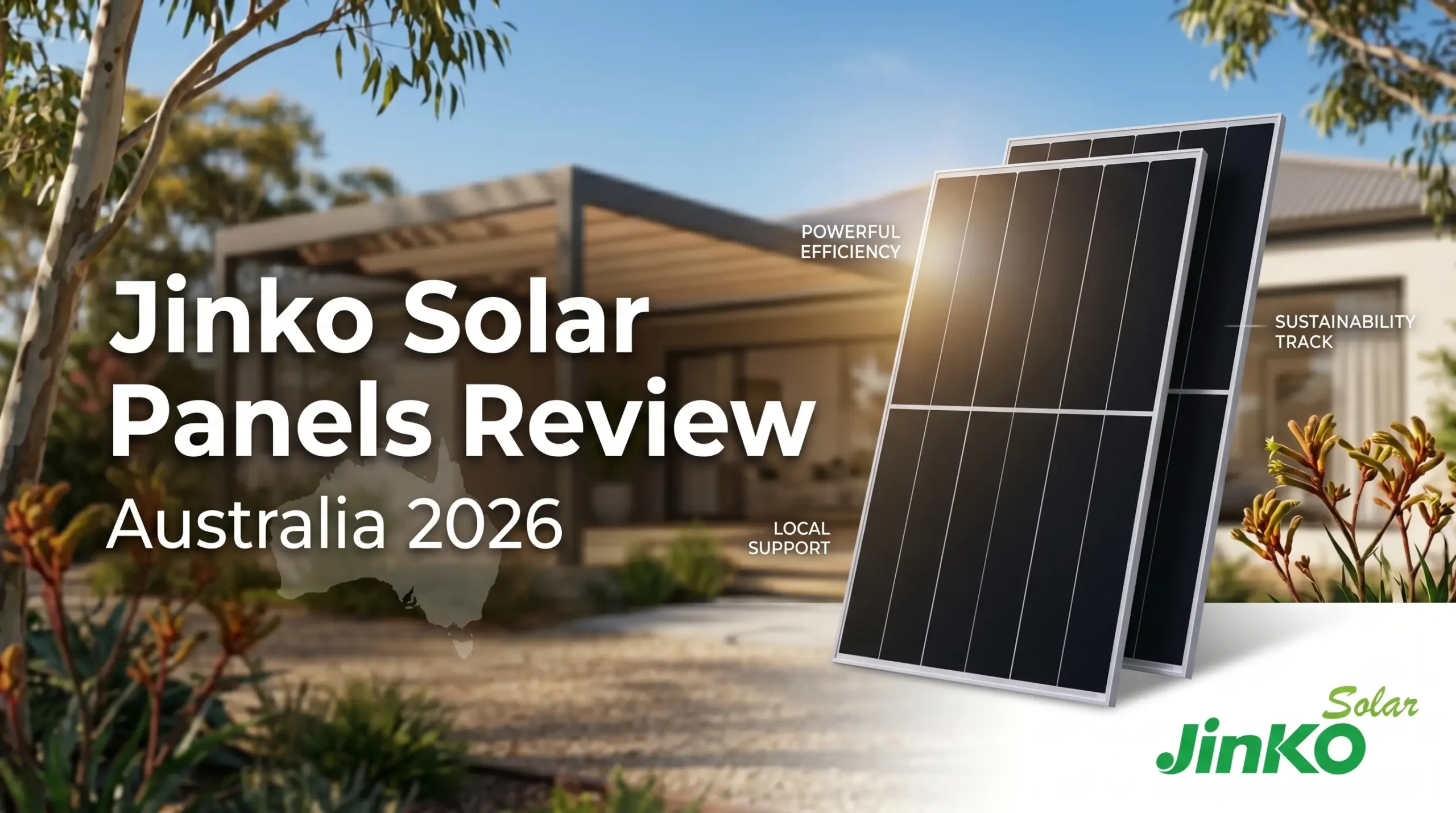
Jinko Solar is a Chinese manufacturer known for producing high-quality “Tier 1” solar panels. The company also maintains a physical office in Sydney, providing local support when needed—though most users rarely need to contact them because Jinko panels are widely regarded as a reliable and cost-effective option. Additionally, the company has warehouse facilities in Melbourne, Brisbane, Adelaide, and Perth, ensuring quick distribution across Australia.
This Jinko Solar Panels Review focuses on what actually matters in Australia. Not just lab specs. Not just marketing claims. Instead, it draws from the field-level experiences of the Aussie Solar Tech installer team and real users.
Are Jinko Solar Panels Worth It: A Brief Overview
For most homes, the numbers make the decision simple. A standard 6.6kW Jinko Solar Panel system in Australia costs around $4,000–$6,000 for full installation. In comparison, premium systems sit closer to $6,500–$8,500+ for the same size.
So, who gets the most value? Budget-focused homeowners. Also, people installing larger systems at an office or business where saving a few thousand upfront matters more than brand prestige.
Now break it down per panel. Jinko solar panels cost about $110-200 per panel. This can be as low as $80-$90, depending on the series and installer. Premium panels, on the other hand, sometimes sit at $450-$750 per panel. Meanwhile, all these brands offer the same efficiency range of 22-24%.
That means you are often paying almost double for premium brands, while getting only little to no gain in efficiency. In other words, Jinko gives you “almost the same power, for much less money.”
Brands like SunPower, REC Group are “premium”. What’s special about these brands is that they sometimes offer longer warranties. Some say their panels appear a bit more stylish if you look really hard. Other than that, they mostly ride the ‘premium’ hype. JinkoSolar might have less show-off value, but this company has been in the solar business for over 26 years.
The following table might help you compare it to other premium solar panels in Australia.
|
Feature |
Jinko Solar (Tiger Neo) |
LONGi Solar (Hi-MO 6/7) |
Trina Solar (Vertex S+) |
REC Group (Alpha Pure-R) |
SunPower / Maxeon 7 |
Canadian Solar (HiKu7) |
|
Market Position |
Budget–mid Tier 1 |
Budget–mid Tier 1 |
Mid Tier 1 |
Premium |
Ultra-premium |
Budget Tier 1 |
|
Technology |
N-Type TOPCon |
N-Type HPBC/TOPCon |
N-Type TOPCon |
HJT (Heterojunction) |
IBC (Back-contact) |
N-Type TOPCon |
|
Typical Efficiency |
~21.5% to 24.8% (2026 Tiger Neo 3.0 models) |
~22.0% to 22.6% |
~21.8% to 22.3% |
~22.0% to 22.6% |
~23.0% to 24.1% |
~21.0% to 22.0% |
|
Temp. Performance |
Excellent(-0.29%/°C) |
Good (-0.29%/°C) |
Good (-0.30%/°C) |
Excellent (-0.24%/°C) |
Excellent (-0.27%/°C) |
Good (-0.30%/°C) |
|
Annual Degradation |
~0.40% |
~0.40% |
~0.40% |
~0.25% |
~0.25% |
~0.40% to 0.45% |
|
Product Warranty |
10- 25 years |
25 years |
25 years |
25 years |
Up to 40 years |
12 to 25 years |
|
Performance Warranty |
30 years |
30 years |
30 years |
25 years |
40 years |
25 to 30 years |
|
Cost Per Panel |
~$90 to $200 |
~$150 to $210 |
~$320 to $430 |
~$450 to $550+ |
~$130 to $190 |
What Makes Jinko Solar Panels Special: Main Features and Specs
Comparing prices is just the beginning. There are many other factors you must consider when solar shopping. For instance, there are certain challenges to turning sunlight into electricity. Is your solar panel capable enough to handle those? How much can they save on your roof space and electricity bills? Plus, there’s the question of warranty and longevity.
Efficiency Range
Efficiency tells you how much sunlight a panel can convert into usable electricity. The higher the efficiency, the more power you get from the same roof space. This becomes very important if your roof area is limited.
Jinko panels’ efficiency range is usually within 21% to 23%. This is especially true for newer models like the Tiger Neo series. Most standard or non-premium panels offer lower ranges. They usually fall somewhere between 17% and 19%.
Another strong point is low-light performance. Jinko panels keep working even when the conditions are not ideal. This includes cloudy weather, smog, and the early morning or late afternoon hours. Older panels tend to lose output during these times. Jinko’s newer cell design captures more of the available light. Because of that, energy losses are reduced. Over a full year, this adds up to more electricity. And that means better savings on your power bill.
Wattage Options
Wattage tells you how much power a panel can produce under standard conditions. Higher wattage means each panel generates more electricity. It also means you need fewer panels to build the same system size.
In Australia, most Jinko panels’ wattage falls between 440W and 475W. Some newer models go even higher. This makes a big difference when space is limited. You can fit more power into the same roof area. For example, 12 older 350W panels give you about a 4.2 kW system. If you switch to 475W Jinko panels, that same space can give you around 5.7 kW.
That extra capacity translates into real savings. Electricity in Australia costs roughly 33 to 50 cents per kWh. A 5.7 kW system can produce around 2,200 more kWh each year compared to a smaller setup. That’s energy you don’t need to buy from the grid. Over time, it can mean an extra $150 to $400 or more in yearly savings.
Cell Technology (TOPCon vs PERC)
Cell technology is the core design of solar panels. Better technology means higher total efficiency and long-term performance.
Older solar panels used PERC tech. PERC means Passivated Emitter and Rear Cell. The special feature of this cell-tech was an added reflective layer, which captured more trapped light than standard silicone cells.
PERC has been a standard cell-tech for years. However, models from Jinko have upgraded to the brand new TOPCon technology. It stands for Tunnel Oxide Passivated Contact. These cells have an ultra-thin oxide layer, which stops electrons from escaping. Thus, it reduces internal energy losses.
Because of this superior physics, Jinko Solar TOPCon has higher efficiency, better heat tolerance, and low-light performance.
Performance in the Australian Heat
Heat is one of the biggest factors affecting solar panel performance. When a solar panel heats up, it produces less electricity. This is normal for all panels.
Higher temperatures make the panel less efficient at converting sunlight into power. This effect is measured by something called the temperature coefficient. It tells you how much output drops for every 1°C above 25°C.
Jinko panels handle heat reasonably well. Older P-type models lose about -0.35% per °C. Newer N-Type TOPCon panels, like the Tiger Neo, improve this to around -0.29% per °C. A smaller (less negative) number is better, because it means less power loss in heat.
In real Australian summers, roof temperatures can hit 65°C to 75°C when the air temperature is around 35°C to 45°C. At that point, total output can fall by roughly 11% to 14.5% compared to ideal lab conditions.
Therefore, Aussie Solar Tech installers operating in scorching environments like Queensland frequently rely on Jinko’s low temperature coefficient panels.
These panels virtually eliminate Light-Induced Degradation (LID). As a result, there is a highly predictable power loss over time rather than erratic drops. Also, they hit the perfect sweet spot between affordable bulk pricing and dependable high-temp tolerance.
Build Quality & Durability
Australia is a tough environment for solar panels. There is strong UV exposure, extreme heat cycles, dust, storms, and even coastal salt in many areas. All of this slowly wears down materials over time. It can weaken frames, reduce power output, and cause small internal damage.
Jinko panels are built with tempered glass and anodized aluminum frames. Many models are tested for hail impact and salt mist corrosion. Typical lifespan is around 25–30 years, which matches industry standards. They are not known for having unusually high failure rates. Problems like microcracks or PID can happen with any brand, not just Jinko. But overall, Jinko stays within normal industry limits. Their degradation is gradual rather than sudden or sharp.
To get the best lifespan from Jinko panels in Australia, basic care helps a lot. Cleaning them from time to time keeps dust from lowering efficiency. Good airflow under the panels also reduces heat stress. And most importantly, using experienced installers like Aussie Solar Tech helps avoid unnecessary structural strain.
Warranty & Local Support in Australia
Warranty is where the difference between Jinko and other brands becomes more obvious. Jinko usually offers a product warranty of 12–15 years. Its performance warranty goes up to 25–30 years for standard panels. These terms are still solid. But they sit a bit below premium brands which often offer up to 25 years of product warranty.
However, Jinko solar panel product warranty does extend to 25 years when you are using a premium model like Tiger Neo. Also, JinkoSolar has a well-established presence in Australia. There are many local offices and a strong distribution network. This helps with faster claim handling and easier part replacement.
Still, warranty experience depends heavily on the installer. The company’s backing is strong, but the process is not as premium-tier as top brands.
You can explore the full warrant terms and conditions here.
How Much Power Do Jinko Tiger Neo Panels Generate in Your City? (2026)
Solar output from a Jinko Tiger Neo system varies by location. The table below shows estimated annual generation for a standard 6.6kW system (15 x 440W Tiger Neo panels) in each major Australian city, using CEC postcode data and Jinko’s -0.30%/°C temperature coefficient.
|
City |
Peak Sun Hrs/Day |
Daily Output (6.6kW) |
Annual Output (kWh) |
PERC Advantage (N-Type Gain) |
Best Jinko Series |
|
Sydney, NSW |
4.2 |
~25.5 kWh |
~9,300 kWh |
~+420 kWh/yr vs PERC |
Tiger Neo 440W |
|
Melbourne, VIC |
4.1 |
~23.6 kWh |
~8,620 kWh |
~+390 kWh/yr vs PERC |
Tiger Neo 440W |
|
Brisbane, QLD |
4.8 |
~27.5 kWh |
~10,040 kWh |
~+490 kWh/yr vs PERC |
Tiger Neo 440W |
|
Perth, WA |
5.1 |
~29.2 kWh |
~10,660 kWh |
~+580 kWh/yr vs PERC |
Tiger Neo 475W |
|
Adelaide, SA |
4.9 |
~28.1 kWh |
~10,250 kWh |
~+520 kWh/yr vs PERC |
Tiger Neo 440W |
|
Canberra, ACT |
4.6 |
~26.4 kWh |
~9,630 kWh |
~+440 kWh/yr vs PERC |
Tiger Neo 440W |
|
Darwin, NT |
5.5 |
~31.5 kWh |
~11,490 kWh |
~+610 kWh/yr vs PERC |
Tiger Neo 475W |
|
Hobart, TAS |
3.6 |
~20.7 kWh |
~7,550 kWh |
~+280 kWh/yr vs PERC |
Tiger Neo 440W |
One Important Caution for Australian Jinko Buyers
Jinko Solar’s competitive pricing is one of its strongest attributes — but it also attracts a risk worth understanding. Because Jinko panels offer strong performance at a lower price than premium brands, they are sometimes used by low-quality or low-margin installers who cut costs in other parts of the system: undersized cabling, non-CEC-compliant inverters, inadequate string design, or subcontracted labour with limited accountability.
The panel quality is not the risk. The installation quality is. A Jinko Tiger Neo panel installed by a substandard installer will underperform a lesser panel installed by an expert — every time.
Before accepting any Jinko solar quote in Australia, we recommend:
- Verifying the installer’s SAA (Solar Accreditation Australia) accreditation at saaustralia.com.au
- Requesting a written quote that specifies the exact Jinko panel model number, inverter brand and model, and all DC cable sizing
- Asking whether their own employed technicians (not subcontractors) will be performing the installation
- Checking Google Reviews and Product Review specifically for mentions of post-installation service quality — not just the sales experience
Jinko Panel Models Available in Australia
The Tiger Neo is Jinko’s flagship model, utilizing advanced N-type TOPCon cell technology to deliver excellent efficiency and low-light performance. The older Tiger Pro (P-type PERC) has mostly been phased out for residential use in favor of the Neo. You might still find it in clearance sales or specific commercial formats. The legacy Eagle Series is an older generation that is rarely used or sold in modern installations. This
|
Model |
Efficiency |
Wattage Range |
Cell Tech |
Warranty (Product / Perf.) |
Est. Price per Panel (AUD) |
|
Tiger Neo |
~22.0% – 23.8% |
440W – 475W |
N-Type TOPCon |
25 yrs / 30 yrs |
$135 – $190 |
|
Tiger Pro |
~20.7% – 21.3% |
395W – 440W |
P-Type PERC |
12–15 yrs / 25 yrs |
$110 – $160 (Clearance) |
|
Eagle Series |
~18.0% – 20.0% |
330W – 370W |
P-Type PERC |
10–12 yrs / 25 yrs |
Discontinued / N/A |
Jinko Solar Warranty in Australia: What Happens If Your Installer Closes?
Jinko’s Tiger Neo carries a 25-year product warranty and 30-year performance warranty. Both remain valid even if your original installer goes out of business — the obligation shifts directly to Jinko Solar Australia.
How to make a direct warranty claim with Jinko Australia:
- Call Jinko Solar Australia on 1300 326 182 — their dedicated Australian customer service line
- Provide photos of the affected panels and the serial number of each panel requiring replacement
- Send this information to the email address Jinko provides on the call
- Jinko arranges replacement panels and, where needed, can recommend a local SAA-accredited installer for the swap
- Jinko reimburses labour costs for panel replacement — check current reimbursement amounts when you call, as these are subject to change
Final Verdict
| Pros | Cons |
|---|---|
| Strong value — high efficiency at a fraction of premium pricing | Shorter warranty on older/non-Tiger Neo models |
| 2nd-ranked brand in the 2026 Installer’s Choice Awards | Slightly behind Aiko on peak efficiency |
| Well-suited to Australian heat and coastal conditions | Less “prestige” appeal than premium Western/Japanese brands |
| Established local support network across 4+ states | Value depends heavily on installer quality (see caution above) |
Jinko earns its runner-up ranking honestly: it isn’t the single most efficient panel on the Australian market, but it delivers 90%+ of premium-brand performance for a fraction of the cost, backed by a genuinely large local support footprint. For most Australian homeowners — and especially for larger residential or small commercial systems where per-panel savings add up fast — Jinko is a safe, well-supported choice, provided it’s installed by a properly accredited team.
Still deciding between Jinko and another brand for your roof? Get a free, no-obligation quote from the Aussie Solar Tech team — we’ll size a system against your actual roof, climate, and budget rather than a generic estimate.
Conclusion
Jinko Solar Panels offer top-tier performance and reliability, making them a great choice for residential and commercial solar installations. Their advanced technology ensures maximum energy generation, while their sturdy construction guarantees durability even in harsh weather conditions. With a wide range of panel options and excellent customer support, Jinko is a reliable and trusted brand in the solar industry
Switch to Jinko Solar Panels today and harness the power of the sun for a greener and more sustainable future.
Frequently Asked Questions
1. Are Jinko solar panels good quality?
Yes. Jinko is the world’s largest solar panel manufacturer by shipment volume and was ranked the 2nd most-recommended brand by Australian installers in the 2026 SolarQuotes Installer’s Choice Awards. Its Tiger Neo range offers strong efficiency, a 25-year product warranty, and local Australian support.
2. How does Jinko rank against other solar brands in Australia in 2026?
Jinko placed 2nd in the 2026 Installer’s Choice Awards with 14% of the vote, behind Aiko (28%) and ahead of SunPower (11%), REC, and Trina.
3. Is Jinko or Aiko the better choice for my home?
Aiko has a slight edge on peak efficiency thanks to its back-contact cell design, but Jinko has a longer Australian track record, broader model availability, and typically lower pricing. For most budget-conscious homeowners, Jinko offers stronger overall value; for very limited roof space where every percentage point of efficiency counts, compare quotes for both.
4. What is the best Jinko solar panel for Australia in 2026?
The Tiger Neo 440W is the best all-round option for most homes. For smaller roofs, the Tiger Neo 475W delivers higher output from the same footprint.
5. How much do Jinko solar panels cost in Australia?
Jinko Tiger Neo panels cost roughly $130–$190 per panel. A 6.6kW system typically runs $4,000–$6,000 fully installed before rebates, depending on your installer, inverter choice, and state.
6. What warranty do Jinko solar panels have?
Tiger Neo panels carry a 25-year product warranty and a 30-year performance warranty, guaranteeing a minimum of 87.4% output retained at year 30. This coverage stays valid even if your original installer closes down.
7. Are Jinko panels N-type or P-type?
Current Tiger Neo panels use N-type TOPCon cells, which offer better efficiency, lower annual degradation (~0.40%), and stronger heat performance than the older P-type PERC panels Jinko previously sold.

Shah Tarek is a Solar Energy Consultant with 10 years experience in solar system design and solar consultancy field at Australia. He is now a Director, Operation & Consultancy Division at Aussie Solar Tech, a leading Australian solar retailer and installer. Here he is writing informative and engaging solar content that educates the community on the benefits of solar power. His work supports Aussie Solar Tech’s mission to promote sustainable energy solutions and foster a greener future for Australia.


Seraphim Solar Panels Review: Efficiency, Reliability, and Value Unveiled

Talesun Solar Panels: Honest Review Before You Buy

Sungrow Battery VS Tesla Powerwall : Which is Best in Australia?

Leapton Solar Panels Review: Affordable Energy Solution

REC Solar Panels Review: Outstanding Efficiency & Durability

Best Hybrid Inverters for Home Solar Systems in 2025
Best Solar Battery In Australia 2026 — Complete Guide

Sigenergy VS Fox ESS Battery: Which is The Best Choice for 2026

How Much Do Solar Panel Costs in Australia? (2026 Price Guide)

