
The solar energy industry is booming, and with advancements in technology, it’s getting easier to make your home more energy-efficient. One of the most exciting innovations in this space is the hybrid solar inverter. Could you please explain its function and how it enhances the efficiency of your solar power system?
For Australian homeowners, where sunlight is abundant, optimizing solar energy systems is critical. Hybrid inverters, which combine solar and battery power capabilities, are a smart and future-proof solution. In this blog post, we will delve into the advantages of hybrid solar inverters and explain why they will revolutionise solar system upgrades in 2025.
What is a Hybrid Solar Inverter?
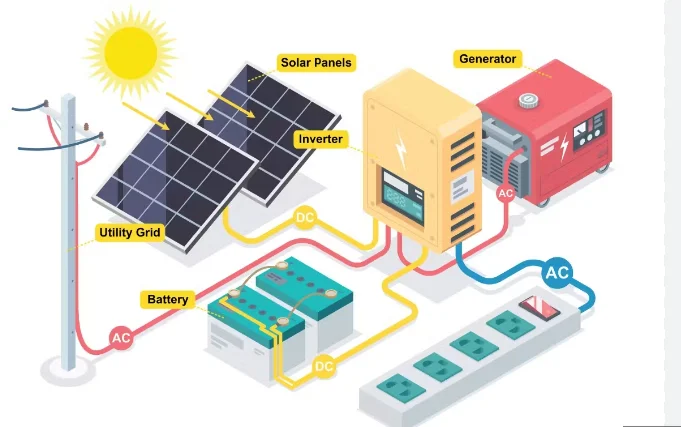
A hybrid solar inverter is an advanced piece of equipment that integrates solar panels and batteries into a single system. Unlike traditional inverters that convert direct current (DC) from solar panels into alternating current (AC) for household use, hybrid inverters manage both solar energy and energy stored in batteries. This means they can distribute energy between the grid, your home, and your battery, depending on demand.

In simple terms, a hybrid inverter allows you to store excess energy in your solar battery during the day and use it during the night or when the sun isn’t shining. It also provides you with the flexibility to sell excess energy back to the grid, thereby further increasing the efficiency of your solar system.
Hybrid System Operating Modes in Australia—Explained Simply
Hybrid inverters – often called multi-mode inverters – are becoming a go-to choice for Aussie homeowners who want the best of both worlds: solar power during the day and battery storage at night. They work a lot like a standard string inverter, turning DC solar energy into the AC power your household runs on. Is there a significant difference? A hybrid inverter can decide whether to send that extra solar into your home, charge a battery, or export it to the grid for a feed-in tariff.
Household loads first, grid export last
In most Australian setups, the hybrid inverter will always prioritise your household energy needs first. If your solar panels are producing more power than you’re using, the system sends the excess into the battery. Once the battery is topped up, any leftover solar is exported to the grid.
Most hybrid inverters sold in Australia also let you set export limits (handy in states where the DNSPs restrict exports) or even run a zero-export mode if required.
Time-of-use (TOU) optimisation
A clever feature many Aussies use is battery time-of-use programming. You can schedule your battery to charge from the grid during cheap off-peak hours, then discharge during expensive peak times. For households on TOU tariffs in NSW, VIC, SA, and QLD, this can make a noticeable dent in power bills.
Hybrid inverter operating priorities
Thanks to fast electronics and smart software, hybrid inverters can switch between different modes without you noticing. The usual order of priority looks like this:
-
Solar priority: your panels will first cover household loads.
-
Battery charging – Extra solar charges the battery.
-
Grid export—surplus energy is sent to the grid.
-
Backup mode: If the grid loses power, the inverter supplies energy to essential loads.
-
Force charge mode—optional: charge the battery from the grid at off-peak rates.
Backup power in a blackout
One of the main reasons Aussies go hybrid is for blackout protection. When the grid goes down, most hybrid inverters automatically switch into backup (also called UPS or “islanding”) mode. The switchover is usually almost instantaneous (under 30 milliseconds)—fast enough that your Wi-Fi or fridge won’t even notice. Some models, however, can take 10–60 seconds to kick in, which at least makes it obvious that a blackout has happened.
It’s worth noting that not every hybrid inverter is designed for continuous off-grid use. Many will run backup power just fine, but if you live in rural or regional Australia and suffer long outages, a more powerful off-grid inverter system might be the safer option.
Can Hybrid Inverters Be Used for Off-Grid Systems in Australia?
For Aussies living in areas with frequent blackouts or patchy grid reliability, the big question often comes up: Can a hybrid inverter fully replace the grid and run as an off-grid system? The short answer is: not always.
Hybrid vs. Off-Grid Inverters
Most hybrid inverters are designed for backup power during outages – not for running a home entirely off-grid. While they can keep essential appliances running, many models can’t operate indefinitely without the grid. Some even have limited functionality in blackout mode, relying only on the stored battery power without the ability to recharge directly from solar. That means once the battery drains, the lights go out.
That said, some advanced hybrid systems like FranklinWH and Deye hybrids feature dual AC inputs, so you can connect both the grid and a backup generator. This gives more flexibility if you live in an area where outages are common.
Where Hybrids Fall Short
Most standard hybrids don’t have the surge capacity or generator management needed for whole-house off-grid living. They also limit pass-through power – meaning only essential loads (like lighting and fridges) can be powered during a blackout. A few exceptions exist, though: for example, the Sungrow SH-RS can pass through extra grid power to handle higher loads, and bigger systems like the Sol-Ark 15K, EG4 18K, and Deye all-in-one hybrids are capable of powering a whole home more effectively.
But for truly continuous off-grid setups, a dedicated off-grid inverter is usually the better choice – especially in regional Australia.
Hybrid Inverters and Battery Compatibility
A hybrid inverter is only as good as the battery it’s paired with. These days, most solar batteries are Lithium Ferro Phosphate (LFP) thanks to their long lifespan and safety.
-
Low Voltage (48V): Still very common in Australia. It is compatible with a wide variety of rack-mounted batteries like PowerPlus Energy, Pylontech, Simpliphi, Discover Energy, and others. Pros: more flexible, safer, easier to scale, and usually cheaper.
-
High Voltage (150V–500V) is becoming more popular due to its greater efficiency and ability to deliver higher charge and discharge rates. Downsides? They’re usually brand-locked – many HV inverters only work with one specific HV battery model.
If you’re after maximum flexibility, 48V systems are still a solid choice. If efficiency and high power output matter more, then an HV battery setup might be worth considering.
Smarter Features: Getting More From Your Hybrid
Modern hybrid inverters in Australia come with a bunch of smart functions that help you save more and get better control over your energy.
-
Off-peak battery charging: Charge your battery from the grid during cheap overnight tariffs and use it during expensive peak hours. This is especially valuable in VIC, NSW, SA, and QLD where TOU tariffs apply.
-
Load management: Some hybrids can manage which appliances get power first – like prioritising your fridge, lights, or EV charger.
-
Time-of-use optimisation: Automatically shifts energy use to match tariff schedules, cutting bills and boosting independence.
These smart settings mean your hybrid system isn’t just about backup power – it’s also about maximising savings and reducing reliance on the grid.
The Benefits of Hybrid Solar Inverters in Australia
Upgrading to a hybrid solar inverter comes with a variety of benefits, particularly for homeowners in Australia. With a focus on maximising energy efficiency and savings, here’s why hybrid inverters should be on your radar in 2025.
Maximized Energy Efficiency
Hybrid inverters significantly increase the efficiency of your solar system by optimising how energy is used, stored, and shared with the grid. By balancing your household’s energy needs with the amount of solar energy produced, these inverters minimise waste and maximise the use of solar power. In fact, you can save up to 30% more energy when using a hybrid system compared to a standard solar setup.
For Australian households where energy prices continue to rise, maximising efficiency is crucial. Hybrid inverters give you more control over when and how you use energy, allowing you to minimise grid reliance and lower electricity bills.
Energy Storage for Maximum Flexibility
The ability to store energy is a standout feature of hybrid inverters. This means you can store excess energy during the day and use it later when electricity prices are higher, such as during the evening. Even better, with the introduction of time-of-use tariffs in Australia, having control over when you use energy can result in significant cost savings.
Additionally, hybrid inverters allow for seamless energy transitions. If the grid goes down, your home can switch to stored battery power without any interruptions. This makes hybrid systems ideal for areas prone to power outages or for homeowners looking for energy independence.
Future-Proof Technology
In 2025, solar inverter upgrade options are all about making sure your system is ready for future energy demands. Hybrid inverters are designed to be compatible with both current and future battery technologies, ensuring that your investment remains relevant as solar tech continues to evolve.
Because they integrate batteries and solar panels, hybrid inverters offer scalability. Whether you want to start with a small battery setup or expand later, hybrid inverters give you the flexibility to grow your system based on your energy needs.
Lower Energy Bills
Hybrid solar inverters enable you to reduce reliance on grid electricity, which is a great way to lower your overall energy bills. By optimising the use of solar energy and stored battery power, hybrid inverters can help Australian households reduce grid electricity usage by up to 80%.
Moreover, during peak electricity pricing periods, you can use stored solar energy instead of drawing from the grid, adding even more savings.
Environmental Benefits
By reducing reliance on grid electricity, hybrid inverters contribute to a smaller carbon footprint. This is especially important in Australia, where much of the grid electricity still comes from fossil fuels. Using a hybrid solar inverter helps minimize your home’s carbon emissions while maximizing clean, renewable energy use.
In addition, many hybrid inverters support selling excess energy back to the grid. This not only helps power the community with clean energy but can also earn you credits, further contributing to your sustainability goals.
Hybrid Inverters vs Traditional Inverters
While traditional inverters convert solar energy into electricity for immediate use, they lack the storage capacity of hybrid systems. Hybrid inverters, on the other hand, offer a more efficient, versatile, and future-proof solution. Let’s break down the differences.
| Feature | Traditional Inverters | Hybrid Solar Inverter |
|---|---|---|
| Energy Storage | No | Yes |
| Grid Interaction | Basic | Advanced |
| Power During Outages | No | Indeed, the battery level is high. |
| Energy Efficiency | Moderate | High |
| Cost | Lower upfront cost | Higher upfront cost, but more savings long-term |
In the long run, hybrid inverters pay for themselves by delivering higher energy efficiency, lowering electricity bills, and providing peace of mind during power outages.
Is a Hybrid Inverter Right for Your Home?
Before upgrading to a hybrid solar inverter, consider your specific energy needs, budget, and location. If you experience frequent power outages or live in an area with high electricity prices, a hybrid inverter may offer more significant benefits. Additionally, if you’re planning to add battery storage to your solar system in the future, investing in a hybrid inverter makes sense.
For homeowners in Australia, where energy consumption peaks during the evening and grid electricity prices are rising, hybrid inverters provide a practical and forward-thinking solution. They allow you to store excess solar energy and use it during high-demand periods, reducing overall costs and making your home more energy-independent.
FAQ Section
What is a hybrid solar inverter?
A hybrid solar inverter is a device that manages the energy generated by solar panels and the energy stored in batteries. It converts solar energy into electricity for household use and stores excess energy in batteries for later use.
How does a hybrid inverter differ from a traditional inverter?
A traditional inverter only converts solar energy for immediate use, while a hybrid inverter also stores excess energy in batteries and offers advanced grid interaction capabilities. Hybrid inverters provide more flexibility and efficiency by enabling energy storage.
Is a hybrid inverter worth the investment?
Yes, a hybrid inverter can significantly increase the efficiency of your solar system and lower your energy bills by reducing reliance on grid electricity. Over time, the savings on electricity costs can offset the initial higher investment.
Can I upgrade my existing solar system to include a hybrid inverter?
Yes, many homeowners choose to upgrade their existing solar systems by adding a hybrid inverter. It’s a great way to future-proof your system, especially if you plan to add batteries for energy storage in the future.
Call to Action: Upgrade to a Hybrid Solar Inverter Today!
Ready to make your solar system more efficient and future-proof? Contact Aussie Solar Tech today to learn more about the best hybrid solar inverters available in Australia. Whether you’re looking to reduce your energy bills or increase your home’s energy independence, we can help you choose the right hybrid inverter for your needs.

Shah Tarek is a Solar Energy Consultant with 10 years experience in solar system design and solar consultancy field at Australia. He is now a Director, Operation & Consultancy Division at Aussie Solar Tech, a leading Australian solar retailer and installer. Here he is writing informative and engaging solar content that educates the community on the benefits of solar power. His work supports Aussie Solar Tech’s mission to promote sustainable energy solutions and foster a greener future for Australia.






Seraphim Solar Panels Review: Efficiency, Reliability, and Value Unveiled

Talesun Solar Panels: Honest Review Before You Buy

Sungrow Battery VS Tesla Powerwall : Which is Best in Australia?

Leapton Solar Panels Review: Affordable Energy Solution

REC Solar Panels Review: Outstanding Efficiency & Durability

Best Hybrid Inverters for Home Solar Systems in 2025
Best Solar Battery In Australia 2026 — Complete Guide

Sigenergy VS Fox ESS Battery: Which is The Best Choice for 2026

How Much Do Solar Panel Costs in Australia? (2026 Price Guide)

