As demand for home solar battery storage continues to grow in Australia, many homeowners are comparing two leading options: Alpha ESS and Tesla Powerwall 3. Both brands offer innovative technology, dependable performance, and solutions designed to help households make better use of solar energy.
But choosing the right battery is about more than just brand recognition. From performance and backup power to price and overall value, each system offers different benefits. In this comparison, we take a closer look at Alpha ESS Battery vs Tesla Powerwall 3 to help you decide which system offers the better value in 2026 for your home and energy needs.
Alpha ESS vs Tesla Powerwall 3: Side-by-Side Comparison
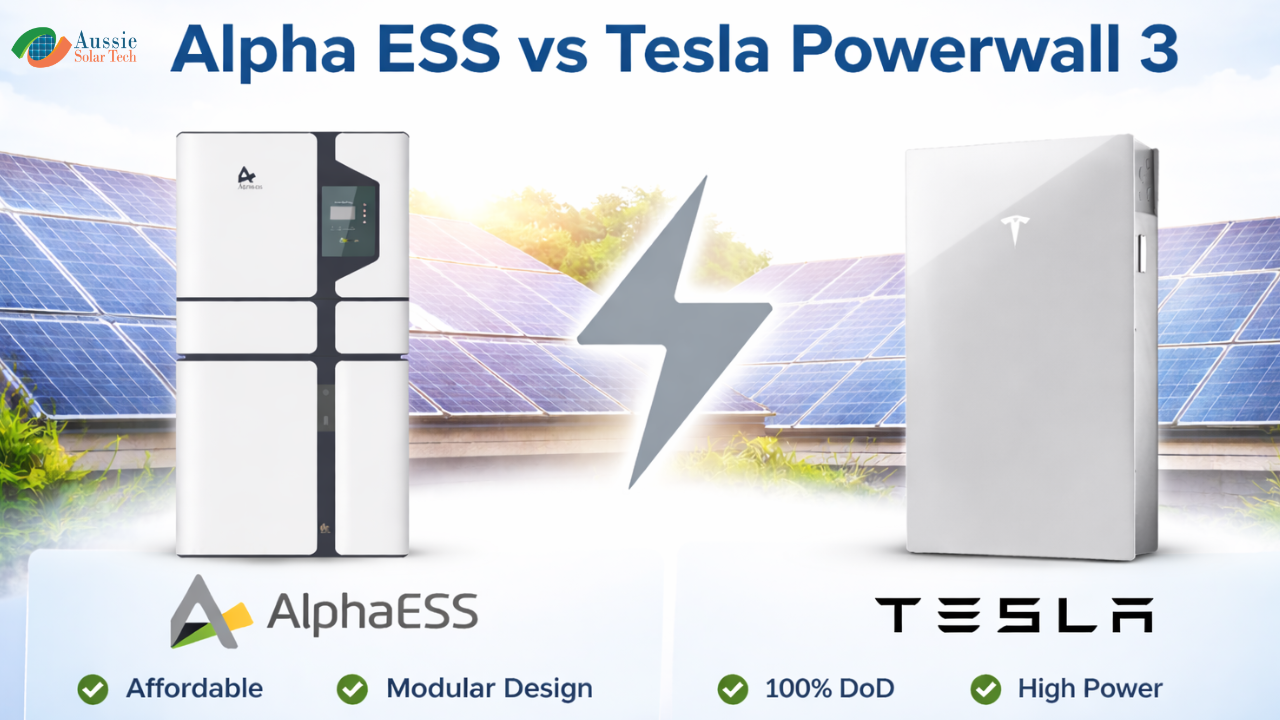
Choosing between Alpha ESS and Tesla Powerwall for home energy storage in Australia comes down to your energy needs, budget, and brand preference. Both offer reliable battery solutions, but each has its own strengths. Alpha ESS is often seen as a more budget-friendly option, with a wider range of battery sizes and system configurations to suit different households.
It also has a strong presence in the Australian market, with products designed to meet local conditions and regulations. Tesla Powerwall, on the other hand, stands out for its premium design, strong performance, and seamless integration within the Tesla ecosystem. The table below highlights the key differences to help you decide which battery is the better fit for your home.
Before breaking down the features of each brand, here’s a simple comparison of the most important differences between the two batteries.
|
Feature
|
Alpha ESS Smile Series
|
Tesla Powerwall 3
|
|
Capacity
|
3.8–60.5 kWh (scalable, depends on model/battery option)
|
13.5 kWh
|
|
System type
|
Hybrid ESS
|
Integrated solar + battery system
|
|
Backup power
|
Yes
|
Yes
|
|
Continuous power output
|
5 kW
|
Up to 11.5 kW
|
|
Max solar input
|
10 kW
|
20 kW DC
|
|
Efficiency
|
Max inverter efficiency: 97.3%
|
97.5% solar-to-home/grid efficiency
|
|
Outdoor rating
|
IP65
|
IP67
|
|
Operating temperature
|
-10°C to 50°C
|
-20°C to 50°C
|
|
Warranty
|
5-year product warranty + 10-year battery performance warranty
|
10-year warranty
|
|
Connectivity
|
Ethernet / Wi-Fi
|
Wi-Fi / Ethernet / Cellular
|
|
Price
|
$5,700 – $14,000
|
$14,850 to $16,850
|
Get the best deal and expert advice on Alpha ESS Battery and Tesla Powerwall 3 at Aussie Solar Tech.
Alpha ESS Battery vs Tesla Powerwall 3: Feature Comparison
Storage Capacity and Scalability
Alpha ESS stands out for its modular design, allowing homeowners to expand storage over time as their energy needs grow. This makes it a flexible option for those who want to start smaller and scale later. Tesla Powerwall 3, by comparison, offers stronger single-unit capacity, making it appealing for homeowners who want a more powerful all-in-one system from the start.
Smart Features and Monitoring
Both systems offer smart monitoring tools that help homeowners track energy usage, solar generation, and battery performance. Alpha ESS provides reliable remote monitoring and diagnostics, while Tesla delivers a more seamless app experience, especially for users already invested in the Tesla ecosystem.
Backup Power and Long-Term Value
Backup performance is an important factor when comparing home batteries. Alpha ESS can be a cost-effective choice for homeowners who want flexibility and future expansion, while Tesla Powerwall 3 may offer better value for those looking for higher upfront performance and a more premium integrated system. Warranty, ease of expansion, and long-term energy needs should all be considered when deciding which option offers the better overall value.
System Integration and Compatibility
Compatibility is another key factor when choosing a home battery. Alpha ESS offers flexible integration with a range of solar setups, making it suitable for different household requirements. Tesla Powerwall 3, on the other hand, is especially attractive for homeowners already using Tesla products, as it offers a more connected and streamlined energy ecosystem.
Installation and Design
Installation style and overall design can also influence the decision. Alpha ESS gives homeowners more flexibility through its modular approach, which can be useful for gradual expansion. Tesla Powerwall 3 focuses on a compact, premium all-in-one design, making it a strong option for those who prefer a cleaner and more simplified setup.
See the Alpha ESS and Tesla Powerwall 3 Datasheet
Alpha ESS Battery vs Tesla Powerwall Performance Comparison
When comparing the performance of the Alpha ESS Battery vs Tesla, several important factors need to be considered. Let’s explore these in more detail.
Round-Trip Efficiency:
- Alpha ESS: Official SMILE-G3 materials list a maximum inverter efficiency of over 97% and EU efficiency of over 96.2%, rather than a clearly stated round-trip efficiency figure in the document reviewed.
- Tesla Powerwall 3: Tesla states 89% solar-to-battery-to-home/grid efficiency and 97.5% solar-to-home/grid efficiency, so it is important to distinguish between round-trip battery efficiency and direct solar-to-home efficiency.
Lifespan and Durability:
- Alpha ESS: Thanks to its LiFePO4 technology, the Alpha ESS Battery is built to last, with a lifespan of up to 10,000 cycles. This is a significant advantage for those who want an energy storage solution that can last for decades.
- Tesla Powerwall: The Tesla Powerwall has a shorter lifespan of around 5,000 cycles, which is still impressive but less than the Alpha ESS Battery.
Technology Used:
- Alpha ESS: The LiFePO₄ technology used in the Alpha ESS Battery offers enhanced safety, better temperature tolerance, and longer durability. It is a solid choice for homeowners who prioritize safety and long-term reliability.
- Tesla Powerwall: The Tesla Powerwall uses NMC lithium-ion technology, which is known for its higher energy density and compact form. This battery is a great choice for users seeking a sleek, high-performance option, although it lacks the same safety benefits as LiFePO₄.
Alpha ESS vs Tesla Powerwall 3: Pros and Cons
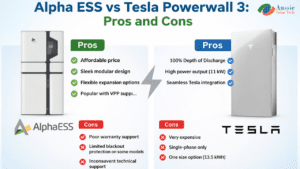
Alpha ESS Battery – Pros and Cons
Pros:
- Affordable price compared to many alternatives.
- Sleek design with a unified façade for neat installation and easy servicing.
- Easy cable management due to removable brick design.
- Available for DC-coupled solar systems with blackout protection and “black start” functionality.
- High popularity, making it compatible with Virtual Power Plants (VPPs).
Cons:
- Warranty support is often considered insufficient.
- Some models have poor surge capacity during blackouts.
- Not all models offer blackout protection.
- The wide range of models can be confusing for buyers.
- Technical support can be lacking.
Tesla Powerwall 3 – Pros and Cons
Pros:
- 100% Depth of Discharge (DoD), maximizing usable energy.
- High power output: up to 11.5kW continuous, enough for major household appliances.
- Best for new installations, but retrofitting is possible.
Cons:
- Expensive compared to other options.
- Single-phase: For 3-phase homes, multiple units are required.
- Only available in one size (13.5 kWh), limiting flexibility
Price Comparison: Alpha ESS Battery vs Tesla Powerwall 3
When it comes to the cost of home solar batteries, the price difference between Alpha ESS and Tesla Powerwall is quite noticeable.
Alpha ESS Battery:
Alpha ESS batteries are considered one of the more affordable options in the Australian market. They’re designed for homeowners who want the benefits of energy storage without incurring high costs. Depending on the battery size, system capacity, and installation requirements, Alpha ESS systems generally range between A$5,700 to A$14,000*. This makes them an attractive solution for families who are budget-conscious but still want a reliable storage system to maximize solar savings.
Tesla Powerwall 3:
On the other hand, the Tesla Powerwall 3 sits at the premium end of the market. In Australia, the total price, including installation, usually falls between A$14,800 and $16,000. The higher cost can be attributed to Tesla’s strong brand reputation, advanced technology, and smart features such as app integration, sleek design, and powerful backup capabilities. For many households, the Powerwall is not just about storage—it’s also about investing in one of the most recognized names in renewable energy.
Verdict:
If affordability is the main concern, Alpha ESS offers a much more cost-effective solution while still delivering solid reliability and performance. However, if you’re willing to pay extra for brand prestige, advanced features, and seamless integration with other smart energy systems, the Tesla Powerwall stands out as the premium choice. Ultimately, the decision comes down to whether you prioritize keeping upfront costs low or investing in a higher-end, feature-rich system.
Prices may vary depending on system size, installer, and location. Contact us for a personalized quote and expert advice
Alpha ESS vs Tesla Powerwall 3 Warranty
Alpha ESS Battery: Alpha ESS offers long-term warranty coverage, with official SMILE-G3 materials showing a 10-year battery performance warranty and a 5-year product warranty. Because warranty terms can vary by model, it is best to confirm the exact coverage for the specific Alpha ESS system being installed.
Tesla Powerwall 3: Tesla provides a 10-year warranty and states that the Powerwall will retain at least 70% of its installed usable energy at the end of the warranty period.
Verdict: Both brands offer strong long-term warranty support, but the exact Alpha ESS warranty details should be checked against the specific model. Tesla’s warranty terms are more clearly stated in its official documentation.
How to Choose the Right Solar Energy Storage System in Australia
Choosing the right solar energy storage system starts with understanding your household’s energy needs. Reviewing your electricity usage, peak demand times, and any future changes — such as adding new appliances or an EV — can help you select a battery that suits both your current and future requirements.
It’s also important to look at key factors such as battery capacity, power output, efficiency, warranty, and overall lifespan. Compatibility with your existing solar system and access to smart monitoring features can also make a big difference in long-term performance and convenience.
Finally, consider both the upfront cost and the long-term value the system can provide. The best battery is not always the cheapest one, but the one that offers the right balance of performance, reliability, and savings for your home.
FAQs
What is the difference between Tesla and AlphaESS?
Tesla’s Powerwall is a premium home battery with a strong brand reputation, user‑friendly app, and seamless integration with other Tesla products. AlphaESS typically offers more affordable and scalable battery solutions with modular design and good long‑term durability. Tesla tends to focus on a polished user experience and higher continuous power output, while AlphaESS appeals to cost‑conscious buyers who want flexibility in sizing their system.
Is AlphaESS a good battery brand?
Yes — AlphaESS is generally considered a reliable and cost‑effective home solar battery brand. It uses lithium iron phosphate (LiFePO4) technology, which is known for safety and long life, and offers scalability and strong warranties for many systems. Many Australian installers list AlphaESS among the popular battery options.
What is the best alternative to a Tesla Powerwall?
Some of the top alternatives to Tesla Powerwall include brands like, Sungrow, Sigenergy, Enphase IQ, AlphaESS,and BYD batteries — each offering competitive performance, different capacity options, and varying price points suited to different needs and budgets.
Which is better, AlphaESS or Growatt battery?
Both AlphaESS and Growatt are reputable brands in the home solar battery market. AlphaESS is known for modular scalability and affordability, while Growatt also offers reliable performance and strong value, especially for medium‑sized homes. The better choice depends on your household’s power needs and budget.
How long do solar batteries like AlphaESS and Tesla Powerwall last?
Home batteries typically last around 10 years or more with proper use. Warranty terms often reflect this, and high‑quality LiFePO4 batteries like AlphaESS may offer more cycles over time compared with standard lithium‑ion chemistries.
Can AlphaESS or Tesla batteries work with my existing solar system?
Yes — both AlphaESS and Tesla Powerwall 3 can be integrated with most solar systems, but compatibility depends on your inverter type (AC vs DC coupling) and installation setup. It’s best to check with your solar installer before purchase.
Conclusion
When choosing the right solar energy storage solution, the decision between Alpha ESS and Tesla Powerwall comes down to a balance of factors such as cost, technology, scalability, and brand reliability. By carefully evaluating these elements based on your unique needs, you can confidently choose the best option for your home and take a major step towards energy independence and sustainability.
Whether you choose Alpha ESS or Tesla Powerwall, embracing solar storage is a key move towards a greener, more resilient future.
Shah Tarek is a Solar Energy Consultant with 10 years experience in solar system design and solar consultancy field at Australia. He is now a Director, Operation & Consultancy Division at Aussie Solar Tech, a leading Australian solar retailer and installer. Here he is writing informative and engaging solar content that educates the community on the benefits of solar power. His work supports Aussie Solar Tech’s mission to promote sustainable energy solutions and foster a greener future for Australia.