Australian electricity bills are not getting cheaper.Peak grid rates in states like NSW and VIC can reach around $0.45/kWh to $0.55/kWh during evening demand periods, while feed-in tariff returns in SA and QLD have collapsed to as low as $0.04/kWh. Homeowners who built their solar systems around export income are now losing money every evening they draw from the grid.
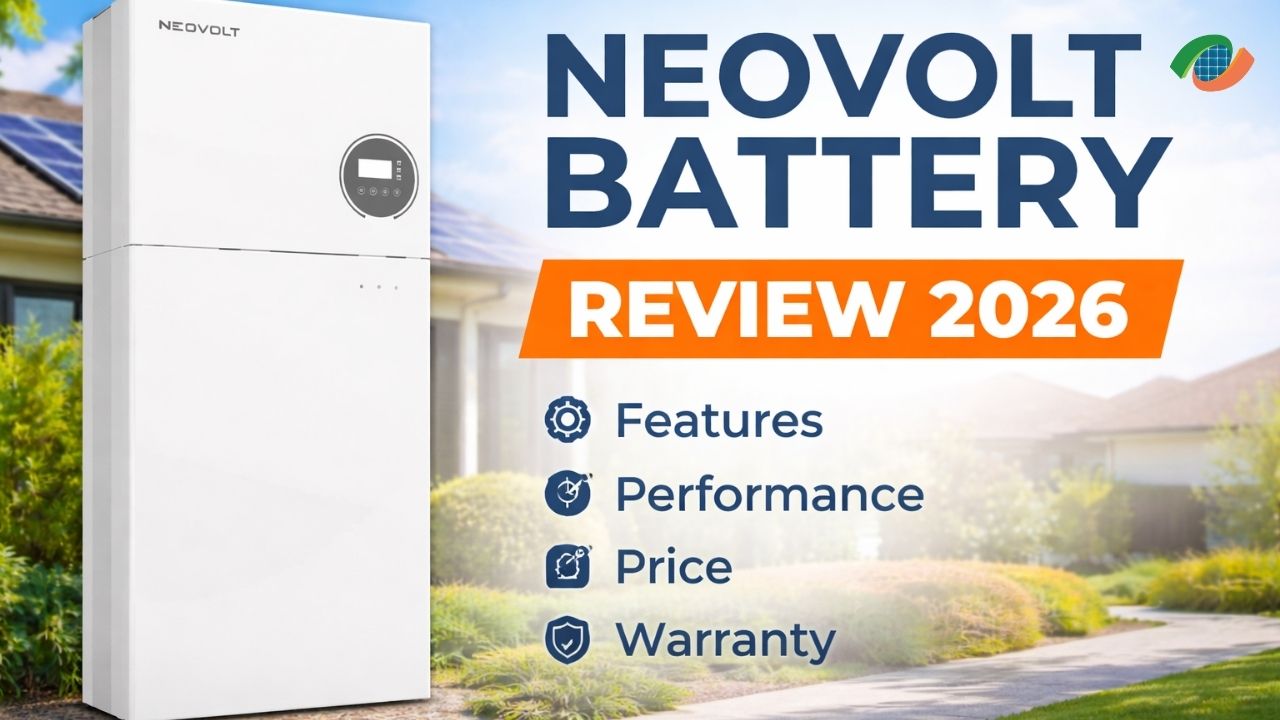
The Neovolt battery enters this market as a budget-accessible LFP storage option backed by modular design, a 10-year warranty, and fast blackout switchover. In this in-depth Neovolt battery review, we cover everything you need to know, from key features and real-world performance to pricing, warranty terms, and how it compares to other options on the market. By the end, you will have a clear understanding of whether Neovolt is the right choice for your solar energy storage needs.
Neovolt Company Overview
Neovolt is distributed exclusively in Australia by VoltX Energy, operating under a manufacturing partnership with Bytewatt China, headquartered in Suzhou, China. VoltX traces its Australian roots to 2009 through portable generator sales, expanded into off-grid energy products by 2012, and entered the home battery market in 2022 under the VoltX Energy brand.
Neovolt Battery Models Available in Australia
Neovolt offers three modular LiFePO₄ battery options in Australia. The main differences include nominal capacity, usable capacity, scalability, cycle life, and warranty coverage.
| Battery Model |
Nominal Capacity |
Usable Capacity |
Expandable Capacity |
Cycle Life |
Warranty |
| BW-BAT-4.8S |
4.8 kWh |
4.6 kWh |
4.8–28.8 kWh |
8,000 Cycles |
10 Years |
| BW-BAT-9.6P |
9.6 kWh |
9.1 kWh |
9.6–57.6 kWh |
10,000 Cycles |
12 Years |
| BW-BAT-10.1P |
10.1 kWh |
9.6 kWh |
10.1–60.6 kWh |
8,000 Cycles |
10 Years |
All three models use LiFePO₄ battery chemistry and feature IP65-rated protection. The BW-BAT-4.8S is suitable for lower-capacity modular systems, while the BW-BAT-9.6P and BW-BAT-10.1P offer larger expandable storage options for homes with higher energy consumption and backup requirements.
Neovolt Battery Technical Specifications
| Specification |
Detail |
| Cell Chemistry |
Lithium Iron Phosphate (LiFePO₄) |
| Nominal Capacity Range |
4.8 kWh to 60.6 kWh, depending on the selected battery model and configuration |
| Usable Capacity Range |
4.6 kWh to 57.6 kWh |
| Depth of Discharge |
95%–96%, depending on the model |
| Cycle Life |
8,000–10,000 cycles, depending on the model |
| Warranty |
10–12 years, depending on the battery model |
| Capacity Retention |
At least 70% usable capacity at the end of the applicable warranty period, subject to warranty conditions |
| IP Rating |
IP65 rated for suitable indoor and outdoor installation |
| Blackout Switchover |
Less than 10 ms with a compatible Neovolt BW-ESS system |
| Battery Protection |
Multi-level hardware and firmware protection with temperature monitoring and intelligent BMS control |
| Monitoring |
Online monitoring, diagnosis, system status tracking and remote service |
| System Configuration |
Available with compatible single-phase and three-phase Neovolt BW-ESS systems |
| VPP Support |
Supported through compatible Neovolt BW-ESS system configurations |
Neovolt Battery Price In Australia (Updated 2026)
Neovolt Battery Module 9.6P
| Battery Capacity |
Approx. Price (AUD) |
| 10 kWh |
A$5,495* |
| 19.2 kWh |
A$6,570* |
| 28.8 kWh |
A$8,285* |
| 38.4 kWh |
A$11,820* |
| 48 kWh |
A$15,875* |
Neovolt Battery Module 4.8 kW
| Battery Capacity |
Approx. Price (AUD) |
| 14.4 kWh |
A$7,395* |
| 24 kWh |
A$9,290* |
| 38.4 kWh |
A$14,485* |
| 43.2 kWh |
A$16,030* |
* Final price may varies based on location, installation requirements. Contact us for a personalized quote and expert advice.
How Neovolt Performs in Australian Conditions
LiFePO4 chemistry is the right call for Australian homes. Unlike NMC (nickel manganese cobalt) cells, LFP cells do not enter thermal runaway under the kind of temperatures recorded across Western Sydney, inland QLD, or Darwin, where ambient temperatures regularly exceed 40 degrees Celsius. The electrochemical stability of LFP cells under heat stress is a genuine safety and performance advantage.
The IP65 protection rating means the unit handles dust ingress and water jets, making it suitable for exposed outdoor installs on coastal WA and SA properties, as well as cyclone-adjacent installs in tropical QLD. It is not rated for full submersion.
The 20ms blackout switchover latency is fast enough to protect sensitive electronics, including CPAP machines, home office equipment, and medical devices. This is comparable to leading competitors at this price point and materially better than slower relay-based backup systems that can take 60 to 200ms.
Modular Scalability: Can You Expand Later?
The Neovolt architecture supports modular expansion from around 5 kWh to larger multi-module systems depending on configuration.. This means a homeowner can start with a 10 kWh unit and add a second module later as budget allows. The critical question our team always confirms before any modular install: does your existing inverter support the expanded capacity without replacement? This must be verified on a case-by-case basis, as Neovolt has not published a formal inverter compatibility matrix.
Inverter Compatibility in the Australian Market
According to installer experience, Neovolt systems have been paired with Sungrow, GoodWe, Growatt, and Solis hybrid inverters — official compatibility should be verified with the inverter manufacturer and installer. Fronius Gen24 and SolarEdge StorEdge have strict battery approval lists and require direct verification with VoltX Energy before proceeding.
IMPORTANT: Neovolt does not publish an official inverter compatibility matrix, unlike Tesla Powerwall 3, Sungrow SBR, or BYD Battery-Box HVS. Always confirm compatibility with your Aussie Solar Tech installer before signing a contract.
ROI and Payback Period Estimate
Using an average Australian electricity rate of $0.32/kWh and a standard daily cycling assumption of 10 kWh, a 10 kWh Neovolt at $4,855 after rebate would generate approximately $1,168 per year in avoided grid consumption (at 100% self-consumption of stored energy). That equates to a rough payback period of 4.2 years, with the battery continuing to operate for the remaining 5.8 years of its warranty period at zero ongoing cost.
Households on time-of-use tariffs (TOU) in NSW, VIC, and SA, where peak rates can reach $0.45/kWh to $0.55/kWh between 3 pm and 9 pm, can achieve payback periods closer to 3 to 3.5 years by charging from solar during the day and discharging during the evening peak window. This is the core peak shaving benefit that makes batteries financially viable at current Australian tariff levels.
Neovolt Warranty Information
Neovolt provides a 10-year manufacturer’s warranty covering both product quality and performance. The performance clause guarantees that the battery retains at least 80% of its usable capacity under normal operating conditions during the warranty period. Warranty documentation is provided by the authorised installer at the time of installation.
A critical distinction that most homeowners overlook: the warranty is honoured through VoltX Energy Australia, not directly through Bytewatt China. If VoltX Energy were to cease Australian operations, the warranty chain becomes the responsibility of the Australian Consumer Law framework rather than the manufacturer. This is a real risk for any battery distributed by a relatively young AU business, and it is why choosing an SAA-accredited installer like Aussie Solar Tech matters for long-term warranty protection.
Australian Consumer Law: Your Backup Protection
Regardless of any manufacturer’s warranty, the Australian Consumer Law (ACL) guarantees that any product sold in Australia must be of acceptable quality and fit for its stated purpose. If your Neovolt battery fails to deliver its stated energy storage function within a reasonable period, you have legal remedies against the Australian seller under the ACL, independent of any manufacturer warranty terms.
Using an SAA-accredited installer is essential. Warranty claims require proof of accredited installation. DIY or unlicensed installs void the manufacturer’s warranty and forfeit ACL protections that apply to the installation workmanship.
Honest Assessment: Advantages and Disadvantages
Advantages
~20ms Blackout Switchover: Fast enough to protect sensitive equipment like CPAP machines, home office setups, and medical devices without any noticeable interruption during grid outages.
LiFePO4 Chemistry,Much lower thermal runaway risk: LFP cells do not enter thermal runaway under high heat, a critical safety advantage for Australian homes where summer temperatures regularly exceed 40°C across WA, QLD, and inland NSW.
Solar Recharge During Blackout: Paired with a compatible backup inverter, Neovolt continues charging from solar panels even when the grid is down, extending energy independence during prolonged outages.
Modular Scalability From 5 kWh: Start small and expand capacity over time. This phased investment approach removes the pressure of committing to maximum capacity upfront.
IP65 Outdoor Rated Across All Australian Climates: Suitable for cyclone-adjacent coastal QLD, humid Darwin environments, and dry inland SA properties. Dust, water jets, and coastal salt air are handled without performance impact.
Smart BMS Monitoring via App and Web Portal: Real-time state of charge, energy usage, and savings data accessible through a mobile app and web portal from anywhere at any time.
Disadvantages
No published inverter compatibility matrix for Sungrow, GoodWe, and Growatt is available, but Fronius Gen24 and SolarEdge setups require direct verification before installation.
After-Sales Service Network Thin Outside NSW: Warehousing is concentrated in NSW. Service response times in regional WA, QLD, SA, and NT may be slower than nationally distributed competitors.
VPP Program Participation Not Confirmed: Homeowners looking to enrol in Amber Electric or SA Virtual Power Plant programs should verify VPP readiness directly with VoltX Energy before purchasing.
Warranty Chain Adds Complexity: Warranty is honored through VoltX Energy Australia, not Bytewatt China directly.Manufacturer warranty is through VoltX Energy Australia; if the distributor exits, statutory consumer guarantees under Australian Consumer Law still apply, but product coverage may change.
The CEC Listing Detail Every Other Review Has Missed
Neovolt standalone batteries may not appear on the current CEC battery list, as eligibility depends on the paired inverter and system configuration. In Victoria, South Australia, and Queensland, state rebate programs often require a CEC-listed battery system, so incorrect configurations may lead to rejected rebate applications.
Before signing a contract, confirm with your installer:
-
Is the complete Neovolt system CEC-approved at the system level?
-
Does it qualify under your state rebate scheme?
-
Has AS/NZS 5139:2019 compliance been verified?
At Aussie Solar Tech, our teams verify full system-level compliance and rebate eligibility before installation across all six states.
Market Comparison: Neovolt vs. Tesla Powerwall vs. SolarEdge Battery
| Criteria |
Neovolt 10 kWh |
Tesla Powerwall 3 |
SolarEdge Home Battery |
| Approx. Price (AUD) |
~$5,495 |
~$11,900 |
~$9,966 |
| Price Per kWh |
$549 |
$881 |
$999 |
| Cell Chemistry |
LiFePO4 |
LiFePO4 |
LiFePO4 |
| Cycle Life |
6,000+ |
4,000+ |
6,000+ |
| CEC Listed (Standalone) |
Not confirmed |
Yes |
Yes |
| VPP Ready |
Not confirmed |
Yes |
Limited |
| Inverter Compatibility |
Not published |
Tesla only |
SolarEdge only |
| AU Service Network |
NSW-centric |
National |
National |
| Brand Track Record (AU) |
3 years |
8+ years |
6+ years |
On price per kWh, Neovolt leads this comparison by a clear margin. At ~$4,855 after rebate, it costs nearly half of what Tesla Powerwall 3 and SolarEdge demand for a comparable capacity. Tesla justifies its premium through brand maturity, polished app monitoring, confirmed CEC listing, and the strongest VPP integration available in the Australian market. SolarEdge is a compelling option only if you are already running SolarEdge inverter hardware, its closed ecosystem limits flexibility outside that setup.
For budget-conscious homeowners who have confirmed rebate eligibility and are not locked into a specific inverter ecosystem, Neovolt offers the strongest entry-level value of the three.
Final Verdict
The Neovolt battery may be a good option for budget-conscious homeowners looking for an affordable energy storage system with fast blackout protection. It can be suitable if rebate eligibility is confirmed and the battery is paired with a compatible inverter.
However, homeowners who depend on state rebates in VIC, SA, or QLD that require a CEC-listed battery, or those who want confirmed VPP participation and a nationally serviced brand, may want to consider alternatives.
Our assessment: A conditional buy. Neovolt offers strong value for its price, but the lack of a standalone CEC listing and a limited service network are factors that should be considered before making a final decision.
At Aussie Solar Tech, our accredited teams across ACT, NSW, VIC, QLD, SA, and WA assess every Neovolt installation for full compliance before proceeding. If the Neovolt is right for your home, we will tell you, and if it is not, we will recommend what is. Call us on 02 6182 2877 or send your enquiry to info@aussiesolartech.com.au for a free quote and rebate eligibility check.
Frequently Asked Questions
| Q1: Can the Neovolt battery charge from solar during a blackout on a three-phase home? |
| Solar recharge during blackout is confirmed for single-phase homes paired with a compatible backup-capable inverter. Three-phase setups are more complex. The inverter must support three-phase backup and solar recharge simultaneously in island mode. This is not a universal capability and must be confirmed with your specific inverter model before installation. Aussie Solar Tech can assess your setup before you commit. |
| Q2: What happens to my Neovolt warranty if VoltX Energy ceases operations in Australia? |
| Your primary warranty coverage becomes the Australian Consumer Law guarantee, which requires the seller (your installer or retailer) to remedy defects in goods sold as fit for purpose. Choosing an established, SAA-accredited installer like Aussie Solar Tech means you have a local business with long-term accountability for your installation, independent of the distributor’s ongoing operations. |
| Q3: Does Neovolt support time-of-use tariff optimization for energy retailers like Amber Electric? |
| Neovolt’s smart monitoring app provides state-of-charge visibility and energy usage data. However, automated TOU tariff optimisation and VPP dispatch via platforms like Amber Electric requires confirmed API integration between the battery management system and the retailer’s platform. VoltX Energy has not confirmed Amber Electric or similar VPP compatibility. Confirm this directly with VoltX Energy if TOU automation is a priority for your household. |
| Q4: What is the real usable capacity of the Neovolt 10 kWh after depth of discharge limits are applied? |
| Nominal capacity and usable capacity are not the same figure. The Neovolt 10 kWh has a nominal capacity of 10 kWh. Actual usable capacity depends on the depth of discharge (DoD) setting configured by the BMS and installer. Most LFP systems operate at 90 to 95% DoD, meaning real usable capacity sits between 9 kWh and 9.5 kWh. VoltX Energy should be asked to confirm the default BMS DoD setting for your specific installation configuration. |
Shah Tarek is a Solar Energy Consultant with 10 years experience in solar system design and solar consultancy field at Australia. He is now a Director, Operation & Consultancy Division at Aussie Solar Tech, a leading Australian solar retailer and installer. Here he is writing informative and engaging solar content that educates the community on the benefits of solar power. His work supports Aussie Solar Tech’s mission to promote sustainable energy solutions and foster a greener future for Australia.