

Solar export payments are getting smaller. In many parts of Australia, households now earn only a few cents for every kilowatt-hour sent to the grid. That leaves many homeowners asking the same question: is solar still worth it?
For a large number of Australian homes, the answer is still yes. But the value of solar no longer depends mainly on selling excess electricity.
The bigger saving usually comes from using solar power inside the home and avoiding electricity bought from the grid. Installation cost, roof conditions, system size and household energy use now matter more than the advertised export rate.
Why Are Solar Export Payments Falling?
Australia produces a large amount of rooftop solar electricity during the middle of the day. When thousands of systems export at the same time, the grid can receive more electricity than it immediately needs. That reduces the wholesale value of daytime solar exports and puts downward pressure on retailer feed-in tariffs.
NSW provides a clear example. IPART’s all-day solar feed-in tariff benchmark for 2026–27 is 3.4 to 6.5 cents per kWh, compared with 4.8 to 7.3 cents per kWh in 2025–26. IPART says the reduction reflects lower expected wholesale electricity prices during common solar-export periods. These are NSW benchmarks, not fixed national rates, and retailer offers vary across Australia.
Some retailers also offer rates that change throughout the day. Midday exports may earn less, while electricity exported later can receive a higher credit. This does not mean rooftop solar has stopped providing value. It means the value increasingly comes from using the electricity rather than exporting it.
Why Electricity Prices and Self-Consumption Matter More
A solar feed-in tariff is the credit a retailer pays for electricity sent to the grid. It is usually much lower than the price households pay to buy electricity.
Consider a home that:
- Pays 35 cents per kWh for grid electricity
- Receives 5 cents per kWh for exported solar
Using 1 kWh of solar inside the home avoids a 35-cent electricity purchase. Exporting that same amount earns only 5 cents.
In this example, using the electricity directly is worth seven times more than exporting it.
| How the solar electricity is used | Financial result |
| Used directly in the home | Avoids buying electricity at the retail rate |
| Exported to the grid | Earns the lower feed-in tariff |
| Stored in a battery | May reduce later grid purchases but requires an additional investment |
| Curtailed above an export limit | Earns no credit |
The Australian Government confirms that feed-in tariffs are generally much lower than electricity purchase rates, which means solar self-consumption normally produces greater savings than exporting. Electricity prices also affect the return. The higher the rate a household would otherwise pay for grid power, the more each self-consumed kilowatt-hour is worth.
How Solar Costs and Rebates Affect the Return in 2026
Upfront cost plays a major role in determining whether solar is financially worthwhile.
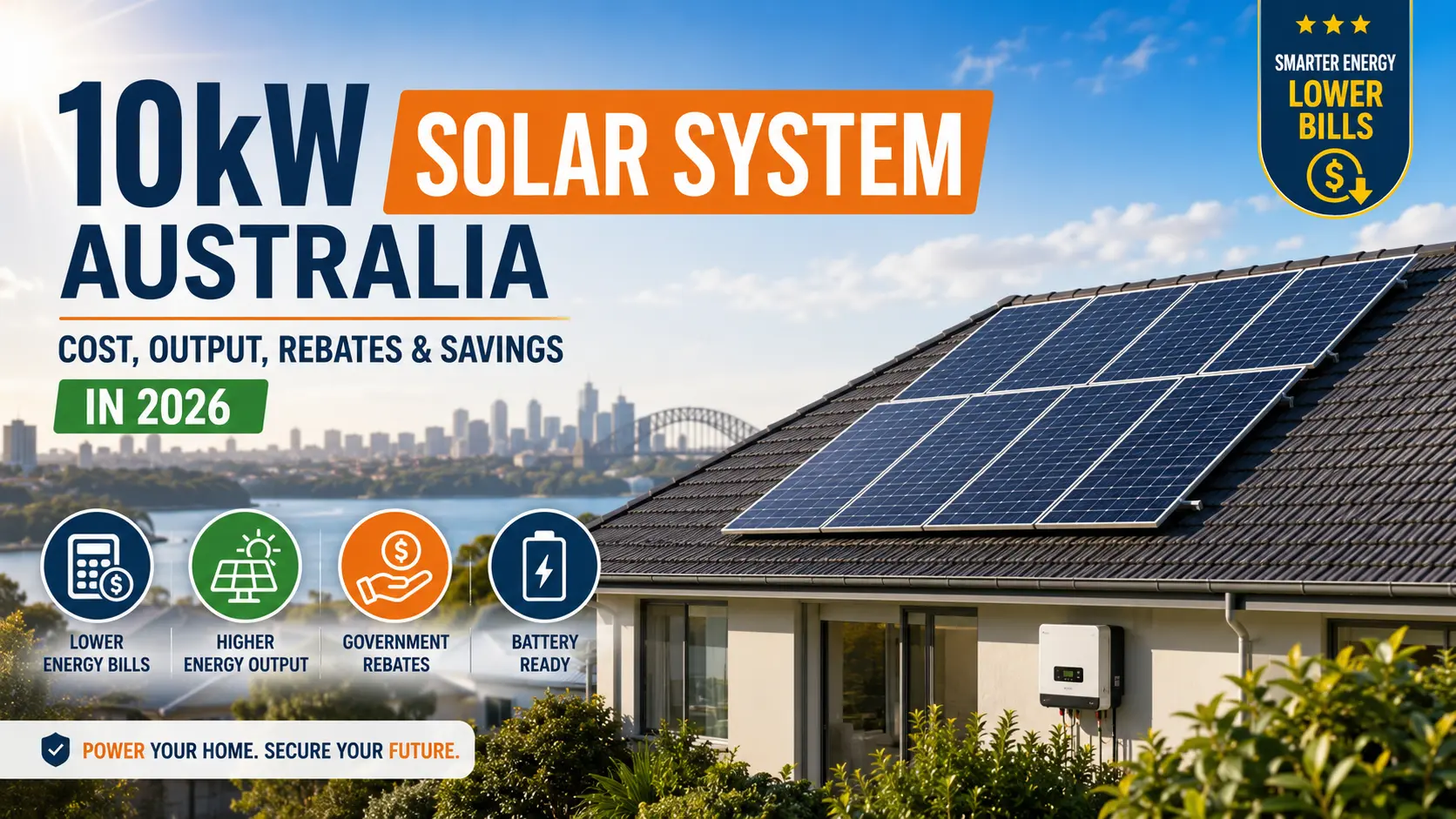
Australian residential solar price data for 2026 indicates that a standard 6–6.6kW residential system generally costs around A$5,000 to A$6,000 in most Australian states after the federal STC discount. A standard 10kW system commonly falls around A$8,000 to A$10,500, while premium equipment can cost approximately 20–30% more.
| System type | Typical installed price |
| Standard 6–6.6kW system | Around A$5,000–A$6,000 |
| Standard 10kW system | Around A$8,000–A$10,500 |
| Premium system | Commonly 20–30% above standard pricing |
Final pricing depends on the panel and inverter choice, roof design, access, switchboard condition and additional electrical work.
Most eligible residential systems receive an upfront discount through the Australian Government’s Small-scale Renewable Energy Scheme. The value is commonly applied to the quote through Small-scale Technology Certificates, or STCs. State or local assistance may also be available in some areas.
A quote should clearly show whether the STC discount is already included. The cheapest offer is not always the best value if it compromises equipment quality, installation standards or after-sales support.
Solar Payback Periods in 2026
The solar payback period is the time required for bill savings and export credits to recover the installation cost. Australian solar payback modelling for 2026 shows estimated payback periods of approximately 1.9 to 4.6 years across the major Australian cities included in its comparison. Its model assumes a 6.6kW system, household electricity use of 25kWh per day and 50% solar self-consumption, so individual results will vary.
The following example shows how self-consumption can change the return. It assumes:
- 8,000 kWh annual solar generation
- 35 cents per kWh grid electricity rate
- 5 cents per kWh feed-in tariff
- A$6,000 installed system cost
| Household profile | Solar used directly | Estimated annual value | Simple payback |
| Low daytime use | 30% | A$1,120 | About 5.4 years |
| Moderate daytime use | 50% | A$1,600 | About 3.8 years |
| High daytime use | 70% | A$2,080 | About 2.9 years |
The annual value combines the money saved through self-consumption with the credits earned from exports. These are illustrative figures, not personalized forecasts. Actual payback depends on location, roof conditions, electricity prices, system performance and future household demand.
Why System Size and Export Limits Matter
The largest system that fits on the roof is not always the best financial choice. Extra generation has limited value when the household cannot use it and it is exported for only a few cents per kilowatt-hour. Network rules may also restrict how much electricity a property can send to the grid. Any generation above an approved export limit may be curtailed, meaning it is not exported and earns no credit.
The right system size should consider:
- Current electricity consumption
- Daytime energy use
- Roof orientation and shading
- Network export limits
- Future EV charging
- Electric hot water or heat-pump use
- A possible battery installation
- Available budget
A larger system may still make sense when future electricity demand is expected to rise. However, the proposal should explain how the additional generation will be used instead of assuming every extra kilowatt-hour will earn a useful export credit.
When Is Solar Worth It in Australia?
Solar generally provides a stronger return when the system suits the property and the way electricity is used.
| Solar is more likely to be worthwhile | The return may be weaker |
| Roof receives good sunlight | Roof has significant shading |
| Electricity use is moderate or high | Electricity consumption is already very low |
| Some energy is used during the day | Nearly all generation will be exported |
| System size matches demand | System is substantially oversized |
| Installation price is competitive | Quote is unusually expensive |
| Future demand may increase | No expected increase in energy use |
| Household will remain at the property | Property may be sold soon |
A household does not have to be occupied all day for solar to make sense. However, the savings calculation should use the home’s genuine consumption profile rather than assuming an unrealistically high level of daytime usage.
Future electricity demand should also be considered. An electric vehicle, heat-pump hot-water system or shift away from gas may increase the amount of solar the household can use.
Solar Only vs Solar Plus Battery
A battery stores surplus solar for use later, usually during the evening. This can increase self-consumption and reduce reliance on low export payments. However, it also adds a separate upfront cost.
| Option | Main benefit | Main limitation |
| Solar only | Lower cost and usually faster payback | More surplus energy may be exported cheaply |
| Solar plus battery | Higher self-consumption and possible backup | Higher cost and separate battery payback |
Solar-only may remain the better financial choice for homes with strong daytime electricity use.
A battery may suit homes with high evening demand, regular surplus solar, expensive peak tariffs or a need for backup power. Australian Government guidance notes that batteries can improve self-consumption, but their cost means they will not make financial sense for every household.
Eligible battery systems may also receive an upfront discount through the Cheaper Home Batteries Program. The solar and battery returns should still be calculated separately.
Why the Highest Feed-in Tariff May Not Be the Best Plan
A higher feed-in tariff does not always produce the lowest electricity bill. A plan offering a generous export rate may also include:
- Higher electricity usage rates
- A larger daily supply charge
- A cap on premium exports
- A lower rate after the cap
- Less competitive off-peak prices
The best electricity plan depends on all fixed and variable charges, not the export rate alone. Australian Government guidance specifically notes that the plan with the highest feed-in tariff is not necessarily the best overall deal.
A household with high self-consumption may benefit more from lower grid usage rates. A home exporting heavily may place greater value on the feed-in tariff.
The useful comparison is the estimated total annual bill.
What to Check Before Installing Solar
A reliable solar proposal should clearly explain:
| Factor | What the proposal should show |
| Roof suitability | Orientation, usable area and shading |
| Expected output | Estimated annual generation for the property |
| Self-consumption | How much solar is expected to be used directly |
| System size | Why the recommended capacity suits the household |
| Export rules | Approved export limit and possible curtailment |
| Installation cost | Full price after the STC discount |
| Payback estimate | Self-use savings separated from export income |
| Equipment | Exact panel and inverter models and warranties |
| Monitoring | Whether production and consumption can both be tracked |
| Future needs | EV, electric hot water, heat pump or battery plans |
| Existing tariff | Whether an upgrade could affect an older premium arrangement |
Be cautious when a proposal values every generated kilowatt-hour at the full retail electricity rate. Only electricity used inside the property avoids that rate. Exported electricity should be valued at the expected feed-in tariff.
The installer should also explain the assumptions used for annual generation, electricity prices, self-consumption and payback.
Final Verdict: Is Solar Still Worth It in 2026?
So, is solar still worth it if export payments keep dropping?
For many Australian households, yes.
Lower feed-in tariffs reduce export income, but the larger saving usually comes from using solar electricity inside the home and avoiding more expensive grid power.
Solar is most likely to provide good value when the roof is suitable, the system is correctly sized and the installation price is reasonable. It may be less attractive when electricity use is very low, the roof is heavily shaded or nearly all generation will be exported.
The decision should be based on system cost, electricity prices, self-consumption, export limits and a realistic payback estimate—not the feed-in tariff alone.
Frequently Asked Questions
Is Solar Still Worth It When Feed-in Tariffs Are Low?
Yes, for many homes. A lower feed-in tariff reduces export income, but solar can still save money by replacing electricity that would otherwise be purchased from the grid. The result depends largely on system cost, roof conditions and how much solar is used inside the home.
Why Are Solar Export Payments Falling in Australia?
Solar exports are usually highest around the middle of the day, when rooftop generation is strong across the country. This can create more supply than the grid needs at that time, reducing the value of exported electricity and putting downward pressure on feed-in tariffs.
How Long Does Solar Usually Take to Pay for Itself?
The payback period varies by location, installation cost, electricity prices, self-consumption and export rates. Many Australian households may recover the cost within several years, but the estimate should be based on the property’s actual energy use rather than a broad national average.
Is Solar Worth It If Most Electricity Is Used at Night?
It can still be worthwhile, although the return may be slower if most daytime generation is exported. A battery may increase self-consumption, but its purchase cost and expected savings should be assessed separately.
Should I Choose the Electricity Plan with the Highest Feed-in Tariff?
Not always. A plan offering a higher export rate may also have higher usage charges, daily supply costs or export limits. The better comparison is the estimated total annual bill, including both electricity purchases and solar credits.

Shah Tarek is a Solar Energy Consultant with 10 years experience in solar system design and solar consultancy field at Australia. He is now a Director, Operation & Consultancy Division at Aussie Solar Tech, a leading Australian solar retailer and installer. Here he is writing informative and engaging solar content that educates the community on the benefits of solar power. His work supports Aussie Solar Tech’s mission to promote sustainable energy solutions and foster a greener future for Australia.









Seraphim Solar Panels Review: Efficiency, Reliability, and Value Unveiled

Talesun Solar Panels: Honest Review Before You Buy

Sungrow Battery VS Tesla Powerwall : Which is Best in Australia?

Leapton Solar Panels Review: Affordable Energy Solution

REC Solar Panels Review: Outstanding Efficiency & Durability

Best Hybrid Inverters for Home Solar Systems in 2025

Best Solar Battery In Australia 2026 — Complete Guide

Sigenergy VS Fox ESS Battery: Which is The Best Choice for 2026

How Much Do Solar Panel Costs in Australia? (2026 Price Guide)

