

Choosing the right solar battery is a big decision for homeowners in Australia. A wrong choice can lead to extra costs, while the right one can lower your electricity bill, provide peace of mind during blackouts, and help you gradually become energy independent. But not all solar batteries offer the same benefits. Each brand has its own technology, capacity, chemistry, efficiency, and warranty, all of which affect your savings and long-term return on investment. In Australia, where electricity prices are unpredictable and the grid isn’t always reliable, investing in the right solar battery is about more than just saving on bills — it’s about securing your future.
Solar Batteries Comparison and Benefits: You need to analyse carefully to choose the best solar battery.
Top Popular Solar Battery Brands Comparison Chart in Australia
| Brand | Made In | Battery Chemistry | Usable Capacity (kWh) | Scalability | Warranty | Round-Trip Efficiency | Blackout | Best For | Market Position | AU Grid Compatibility | VPP |
| Tesla Battery | USA | LFP | ~13.5 | Stackable | 10 yrs | ~97% | Yes | Premium homes | Premium | Yes | Yes |
| Sungrow Battery | China | LFP | 9.6 – 25.6 | Modular | 10 yrs | ~95–96% | Yes | Mid–large homes | Mid–Premium | Yes | Yes |
| Sigenergy SigenStor | China | LFP | 5 – 48+ | Highly Modular | 10 yrs | ~96% | Yes | Smart energy ecosystem | Premium | Yes | Yes |
| SolarEdge Battery | Israel | LFP | ~9.7 | Expandable | 10 yrs | ~94–95% | Yes | SolarEdge users | Premium | Yes | Limited |
| Enphase Battery | USA | LFP | 3.5 (per unit) | Stackable | 10 yrs | ~96% | Yes | Microinverter systems | Premium | Yes | Yes |
| BYD Battery | China | LFP | 5 – 22+ | Modular | 10 yrs | ~95% | Yes | Flexible systems | Mid–Premium | Yes | Yes |
| Sigenergy SigenStack | China | LFP | Scalable blocks | Modular | 10 yrs | ~96% | Yes | Commercial + Residential | Premium | Yes | Yes |
| AlphaESS Battery | Germany/China | LFP | 5 – 20 | Modular | 10 yrs | ~95% | Yes | Smart homes | Mid | Yes | Yes |
| GoodWe Battery | China | LFP | 5 – 30 | Expandable | 10 yrs | ~95% | Yes | Hybrid inverter users | Mid | Yes | Yes |
| Growatt Battery | China | LFP | 5 – 25 | Modular | 10 yrs | ~94–95% | Yes | Budget-friendly setups | Budget | Yes | Limited |
| SAJ Battery | China | LFP | 5 – 20 | Modular | 10 yrs | ~95% | Yes | Residential systems | Mid | Yes | Limited |
| LG Chem Battery | South Korea | Lithium-Ion (NMC) | 6.5 – 13 | Limited expand | 10 yrs | ~95% | Yes | Compact installs | Premium | Yes | Limited |
| Dyness Battery | China | LFP | 5 – 20 | Modular | 10 yrs | ~95% | Yes | Value systems | Budget | Yes | Limited |
| Neovolt Battery | China | LFP | 5 – 20 | Expandable | 10 yrs | ~95% | Yes | Modern homes | Mid | Yes | Limited |
| Hinen Battery | China | LFP | 5 – 25 | Modular | 10 yrs | ~95% | Yes | Reliable backup | Mid | Yes | Limited |
Which solar battery is the best for your home or commercial use? Get expert advice for free and make an informed decision. Request a quote now!
Types of Solar Batteries Available in Australia
Types of Solar Batteries Available in Australia:-
Lithium-Ion (NMC) Batteries
Lithium-Ion (NMC – Nickel Manganese Cobalt) batteries have long been popular in residential and commercial solar storage. They offer high energy density. They offer high storage capacity in a small size. Therefore, they are more commonly seen in wall-mounted systems. Round-trip efficiency is usually between 90–95%. However, NMC batteries are a bit more thermally sensitive. Although modern (BMS) reduces the risk from a safety perspective, many homeowners are turning to LFP for greater thermal stability.
LFP (Lithium Iron Phosphate) Batteries
LFP batteries are the most preferred in the Australian residential solar market. Long-term performance, safety and climate suitability have become the first choice.The biggest advantage is its improved thermal stability. In the hot climate of Australia, where temperature fluctuations are common, LFP batteries are relatively more stable. Moreover, the risk of thermal runaway is low. LFP is also ahead in terms of cycle life. Most premium systems support 6,000 to 10,000+ cycles. This means consistent performance for up to 10–15 years. Depth of Discharge (DoD) capability. Many LFP batteries can be used up to 90–98% DoD. This is accompanied by a round-trip efficiency of 94–98%.
LFP systems are also quite flexible in terms of scalability. Capacity can be easily increased through Virtual Power Plant (VPP) participation. Many LFP systems are compatible with state-based rebate and incentive programs.
Nickel-Cadmium (Ni-Cd) Batteries
Nickel-Cadmium (Ni-Cd) batteries are mainly used in industrial and remote areas. They were very popular in mining sites or remote off-grid projects in Australia. Ni-Cd batteries are very durable, can withstand extreme temperatures. They can store energy for a long time. However, they are rarely used in modern homes. The main reason is that cadmium is a toxic metal, which is harmful to the environment. In addition, Ni-Cd batteries are relatively heavy and have low efficiency. The maintenance of such batteries is also much more complicated, making them very inconvenient for home use.
Flow Batteries
Flow batteries are a type of advanced energy storage system. They are capable of storing electricity for a long time. They use a liquid electrolyte. The storage capacity can be increased as needed. Therefore, they are suitable for commercial/residential properties. The biggest advantage of flow batteries is their long cycle life. They provide reliable performance for about 10,000+ cycles. That is, they can handle daily charge-discharge for years.
Lead-Acid Solar Batteries
Lead-Acid batteries oldest and most traditional solar battery technology in Australia. Once used in residential and off-grid systems, but now phased out in modern Australian homes for a shorter lifespan and lower efficiency. Main types of Lead-Acid batteries: Flooded and Sealed (AGM/Gel). These batteriesare used at low Depth of Discharge (DoD). Generally, discharging more than 50% reduces lifespan. Round-trip efficiency is typically between 70–85%. This is lower than modern Lithium-Ion or LFP batteries. They are also heavy and bulky, making them less suitable for wall-mounted or compact installations.
Benefits of Installing a Solar Battery
Reduce Electricity Bill
Excess energy from solar batteries can be stored and used at night or on cloudy days.This significantly reduces the monthly power cost. Using good-quality LFP or Lithium-Ion batteries has high round-trip efficiency. This reduces energy loss and increases savings.
Virtual Power Plants (VPPs).
VPP systems combine multiple batteries to provide power services to the grid. This means that, on occasion, the VPP operator may take control of your battery and compensate you generously for the privilege
Blackout Protection / Backup Power
In many areas of Australia, sudden power outages during storms or heat waves are not new. If you have a solar battery at home during this time, at least the necessary things can be kept running. Such as a fridge, lights, water pump or small AC. This also ensures the safety of the family. Instead of sitting in the dark, the house remains operational.
In addition to providing backup in a blackout, it also helps to provide uninterrupted backup for everyday load shedding in the home. Some modern battery systems can be monitored with smart apps. So that critical appliances can be run with priority.
For Energy Independence
Having a battery reduces dependence on the grid. Especially in regional or rural areas where the grid can be unstable. The battery system ensures energy security of the home. Using the home’s own solar energy can increase the homeowner’s energy autonomy in the long term. There is no problem even during unexpected power cuts.
Au Environmental Benefit
Using the solar energy stored in the battery itself reduces the pressure on grid electricity. And the use of fossil fuels can be reduced. As a result, CO₂ emissions are reduced, and the carbon footprint of the house is reduced. In this way, it is also possible to reduce the negative impact on the environment. LFP or Lithium-Ion batteries provide high energy efficiency. Therefore, this type of battery is more environmentally friendly.
Future-Proofing & Scalability
Modular or VPP-compatible batteries make it easier to increase capacity in the future. Your home’s electricity needs may increase over time. This means you don’t need to reinstall the entire system. You can simply add additional batteries as needed. Choosing this type of flexible setup from the start will save you money in the future. Only the capacity can be increased as needed.
Therefore, it is best to choose a flexible system from the beginning. The modular design allows the homeowner to gradually expand their energy system. Long-term investment is more secure.
Long-Term Investment & ROI
A good quality battery usually provides reliable performance for 10 years or more. Using solar energy can reduce electricity costs. If there are government incentives/rate rebates, the investment costs are quickly returned. As a result, energy savings in the long-term increase.
Smart Energy Management
Modern battery systems can easily control energy consumption with smart apps. You will see when more electricity is being consumed and where savings can be made. Load management, peak shaving and monthly electricity cost control become much easier. This makes load management, peak shaving, and tariff optimisation easy. Having batteries allows for maximum use of energy in the home and increases energy efficiency.
How to Choose the Right Solar Battery For Your Needs
What factors should you consider when buying a solar battery:-
Battery Capacity
The right battery capacity is really very important. For a small household, 5–10 kWh is usually enough. But for a large household or EV charging, 10–20 kWh or more may be required. Increasing the battery capacity ensures a secure electricity supply at night or on cloudy days. Therefore, monthly power savings are higher.
Battery Chemistry
Choosing the chemistry of a solar battery is very important. It determines how safe, long-lasting and how it will perform. The two popular options are Lithium-Ion (NMC) and LFP. LFP batteries are generally safer and perform better over time. Their performance is good in hot weather. Lithium-Ion (NMC) is small in size, charges faster and offers better efficiency.
Round-Trip Efficiency
It actually measures how effectively energy can be used by the battery. How many units you get back when using it is efficiency. The higher the efficiency, the less energy is wasted and the greater the savings. The higher the efficiency, the less energy is wasted. Modern LFP or Lithium-Ion batteries offer around 94–97% efficiency. Energy waste can be reduced, so electricity costs are lower each month.
Scalability & Future-Proofing
Battery capacity can be easily increased in the future by using modular batteries. This is very convenient when the electricity demand of the house increases. They can gradually expand their energy system. The system does not need to be completely replaced.
Inverter Compatibility
When choosing a solar battery, need to make sure that it is compatible with the hybrid inverter. With proper compatibility, the battery and solar panel work well together. This makes the entire energy system more reliable. Using a hybrid inverter greatly reduces the chances of sudden power outages.
Warranty & Longevity
Most batteries come with a 10+ year warranty. Long-term performance and durability are important when choosing a battery. It is important to check long-term performance and durability. With a good warranty, the battery will be reliable for years to come. Combined with energy savings and incentives, this makes the long-term investment more secure.
Backup / Blackout Support
Battery backup systems provide essential appliances running during a blackout. In many areas of Australia, the grid is unstable during summer peaks or storms. In many areas of Australia, the grid is unstable during summer peaks or storms. A battery can run a fridge, lights, a water pump or a small AC.
Smart Energy Management
Battery systems can easily monitor and optimise energy usage through smart apps. Electricity usage can be seen, and load can be managed as needed. It also becomes easy to reduce costs according to peak shaving or the electricity tariff. The result is energy efficiency and control of electricity costs.
Cost & Incentives
When buying solar batteries, you need to consider the price of the battery and government incentives. Some batteries, if VPP-compatible, can be sold to the grid for income. Energy savings and rebates can reduce the investment payback period. As a result, the homeowner gets the benefit of long-term cost savings.
Check out the solar battery prices in Australia 2026.
Environmental Impact
It is important to consider the environment when choosing a battery. Using eco-friendly batteries reduces the pressure on grid electricity. Moreover, the use of fossil fuels is reduced. This reduces CO₂ emissions. Modern LFP or Lithium-Ion batteries are energy-efficient so more sustainable energy can be used. So while selecting a battery, you should carefully consider the above factors before purchasing it. So that you can select the right battery according to your needs.
Pros & Cons of Installing Solar Batteries
Solar Batteries Pros
- The solar energy stored in the battery can be used by itself. It can reduce monthly power costs and increase energy savings.
- It is possible to run essential appliances during a blackout and off-grid
- Dependence on the grid can be reduced. And reliable power is available in regional or rural areas.
- Fossil fuel consumption is reduced, CO₂ emissions are reduced, and the carbon footprint is reduced.
- Using modular or VPP-compatible systems, battery capacity can be easily increased in the future. This is convenient if the energy demand of the home increases or if you want to charge EVs.
- The investment payback period can be reduced through energy savings and government incentives or rebates.
- Some battery systems help monitor and optimise with smart apps. Helps with load management and tariff optimization are easy.
Solar Batteries Cons
- Premium solar battery systems can be a bit more expensive.
- Some modular or large-capacity batteries take up a lot of space. So the installation location needs to be carefully considered.
- Although modern batteries require low maintenance, periodic checks and monitoring are required.
- After about 10+ years, the capacity of the battery decreases.
Buying Decision Guide for Solar Battery Users
| Your Situation | What You Buy | Why is it suitable? |
| Small family, low electricity usage | 100Ah – 150Ah battery | Will easily handle basic loads and nighttime use |
| Medium family | 150Ah – 200Ah battery | Good backup and balanced performance |
| High load / long backup required | 200Ah or more | Will provide long-term power support |
| When safety is more important | LiFePO4 battery | More safe and long-lasting |
| The load may increase in the future. | Modular battery system | Capacity can be easily increased later. |
| Blackout problem | Backup-supported system | Emergency equipment can be kept running |
| Budget is limited | Medium capacity + good warranty | Reliable support while keeping costs under control |
FAQ
Which battery is best for the home?
It depends on how much electricity your home uses every day. For a small family, 100Ah or 150Ah is often enough. However, if you need more backup or the load is high, 200Ah may be better.
Which is better, LiFePO4 or LiPo?
Most people prefer LiFePO4 for their home solar system because it is safe, long-lasting, and works well in hot weather. While LiPo is lighter and more compact, LiFePO4 is considered more reliable for home use.
What brand of battery has the longest life?
If you want a battery that will last a long time, you should choose a brand that uses good-quality LFP technology. Usually, a warranty of 10 years or more is a good sign. However, not only the brand, but also proper installation and regular monitoring increase the life of the battery.
Which is better, a 150Ah or a 200Ah battery?
If you want long-term backup or the load is high, then 200Ah is convenient. But if you take unnecessarily high capacity, the cost will increase. So it is better to calculate your daily usage and make a decision

Shah Tarek is a Solar Energy Consultant with 10 years experience in solar system design and solar consultancy field at Australia. He is now a Director, Operation & Consultancy Division at Aussie Solar Tech, a leading Australian solar retailer and installer. Here he is writing informative and engaging solar content that educates the community on the benefits of solar power. His work supports Aussie Solar Tech’s mission to promote sustainable energy solutions and foster a greener future for Australia.



Seraphim Solar Panels Review: Efficiency, Reliability, and Value Unveiled

Talesun Solar Panels: Honest Review Before You Buy

Trina Vertex Solar Panels Review: Efficiency, Lifespan, and Performance

Sungrow Battery VS Tesla Powerwall : Which is Best in Australia?

Top 17 Solar Panel Brands in Australia 2025

Leapton Solar Panels Review: Affordable Energy Solution

REC Solar Panels Review: Outstanding Efficiency & Durability

Best Hybrid Inverters for Home Solar Systems in 2025
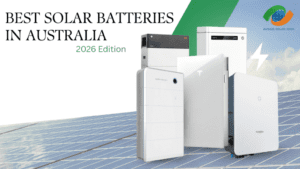
Best Solar Battery In Australia 2026 — Complete Guide

